Throughout its 2+ hour runtime, Black Widow dovetails from family drama to spy thriller to classic superhero film in a way that, much like Natasha’s life, feels complex but also sensible.

In a perfect, non-COVID world, Black Widow was supposed to be the first film of Phase 4. That’s something that feels acutely clear in the first fifteen minutes of the movie, which opens unlike any other Marvel film – even the ones that have been rooted in human stories.
But one of the most compelling things about Natasha Romanoff is that she is a human. She’s not an Asgardian who throws a hammer and she’s not a billionaire who uses his genius to build intricate and powerful technology to protect herself. She’s a spy, a civilian; her powers are guns and batons and learned, deadly fighting skills. Arguably, that’s part of the film’s strength, and Shortland plays into the grounded emotional beats of Natasha’s life in a way that hasn’t truly been seen in any other superhero film. That allows the movie to give a long-deserved and long-awaited center stage to an Avenger who always had a rich story but never had the opportunity to own the narrative.
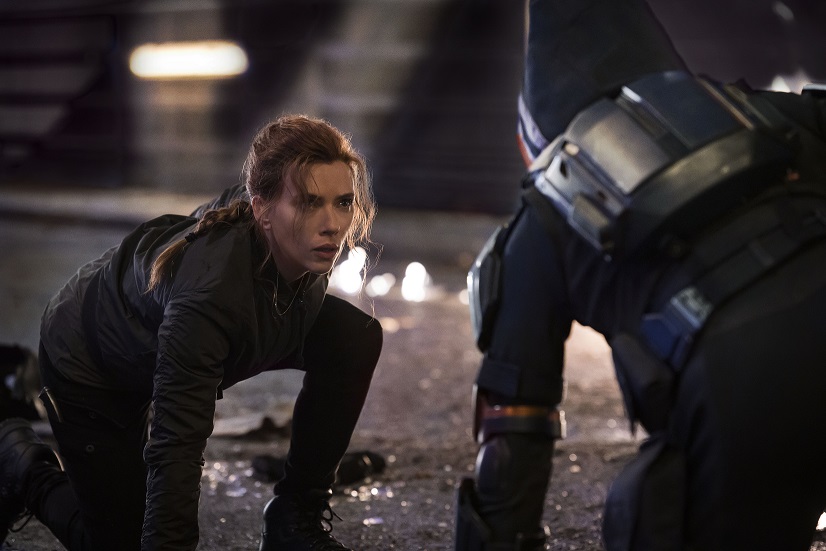
Natasha’s story technically ended two years ago in Avengers: Endgame, after the character sacrificed herself on Vormir to retrieve one of the six Infinity Stones that would help defeat Thanos. Black Widow brings us back to the “before times,” when the biggest disagreement was who would sign the Sokovia Accords and the biggest destruction was an airport in Berlin. Following the events of Captain America: Civil War, Natasha is on the run with Secretary Ross (William Hurt) in pursuit – and content to stay hidden and underground until some secrets from her past make their way into her life, thanks to the help of her trusted friend Mason (a very charming O-T- Fagbenle, who honestly doesn’t get as much screen time as he should.)
Enter Yelena Belova (Florence Pugh) and Budapest. Dedicated Marvel fans will recognize the latter as an Easter egg of sorts – an exchange of dialogue between Black Widow and Hawkeye back in 2012’s Avengers that has been a running thread in Natasha’s clearly complex past, but one that was never fully explained. Black Widow finally does make good on the Budapest reveal (as much as it can, which is to say that there’s still a lot to be left up to interpretation) and also makes good on other parts of Natasha’s story that previous Marvel films have only scratched the surface of: namely, the Red Room and Natasha’s sterilization. (Shortland addresses this particular part of Natasha’s history in a blunt yet hysterical way that proves why it was imperative to have a woman in the directing chair. It’s also a welcome change to see a woman steering a plot that clearly is infused with more personal and real-world relevance than the standard Marvel fare.)
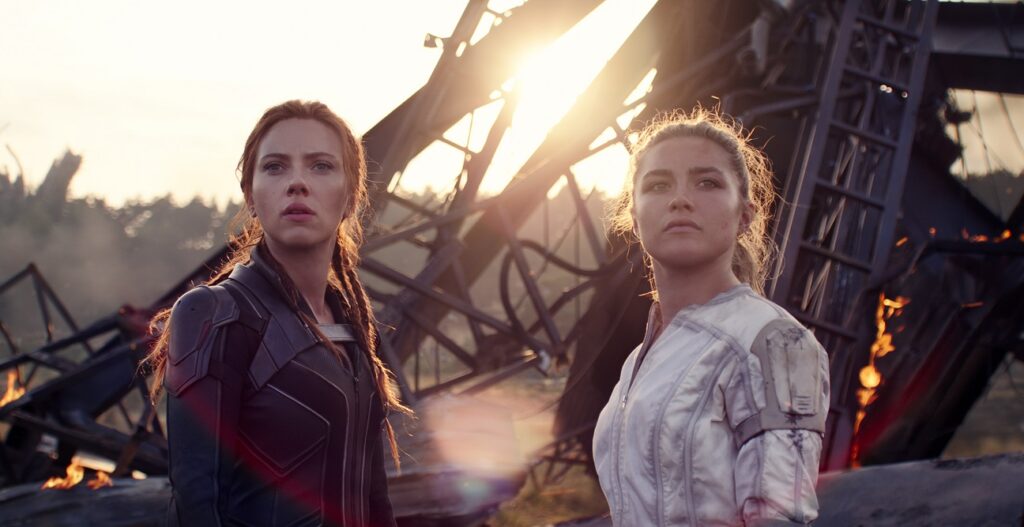
There’s a lot to love about Black Widow. It’s a movie that has all the necessary ingredients of a Marvel film, down to the big action sequences that leave you mesmerized and bring back memories of watching epic car crashes in Captain America: Winter Soldier. And Taskmaster is a formidable enough villain, whose twist turns out to be more surprising than you might expect. But it’s the relationships that shine in the film — none more so than Johansson and Pugh, whose chemistry is what one might call alchemy: a seamless, believable banter that helps center the film between its big action sequences and quiet emotional beats.
Despite not being a true origin story, Black Widow does spend some time in the past – in 1995 Ohio, to be exact. That’s where little blue-haired Natasha (Ever Anderson) grew up alongside her little sister Yelena (Violet McGraw) with their parents, Melina Vostokoff (Rachel Weisz) and Alexei Shostakov (David Harbour). It’s the type of normal, idyllic childhood that Natasha has always longed for and even in short spurts of memories, Shortland makes you understand why, when the family comes back together after 21 years of being torn apart, it’s a traumatic memory for both sisters (notably for Yelena.)

Johansson, who has lived with this character for a decade and has always delivered exceptional performances even when she didn’t have much to do on screen, takes Natasha Romanoff to another level in Black Widow. Her years of knowing Natasha inside and out allow her to lure is into the story with all the emotion, mystery, and intrigue that’s made the character so beloved. But there’s no question Pugh is the standout — a spectacular talent who proves in every scene why she’s become one of Hollywood’s most in-demand actors. Harbour, who is mostly known to audiences as the rough-around-the-edges-but-kind-hearted dad on Stranger Things, shines in a role that’s comedic and boisterous, but also soft – the kind of soft that’s made him beloved as Chief Hopper. Weisz, meanwhile, is the perfect complement to Harbour’s Alexei: a tough-as-nails, non-compromising matriarch who, despite her past, truly cares about the daughters she raised as her own.

Throughout its 2+ hour runtime, Black Widow dovetails from family drama to spy thriller to classic superhero film in a way that, much like Natasha’s life, feels complex but also sensible. Over the years, there have been numerous conversations centered over when the right time to tell Natasha’s story is. Many believe that a solo film would have been best suited after Avengers or Captain America: Winter Soldier, but there’s a special uniqueness to being able to give a character a film about her past when we already know her future.
And at its core, that’s what makes Black Widow so great. In every respect, this is the film that Natasha should have gotten several years ago. It’s funny, it’s thrilling, it’s emotional, it’s meaningful and it (finally) builds a full story around the character of Natasha Alianova Romanova by focusing a spotlight on the parts of her that have never truly been unearthed: her passions, her fears, her traumas, and her grief.
In the end, Black Widow is a reminder that despite Avengers friends and superpowers and help, we’re still only human — but that being human is the most incredible superpower of all.
Want more? Check out all of our Black Widow coverage.
About Black Widow
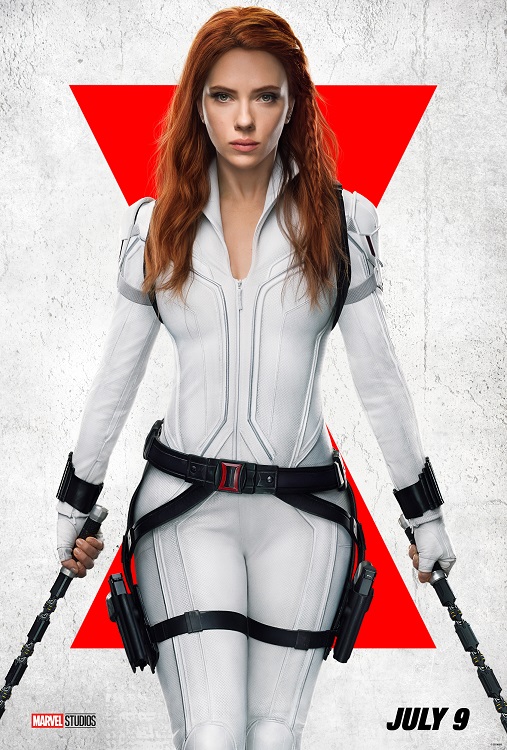
In Marvel Studios’ action-packed spy thriller “Black Widow,” Natasha Romanoff aka Black Widow confronts the darker parts of her ledger when a dangerous conspiracy with ties to her past arises. Pursued by a force that will stop at nothing to bring her down, Natasha must deal with her history as a spy and the broken relationships left in her wake long before she became an Avenger.
Scarlett Johansson reprises her role as Natasha/Black Widow, Florence Pugh stars as Yelena, David Harbour portrays Alexei/The Red Guardian, and Rachel Weisz is Melina. Directed by Cate Shortland and produced by Kevin Feige, “Black Widow”—the first film in Phase Four of the Marvel Cinematic Universe— will launch simultaneously in theaters and on Disney+ with Premier Access in most Disney+ markets on July 9, 2021.