
Composer David Fleming unpacks the sonic secrets of Widow’s Bay, working with Katie Robbins, and the most challenging piece of music from the first season.
Back in early March, I was lucky enough to receive the early screeners for Widow’s Bay. Sitting on a stash of episodes felt like a lifetime ago, and keeping the show’s massive secrets was absolute torture. I didn’t fully binge it all in one sitting, however. Instead, I took my time, watching two episodes, waiting until the next day, and then tackling the next two.
What immediately struck me was the deliberate structural architecture of the season. As the show’s brilliant composer, David Fleming, pointed out to me when we chatted, the first four episodes possess a very specific, slow-burn arc.
“I kind of have thought of those first four episodes as like chapter one of the show,” David told me, emphasizing how beautifully they operate as a unit. “Those are a really nice four to watch together because by the end of four, they sort of, they know what they’re up against a little bit, or at least, at least are the main characters are more on the same page”.
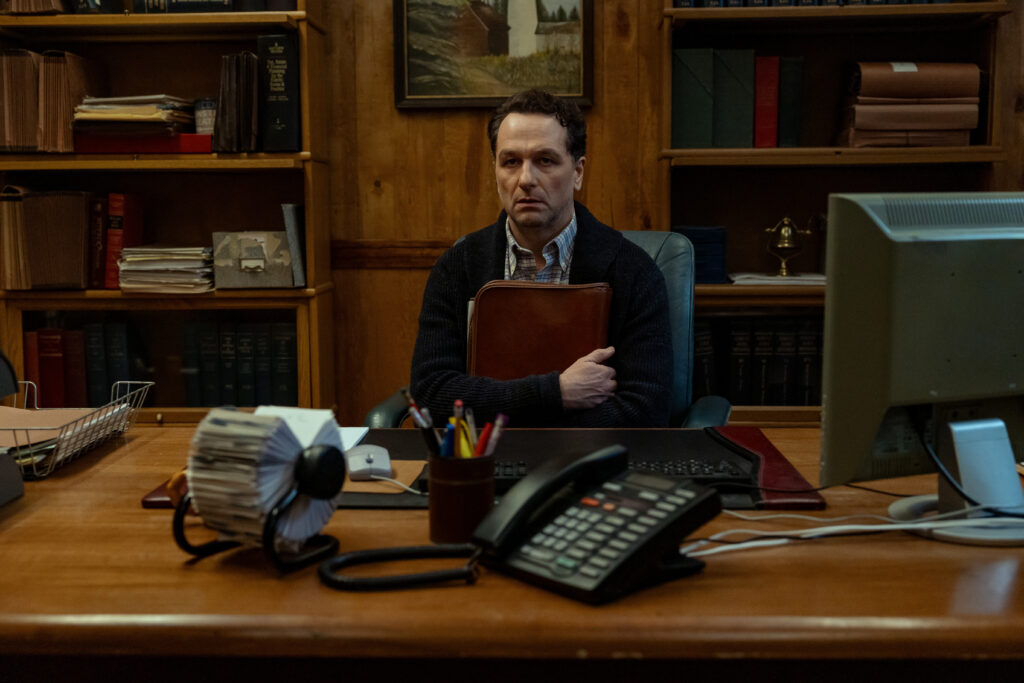
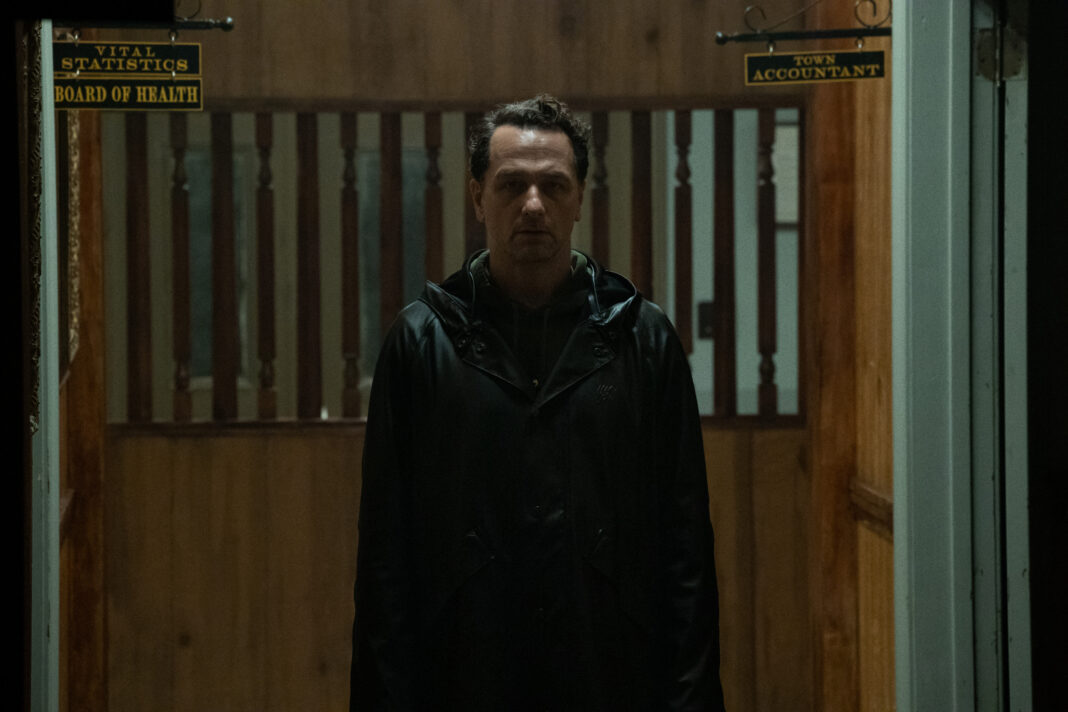
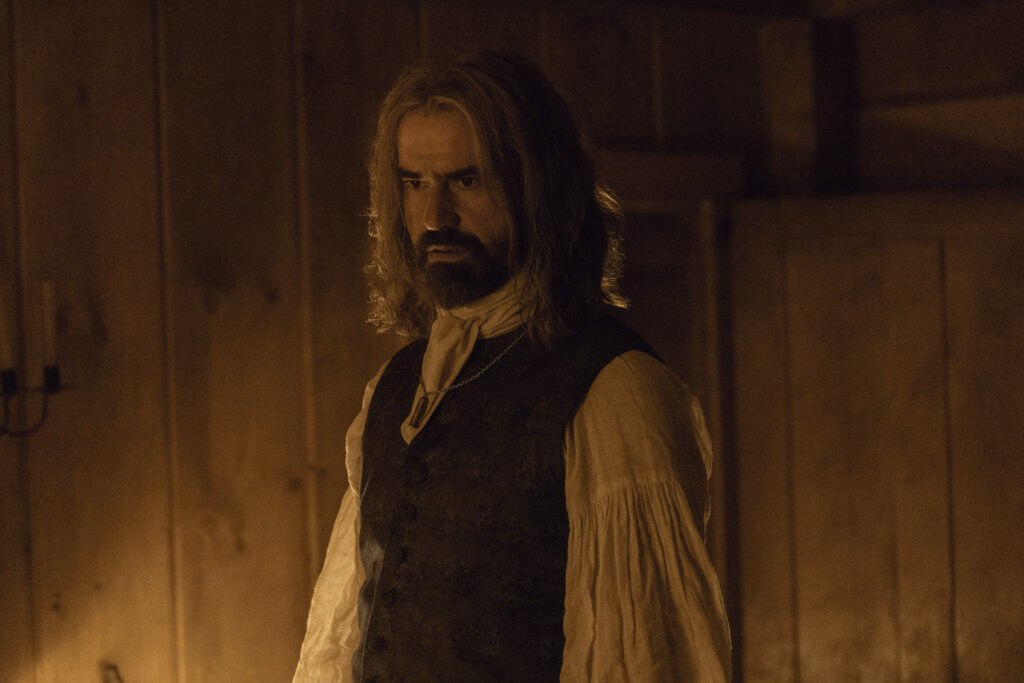
At the center of this skeptical awakening is Mayor Loftus, played with magnificent grit by Matthew Rhys.
When the series finally rolled out to the public, it was nothing short of a phenomenon, boasting an insane Rotten Tomatoes score and driving massive online discourse. David admitted that the overwhelming reception was deeply validating. “When I was working on it, I was like, is this just for me? Is this too weird for everyone? But it’s been really like affirming to see that there’s plenty of weird people and we’re all into it together, you know, and I’m really happy that it’s connecting with people”.
We both bonded over our mutual love for the traditional weekly release schedule. While binging has its place, a mystery-laden show like Widow’s Bay benefits immensely from a slow burn.
“Especially with a show that has like a mysterious component to it, I think the build has been really nice,” David observed. “And I’ve sort of noticed this sort of gradual trend of more people talking about it. I think it’s also the kind of show that you want your friends to watch”.
It’s the ultimate word-of-mouth series, inspiring hilariously creative elevator pitches from fans trying to convert their friends. As David laughed, “Everyone has their own little elevator pitch like, oh, it’s, you know, it’s like Stephen King wrote Parks and Recreation. You know, it’s like if the Coen brothers tried to adapt R.L. Stine’s Goosebumps. Someone said that. I thought that was really good”.
Now, the cherry on top of this entire journey has arrived: since David and I spoke, Season 2 has been officially announced. Looking back at our conversation, it’s thrilling to see how eager he was to return to this world, having teased that the showrunner, Katie, already had some wild ideas cooking. But to understand where the show is going, we have to look back at how David solved the incredible puzzle of Season 1.
Scoring a narrative that unfolds with such erratic, unpredictable momentum is a monumental task. For David, the musical journey from Episode 1 to the explosive finale was like night and day, built partly on structural intent and partly on experimental discovery.
“We wanted it to be a bigger sound, a more orchestral sound by the end of it,” he explained. “And some of it was just things I learned along the way”.
The showrunner, Katie, purposefully kept David on his toes, choosing not to hand over all the narrative answers right away. He was discovering the true nature of the island’s mysteries alongside the audience, realizing that the music had to grow organically without giving away the ghost too early.
“Each episode is, is in some ways like its own little short story, but does advance the plot,” David said. “So, you know, musically, it was like, how do we kind of keep a thread developing, but also have each episode be so specifically scored as well. And it was a fun puzzle together”.
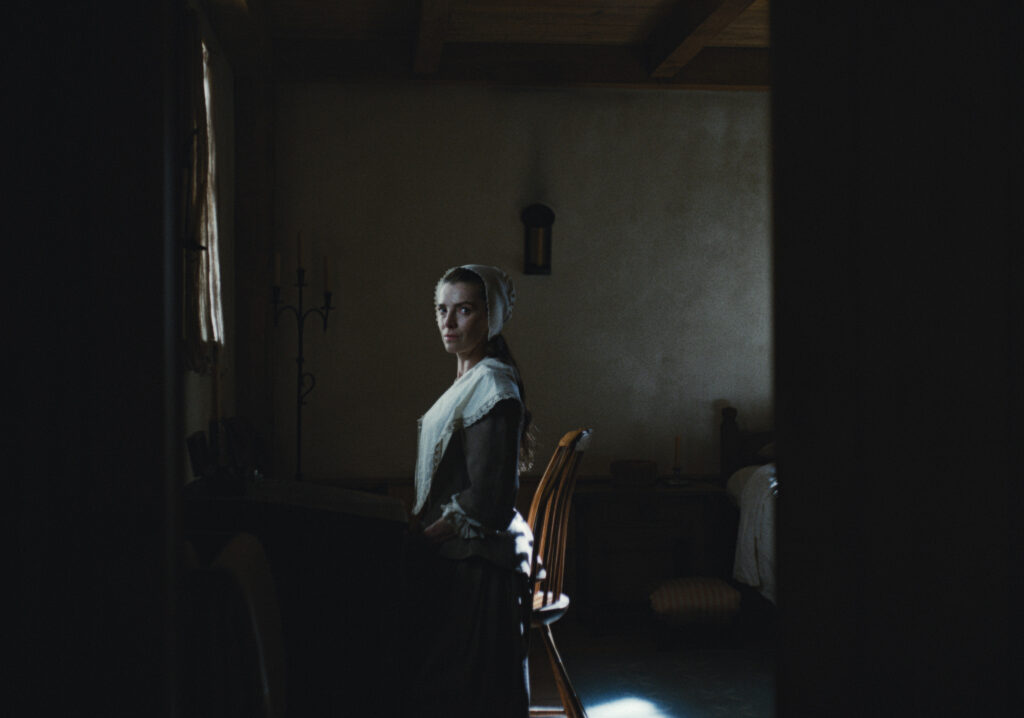
A perfect example of this adaptive process arrived with Episode 6, a historical detour that flashes back to the 1700s. To ground Ty West’s beautifully directed “mini movie” in historical authenticity, David went to great lengths to record period-specific instruments, tracking down a viola da gamba and a Baroque cello to capture a colonial placement.
Yet, it was during a brainstorm with Katie about the pre-colonial history of the island that a stroke of genius struck. David thought about the natural geography: “It’s an island, what would be there besides this colonial idea? And I was like, well, shells, you know, conch shells”.
He proposed using the hollow, booming sound of conch shells to represent an ancient curse or an underlying darkness. Katie was so enamored with the concept that even though the first few episodes were already locked into post-production and being mixed, they scrambled to layer the conch shell motifs back into the beginning of the series.
This continuous process of learning is a staple of David’s creative philosophy. “By the time you finish a season or you finish a film, there’s part of you that wants to go back to the beginning because you’ve learned so much along the way,” he reflected.
Finishing Widow’s Bay left him wanting more, rather than feeling relief. “It’s like, oh man, I wish I could stay in this world and keep going”. I joked that it could become a vicious, never-ending cycle where the music is polished forever and the show never gets released, to which he enthusiastically replied, “If they let me, I would”.
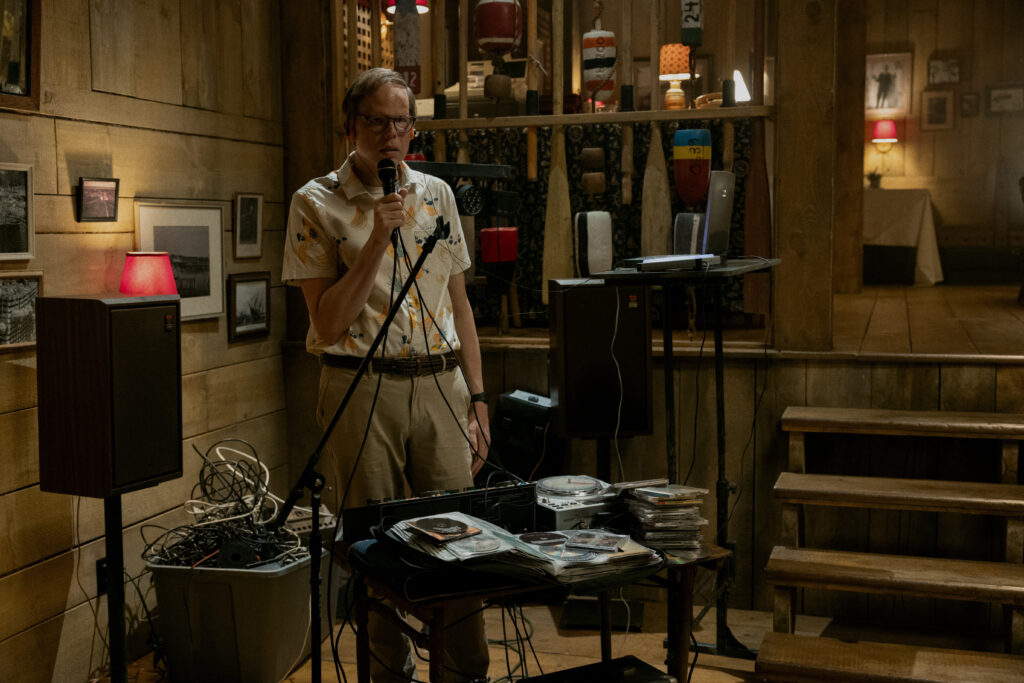
One of the most remarkable feats of Widow’s Bay is its tightrope walk between absolute horror and genuine comedy. I told David that as a viewer, it’s an emotional rollercoaster—I’m laughing out loud one minute, and a split second later, my jaw is on the floor in absolute terror.
“The horror and comedy genre, they, there is a lot of connective tissue,” David agreed. “I think one time Jordan Peele said something like the only difference between horror and comedy is the music, which is funny for me”. He pointed out that very few projects manage to execute both genres with equal efficacy; usually, one compromises the other. Widow’s Bay, however, pulls off the magic trick flawlessly.
David credits this entirely to Katie’s dual sensibilities as a veteran comedy writer who harbors a deep, foundational love for horror movies. “A lot of what we talked about early on was sort of the ride and the fun of a well-executed scare and how, you know, music was involved with that and how she is often laughing at horror movies,” he noted. “She loves that… it’s terrifying, but the laugh and the scare are connected”.
Rather than leaning heavily into traditional comedic hits or dramatic horror tropes, David focused entirely on world-building through a tactile palette.
“I try not to think too much about the score as either one of those and really just try to focus on what is the sound of this place? What, what does this place feel like?”.
He wanted the town of Widow’s Bay to possess a charm that perfectly balances its inherent spookiness, constructing a sonic environment where audiences want to keep hanging out despite the looming shadows. Of course, I had to point out that hanging out there is only fun as a tourist. “As long as you’re not born there, then you’re in trouble,” David chuckled. “Exactly. We’re all, we’re all just visiting. We’re tourists”.
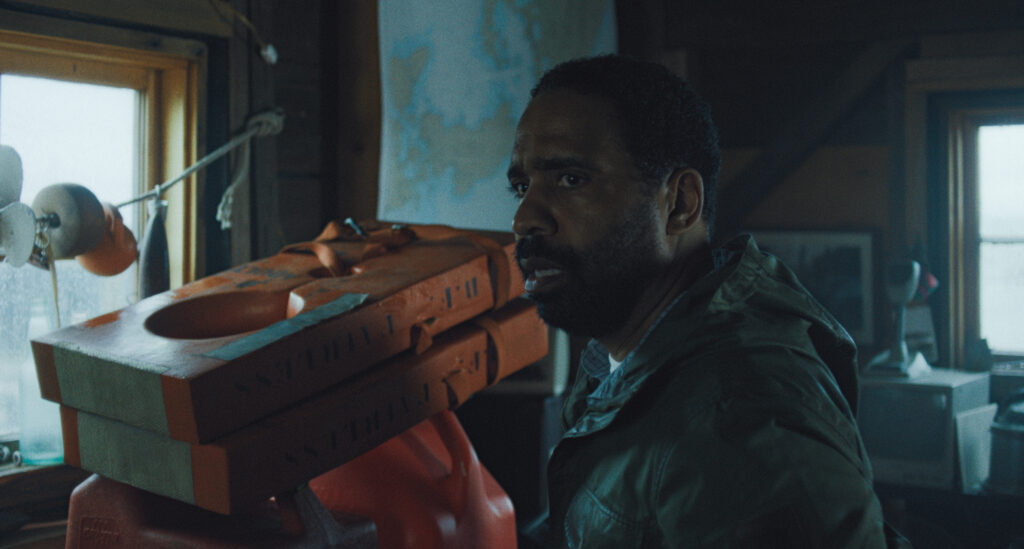
A brilliant score has the power to entirely reshape the psychological subtext of a scene, a phenomenon I love tracking as a viewer. In Widow’s Bay, there is an unmistakable, heavy sense of claustrophobia that suffocates the characters who are trapped on the island.
David confirmed this was highly intentional, pointing directly to the tense shelter sequence in Episode 9, where he utilized closely clustered, unyielding musical dissonance to keep the audience profoundly unsettled.
The architecture of this isolation actually traces all the way back to the very first sound heard in the series: a haunting, stacked vocal harmony performed by David’s wife, Monica.
“It’s sort of, it’s, it’s the idea of a fog horn, or even like a siren in the, you know, the Greek sense… a warning sign that these vocals are producing this, this sort of dissonant warning,” David explained. This vocal motif acts as a recurring anchor during moments of extreme psychological confinement.
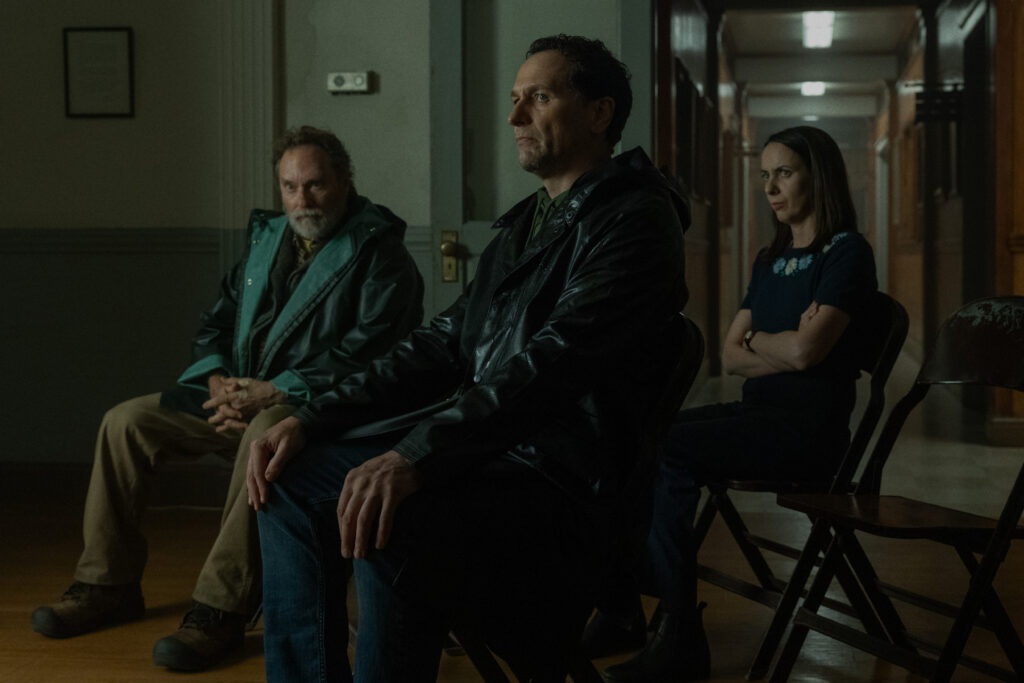
Later in the season, as the tragic history of Mayor Loftus and his late wife unravels, David brings those exact same vocals back, but this time, they are harmonized by a lush arrangement of strings. This musical choices added an emotional depth that caught even the showrunner by surprise. “Despite the show being a fun ride, there is this sadness to Matthew Rhys’ character as well… this undercurrent of isolation“.
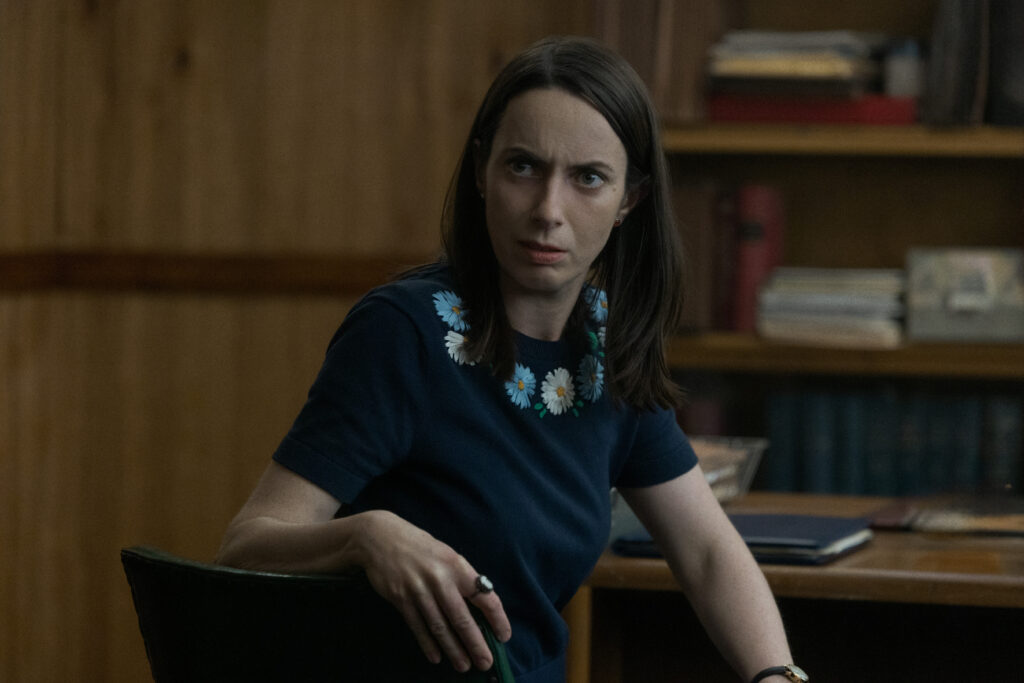
Protecting this incredibly fragile tonal balance required strict discipline from Katie and producer-director Hiro Murai. David praised their impeccable internal barometers, noting how easily a lesser show could have veered into unearned melodrama.
“They were very careful of like, how much is enough… so that we’re feeling something for his character, but we’re not being told to feel something”. Music is an incredibly persuasive medium that can easily push a scene over the edge, so David and Katie constantly calibrated where they had the license to be unbashedly emotional and where the score needed to back away.
This tonal calibration faced its ultimate test during the final episodes of the season, which are dominated by a massive, destructive storm. The weather event begins to brew at the tail end of Episode 8, punctuated by a brilliant cameo from Stephen Root, who ominously warns the characters that “it’s not over”.
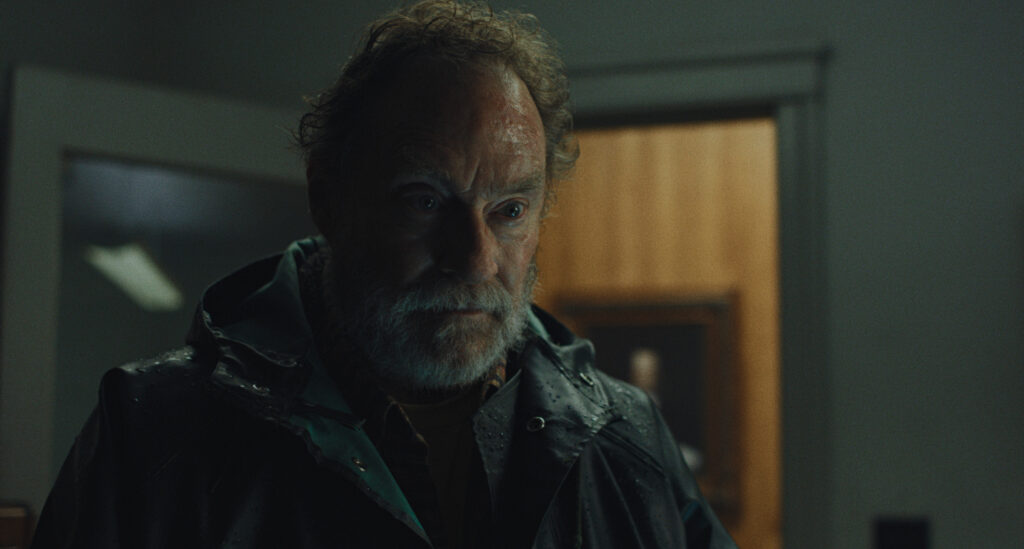
Originally, Katie wanted to close the episode using purely diegetic sound design—just the raw, roaring audio of the storm. But David had other plans. He composed a manic, breathtaking piece featuring a “crazy cyclone of strings”. While much of the series’ music relied on spare, percussive textures, David knew this moment demanded the chaotic energy of live players.
“To be honest, I was like, I don’t know how playable this is. It’s really fast and really complicated rhythmically,” David admitted. “But I had some amazing musicians play on it and just makes this totally insane, kind of… cyclonic… manic piece that Katie loved”.
The track brilliantly bookends the climax, carrying the tension out of Episode 8 and aggressively driving the narrative through Episode 9. By that point in production, David felt entirely comfortable playing in the sandbox, using the storm as an excuse to push his own boundaries: “It was really just me wanting to have fun at that point. And how could we up the ante? I always wanted to keep going further and getting myself into more trouble“.
When I pressed David on the unique, non-traditional sounds he utilized to construct this island, he emphasized a commitment to tactile, organic materials over obvious synthesizer work. While subtle synth drones do exist within the fabric of the score, he never wanted the viewer to feel like they were listening to an explicitly electronic soundtrack.
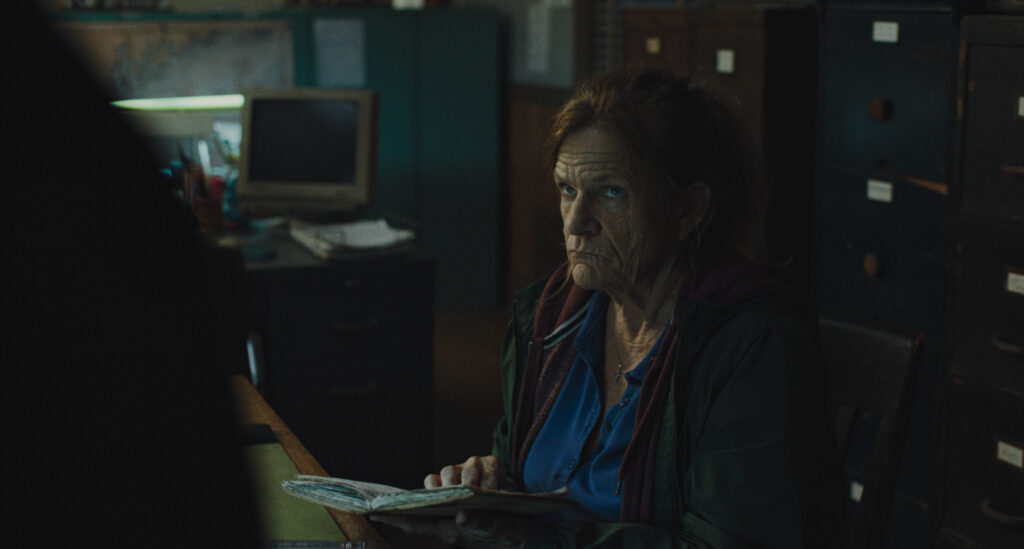
Instead, he conceptualized his instrumentation through physical, environmental elements. He categorized his ideas into elemental forces like “winds” and “woods”. For the wind motifs, he grouped human vocals, woodwinds, and the ancient conch shells together. For the wood textures, he utilized incredibly close, tightly plucked violins and dry percussion. During the height of the storm, these percussive elements were intentionally designed to mimic the environment: “It almost feels like it could be parts of the house batting around in the wind, rattling”.
This bold experimentation thrived because of the immense trust extended by the creative team. Working with executive producer Hiro Murai for the second time following his work on Mr. & Mrs. Smith, David found himself empowered by a director who actively responds to artistic fearlessness. “He kind of has this ‘go for it.’ He responds well to boldness”.
Katie mirrored this philosophy; while she didn’t dictatively prescribe what the music should sound like, she was incredibly definitive about what it shouldn’t be. David adopted a similar internal compass for his workflow.
“Anytime it got big, I felt like that’s not right,” he explained. “It always has to be sort of in a mixture of things that are right in front of your face and feel very tactile. And then this washy ethereal kind of unplaceable spookiness in the background… it was kind of always making those two things work”.
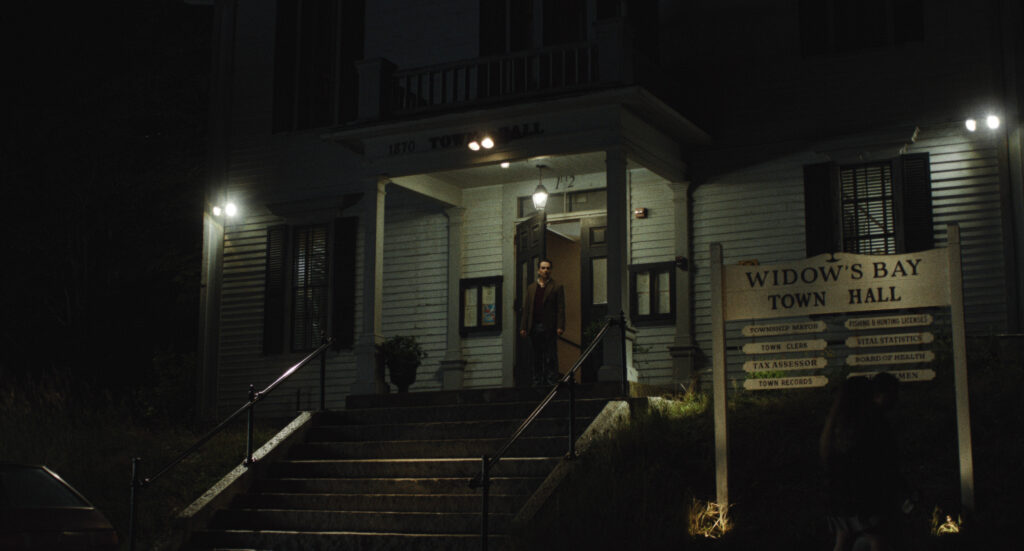
The season finale (Episode 10) is a tour de force, tasking David with scoring a rapid-fire sequence of massive narrative revelations, jaw-dropping twists, and shocking gunshots without letting the sonic landscape devolve into unreadable chaos.
David described the finale as an extraordinary exercise in narrative contrast, balancing high-octane action with profound, ringing silence—particularly in the heavy dramatic beats shared between Tom and Ruth. “It’s this mix of big revelations and then a lot of silence as well… 10 is this… mix of things suddenly happening, but also mixed with the stillness”.
The musical climax of the entire series happens to be David’s absolute favorite cue: the final piece of music that carries the audience out of the narrative and slams into the end credits. Remarkably, this stand-out track was completely born out of a last-minute rejection—a “Plan B” cue.
Earlier in the season, David had cheekily woven Beethoven’s Moonlight Sonata directly into the score, subverting a classic horror trope into something fresh and distinct. For the final frames of the season, he attempted a similar trick with a different classical piece, fully convinced it was going to be an absolute masterpiece. Katie, however, wasn’t buying it. “Katie was like, ‘it doesn’t feel right to me,'” David recalled.
Faced with a ticking clock, the rejection unlocked an unexpected burst of creative adrenaline. Knowing how much Katie had genuinely enjoyed his quirky end-credits pieces throughout the season, David abandoned his original pitch and decided to construct something entirely unhinged.
“I just went for something that was a little bit wacky,” he told me with a grin. “And even though it wasn’t my plan A… I think it sort of finishes the series in a really fun way that hopefully makes us want… want more to come”.
Usually, after a dense, ten-episode journey, a viewer welcomes a breather—but Widow’s Bay leaves you completely hooked. David attributes this addictive pacing to a core philosophy that governed the writers’ room. “I know that they had one thing in the writer’s room, which was like, ‘spend your ammunition now,’ you know?” he revealed.
Rather than hoarding great concepts or drawing mysteries out across multiple seasons to stretch the plot, the creative team fully committed to delivering explosive narrative payoffs in every single block of television. “They didn’t do that in the show… every episode they’re kind of fully committing… It doesn’t take the audience for granted. It really wants you to be getting your cake and eating it right then”.
This commitment meant there was absolutely zero room for filler. Even the period-specific flashback episode was a vital, wall-to-wall cinematic experience that pushed David to his absolute limits. “That one needed to be scored like a film,” David said, noting how the episode features standout, darkly hilarious performances from Betty Gilpin. “It was such an exciting challenge… that I really wanted to like, dig into“. The sheer joy and mutual dedication radiating from the cast and crew elevated the material. “Everyone knew they were working on something good and special”.
Before stepping into his own as a primary musical voice, David spent years working alongside legendary film composer Hans Zimmer. I asked David how he handles projects where that immediate, lightning-in-a-bottle creative connection isn’t as easily found.
He shared a piece of invaluable wisdom passed down from Zimmer himself: “Something I got from him is there’s always something to connect to”.
Even if a composer is uncertain about the broader piece, their job is to look at the work for how good it could be, using their musical toolkit to elevate their specific corner of the universe. Fortunately, on Widow’s Bay, that was never a concern. The foundational writing and directing were so robust that David’s directive was simply to “do no harm and hopefully… elevate where you can”.
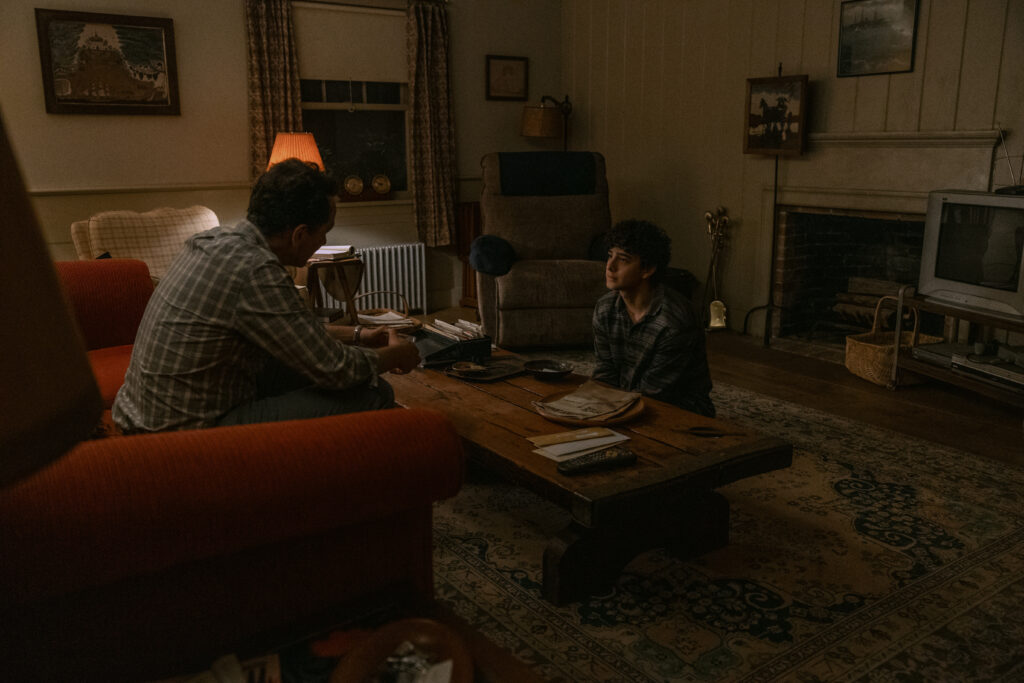
As our conversation wound down, I asked David what specific memory he would carry with him years down the line when looking back at his time on the island. For him, it all comes back to the rare, beautiful opportunity to build an entirely bespoke sonic landscape.
“I love the shows and films where I’ve gotten to define a world really specifically,” he told me. “There was an opportunity to do something musically that wasn’t, ‘Hey, can you make it sound like this? Hey, can you make it sound like this?’ It was, what is the sound that is like a custom suit for the show?”.
He will forever cherish his collaborative meetings with Katie, her sharp wit, and the profound lesson of trusting a creator’s distinct creative vision.
“When you have a great creator, trust their barometer and their sense… when you have someone like that, you just got to latch onto it because you’re part of something bigger”.
Sitting with these screeners for months felt lonely, but watching the rest of the world catch up to the madness of Widow’s Bay has been a joy. David agreed, concluding, “I’ve been really enjoying being part of this like momentum gathering and people noticing the show and wanting it to be great”.
Now that Season 2 is a greenlit reality, we can all rest easy knowing David Fleming is officially heading back to Widow’s Bay. Be sure to watch the full interview here.
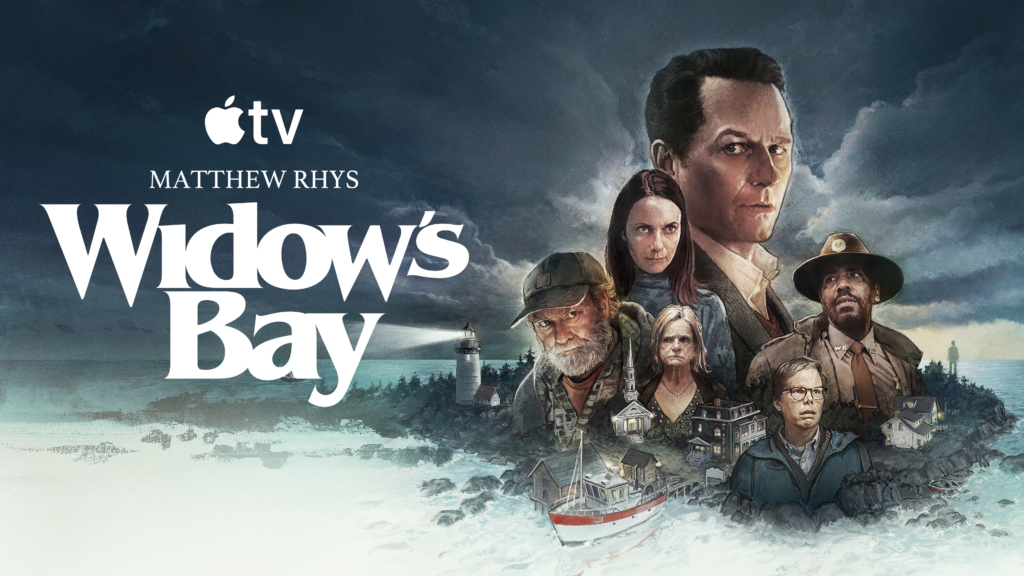
About Widow’s Bay
A New England mayor trying to boost tourism on his island must navigate strange events suggesting it might be cursed.
Widow’s Bay season 1 is now streaming in its entirity on Apple TV.