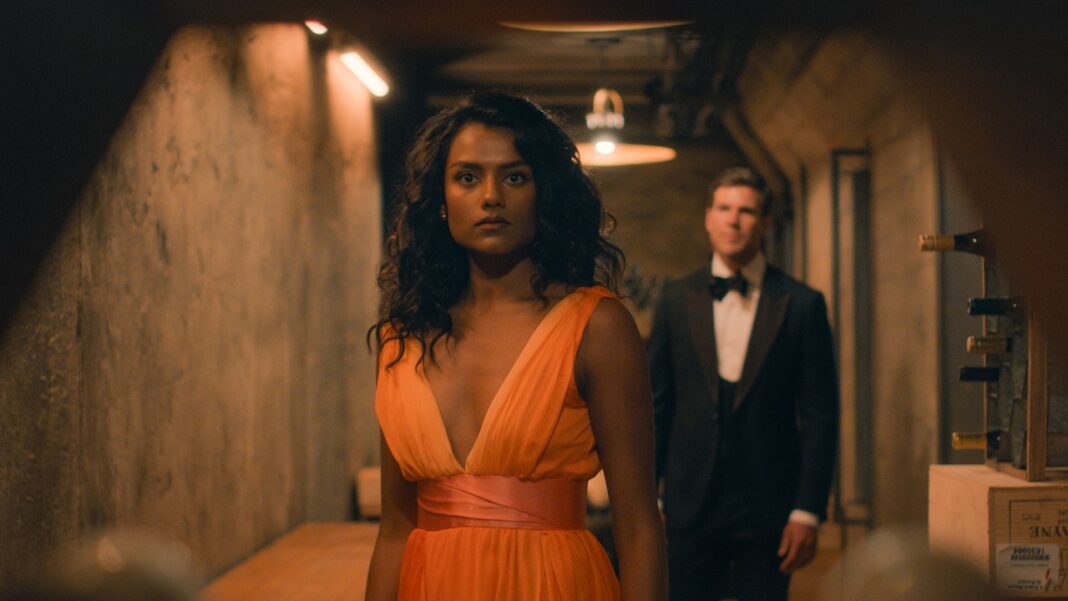

House of the Dragon Season 3 enters a dark Shakespearean tragedy. Get ready for the massive Battle of the Gullet right out of the gate
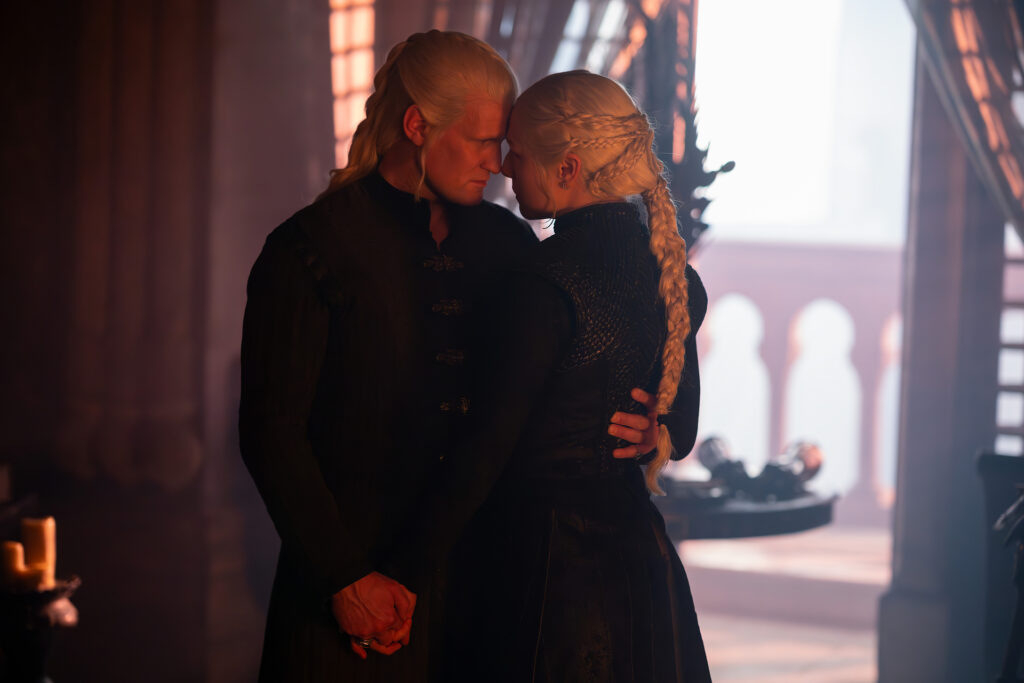
The realm of Westeros is gearing up for its highly anticipated return, and things are about to get significantly bleaker. As fans eagerly await House of the Dragon Season 3, the overarching narrative is shifting into a gripping Shakespearean family tragedy where the moral boundaries are blurring and an air of inevitability takes hold.
According to showrunner Ryan Condal, the upcoming episodes will test the characters under extreme pressure, pushing the conflict into its definitive next acts. With the literal and figurative dragons taking seven to eight months to craft alone, the grand scale of this massive television production promises to reward the patience of viewers who are hungry for the next chapter of the Targaryen dynasty.
Mama’s Geeky was fortunate enough to attend the virtual press conferences for the upcoming season, gaining firsthand insights into what lies ahead for Team Green and Team Black.
The conversations featured an impressive lineup of talent who have spent years embodying these complex figures. Representing Team Green, the panels featured showrunner Ryan Condal, Olivia Cooke (Alicent Hightower), Tom Glynn-Carney (Aegon Targaryen), Ewan Mitchell (Aemond Targaryen), Fabien Frankel (Criston Cole), and Gayle Rankin (Alys Rivers).
Standing firm for Team Black were Emma D’Arcy (Rhaenyra Targaryen), Matt Smith (Daemon Targaryen), Harry Collett (Jacaerys Velaryon), Bethany Antonia (Baela Targaryen), Phoebe Campbell (Rhaena Targaryen), Abubakar Salim (Alyn of Hull), and Steve Toussaint (Corlys Velaryon).
House of the Dragon Season 3 Press Conference Highlights
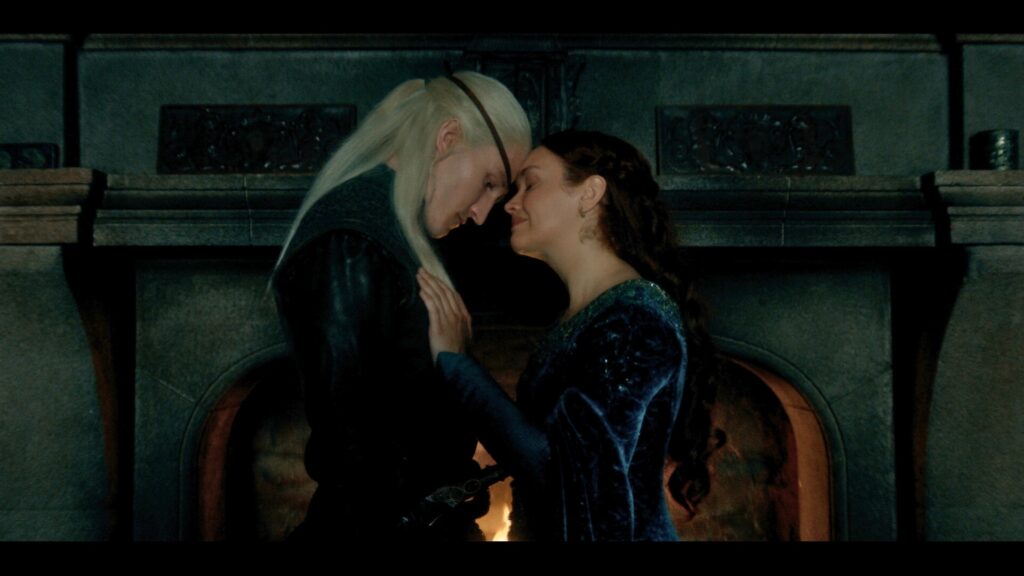
The premiere kicks off with the legendary Battle of the Gullet. Why was this saved for the Season 3 opener rather than closing out Season 2?
Ryan Condal: I don’t know that we saved it. It was more about logistical challenges, resources, and how to do justice to the greatest naval battle ever waged in the history of Westeros. In terms of the rhythm, Game of Thrones fans are used to a slow build that explodes near the end. The fun of this one was letting the bell ring in the boxing ring and coming out swinging with a haymaker right away. It puts people back on their heels, sets the tone, and proves we are playing for keeps now. It was really four years in engineering and planning.
Rhaenyra has largely been a sympathetic figure, but Season 3 hints at a much darker, morally complex evolution. How did you approach that shift?
Ryan Condal: That’s the special sauce of the show. Who a character is in a single moment does not mean that is who they are for all time; that would be boring. Rhaenyra was raised by Viserys, who was a flawed king that feared the dragons. In Season 2, she tried to rule by consensus like him. But eventually, you have to make moral compromises for family, claim, and self-preservation. We love playing with the “chosen one” trope and subverting it. When a main character believes the gods have chosen them to rule and backs them with six dragons, they start believing their own press. It justifies anything because the gods intended it. It’s an incredibly complex characterization that is sympathetic, warning, and tragic all at once.
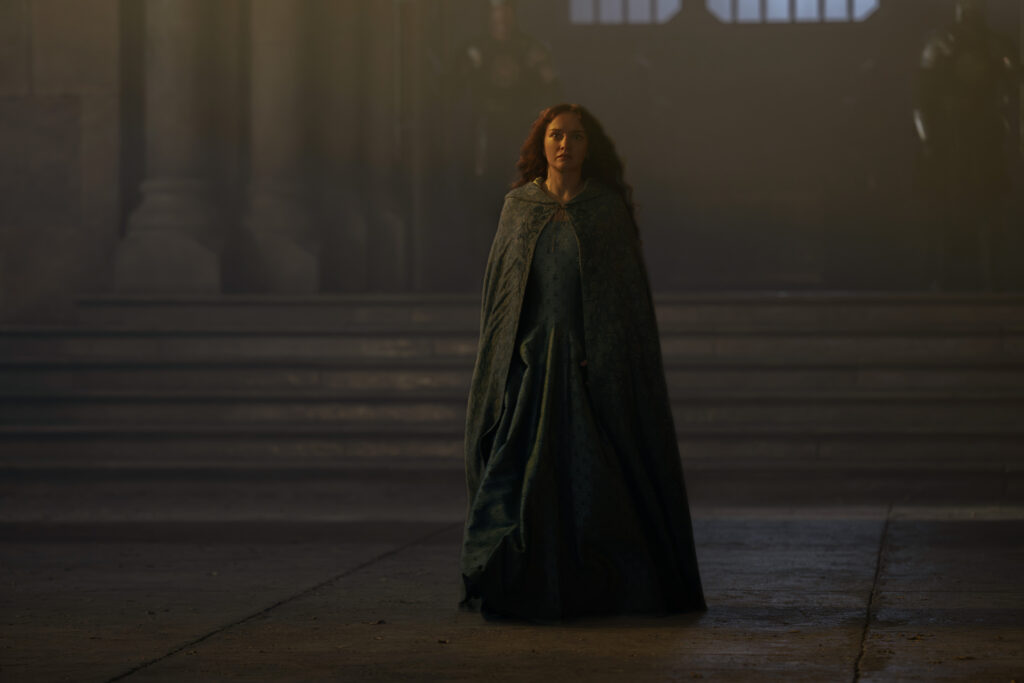
Where do we find Alicent’s mindset regarding her character development and the looming war this season?
Olivia Cooke: Personally, for Alicent, she is trying to enact the bargain that she made with Rhaenyra at the end of Season 2. She is really diligently trying to make sure that comes to pass, but of course, it’s House of the Dragon and nothing can run smoothly. She’s ultimately just thinking about survival, getting herself and Helaena out, and running for her life, really.
Now that you are three seasons in, how does it feel playing the character differently compared to when you started?
Olivia Cooke: We’re tired and haggard! No, it’s lovely, it’s really nice. Especially when new talent arrives on set, it’s nice to show them around because we’ve lived there now for five years. They come in and they’re so in awe of what has just become everyday to us now, so it’s great to live through them.
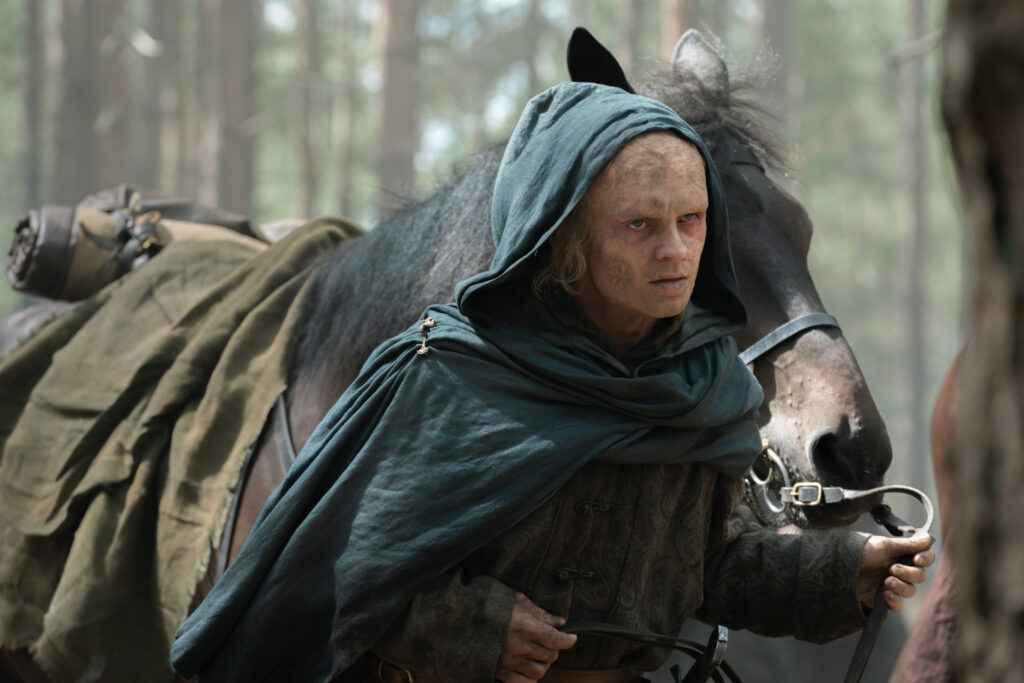
With the actors getting to know these characters over multiple seasons, how has your performance approach shifted?
Tom Glynn-Carney: You hit the nail on the head with us getting to know them better because it feels like less of a journey to actually meet the character now. We’ve lived with them for nearly five years, so they’re kind of extensions of us at this point. You get a deeper understanding and you get braver with your choices the more you know them. It’s a lot of fun.
If you could steal one weapon from anyone else on the set to use in the show, what would it be?
Tom Glynn-Carney: I’d probably swap out—and no offense to Sunfyre—but I’d swap Sunfyre out for Vhagar. It’s like a Mini Cooper versus a Monster Truck, so I’d be having her off Ewen! But weapon-wise, I’d probably go for the cat’s paw dagger—Paddy’s [Considine] dagger that then became mine. I’d take that and have it framed.
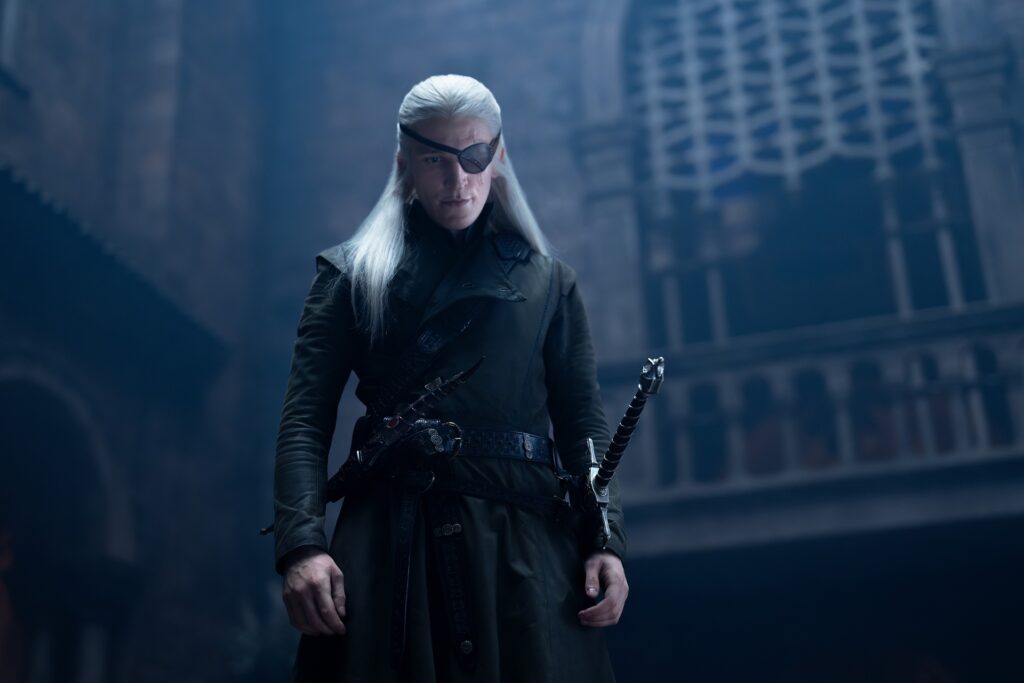
How did your preparation change going into this new season compared to the previous ones?
Ewan Mitchell: In Seasons 1 and 2, I always had a very calculated approach to Aemond. I wanted to learn the lines months in advance to shooting the scenes. For this season, I wanted to leave a lot of faith in the day, really just be organic on set, and work with my tremendous fellow cast members to see what hit spontaneously.
The scale of the visual effects and dragon riding is massive. What is it like managing those sequences?
Ewan Mitchell: A lot of dragon action. I’ve got to shout out Rowley Irlam, our stunt coordinator, because it’s a tremendous feat. The choreography for the large-scale battles we’ve got this season is just through the roof. It feels like they’ve broken records. What’s great is that so much of what is on screen is practical as well; we try to fill the frame with as much that’s real as possible.
The war sequences look massive this year. How does filming on those locations alter the experience for you?
Fabien Frankel: They are just a real blast. The hard scenes to do are the ones where you’re sat in the small council spinning a ball for three days. But the war scenes are amazing, especially when you get hundreds of background artists screaming at the top of their lungs. Because they are shot on location, you feel the real scale of it in a way that you simply can’t at Leavesden studios.
Do you think the characters truly believe they are fighting for the side of “good”?
Fabien Frankel: I think that’s what makes for interesting TV. If you had a bunch of people who were wavering on their own beliefs, you’d be pretty stuck for a storyline. But over the course of the show, they do start to question what they believe. Certainly, I felt that way coming into Season 3 and towards the end of Season 2, where Criston Cole started questioning his decisions a little bit.
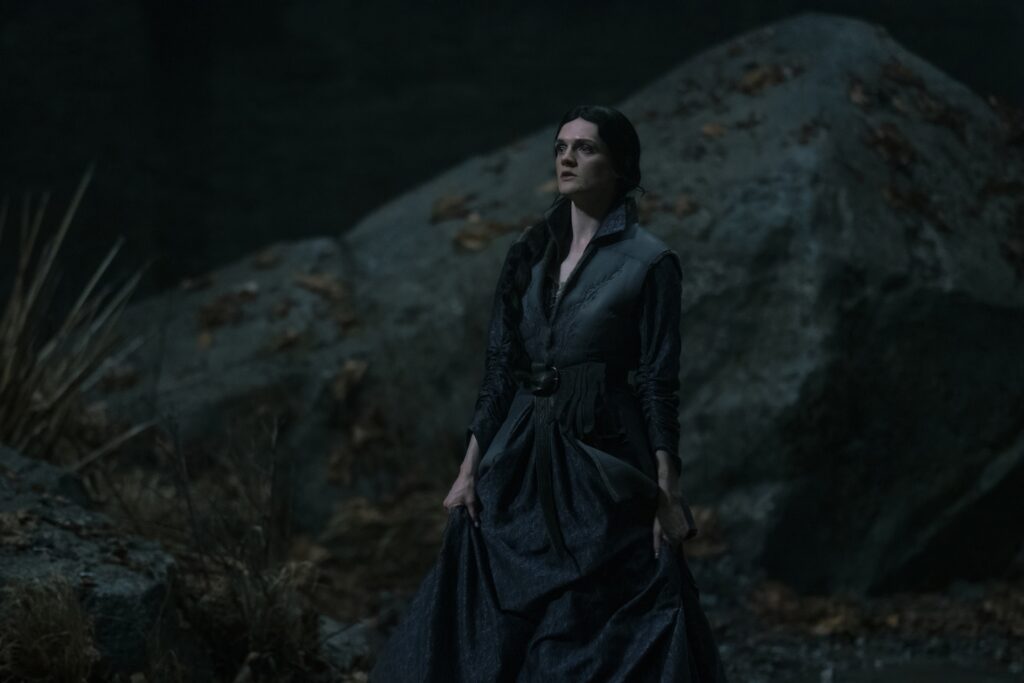
Without spoiling anything, what can you tell us about how Alys Rivers develops in relation to the war?
Gayle Rankin: We understand that Alys kind of has a larger overview of the world and what’s going to happen—a sense of foreboding. She wants to get involved, and she feels like she can potentially do some good. That probably brings out parts of her that we don’t expect, and actually relationships that surprise her.
As a performer, do you prefer the heavy dialogue scenes or letting loose with the fantasy action?
Gayle Rankin: I’m so afraid of acting, it’s weird that I do it for my job! But I love it so much. I love the meaty, emotional, talky stuff, but it’s also really fun to do something very strange, physical, and magical. There’ve been so many opportunities this year to do practical effects. You’re on a fantasy television show—that’s incredibly cool.
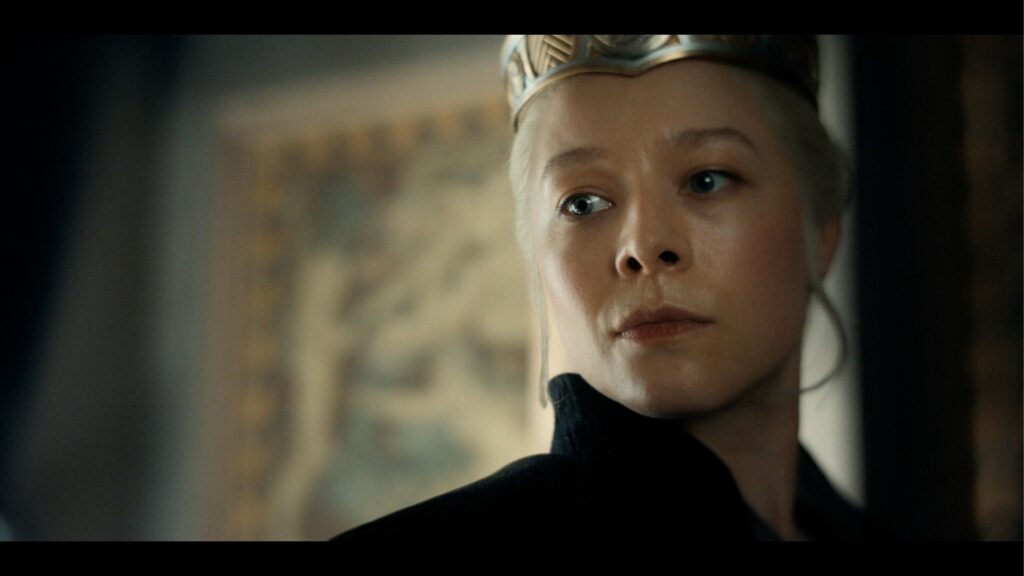
After playing Rhaenyra for years, has she influenced you personally? What has she taught you?
Emma D’Arcy: It’s a great question. There’s something nice over the course of three seasons watching a character who was once doubt-plagued, deeply self-questioning, and self-critical. Some of that has begun to fall away, for better or worse. I think there’s a positive lesson in there about being able to trust oneself and stand by one’s instincts. Perseverance. Which, in my experience, is just like going into your 30s.
We know you and Matt Smith share some incredibly intense scenes. How do you both psych yourselves up for those days?
Emma D’Arcy: I feel really fortunate because Matt is an incredible sparring partner. Although those days are intimidating because there is a high bar you’re looking to meet, I also come with a lot of excitement because we hold each other to a very high standard. We even had our High Valyrian oral exam this year, which was a massive run of text.
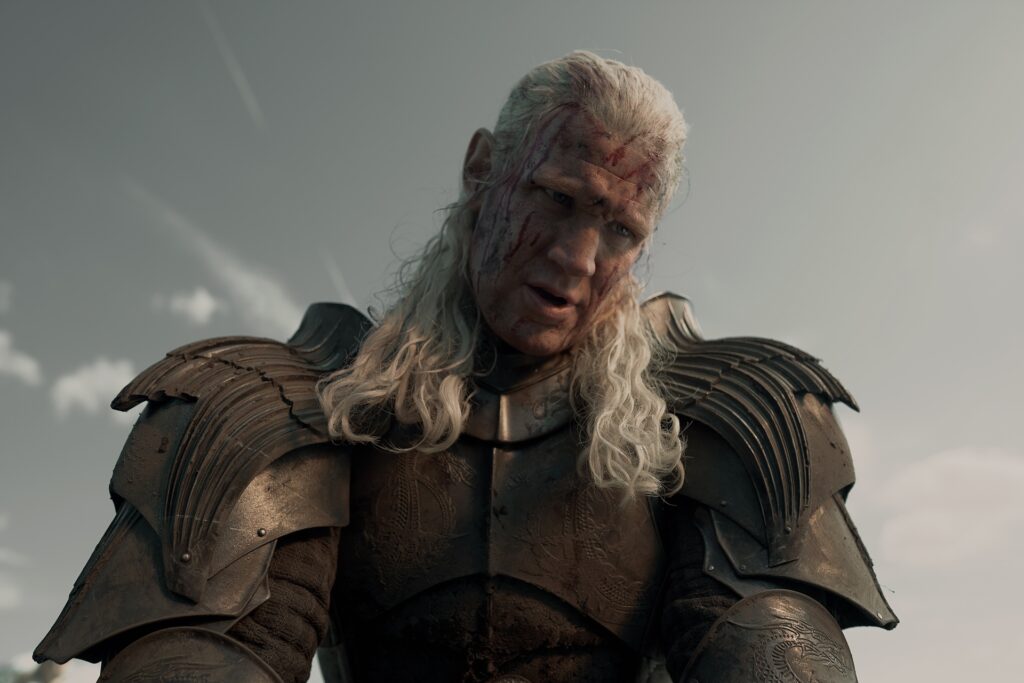
Where do we find Daemon’s headspace this season after stepping back into the fray at the end of Season 2?
Matt Smith: Daemon has been trying to raise an army for some time, and finally that addiction is about to be sated. He’s about to enter the element of his life where he feels most alive: war, violence, and chaos. He’s an agent of chaos. What’s strange is not a huge amount of time has passed since Season 1, so fundamentally, while the situations around him change, the essence of him is pretty similar to who he was at the start.
If you could recruit any fictional character from any universe to join Team Black, who would it be?
Matt Smith: I’m taking Mr. Burns, man. Give me Mr. Burns, stick him at the old council, and let’s get stuff moving. Come on, guys.
Is there a specific set that completely removed the need for imagination and made the acting click for you?
Harry Collett: Probably the painted table room. I spent many, many hours in there and I hold a lot of good memories in that space, so I’ll probably say that one. It’s a really nice, candle-lit room.
What can you tease about Jacaerys’ emotional journey this season?
Harry Collett: Through the whole way, you’ve seen Jacaerys just boiling and boiling up. Now, he’s reached boiling point and he’s very determined. He knows what he wants, he knows what he has to do, and he is not going to let anyone stop him from getting it. That’s all I’ll say.
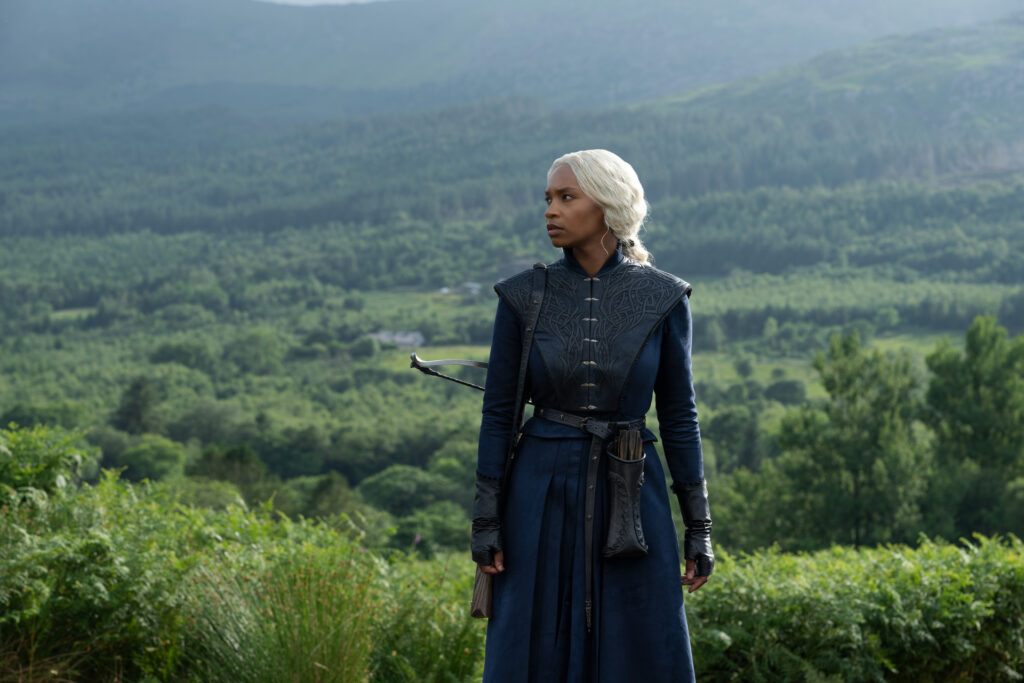
How is Baela handling her place within the family dynamics as the war escalates?
Bethany Antonia: Up until now, Baela has been trying her absolute hardest to carve out a sense of family, but every time she gets close to people, they’re taken away. She’s trying to find out where she fits when the people she looks to the most let her down consistently. This season, we see her grappling with having to change tactics, set her own path, and realize that preordained things aren’t necessarily what she stands by.
If you had to pick a fictional character outside of Westeros to help Team Black win, who are you choosing?
Bethany Antonia: Oh, maybe Iron Man might be quite useful. Yeah, or Ant-Man. We like Ant-Man.
What is the core internal struggle for Rhaena as she navigates Season 3?
Phoebe Campbell: What we really see are the inner struggles of Rhaena. This season for sure, she’s trying to prove something to herself more than anything else. And that is hard when she hits a lot of roadblocks. But as I say, God loves a trier and she’s trying. She used to have a strong sense of duty, but now she’s figuring out what her own identity actually means.
What has playing Rhaena taught you as an actress?
Phoebe Campbell: For sure, Rhaena has taught us all how to keep trying. You’ll fail, and you’ll fail again, but you keep going. That’s what I’ve taken from her.
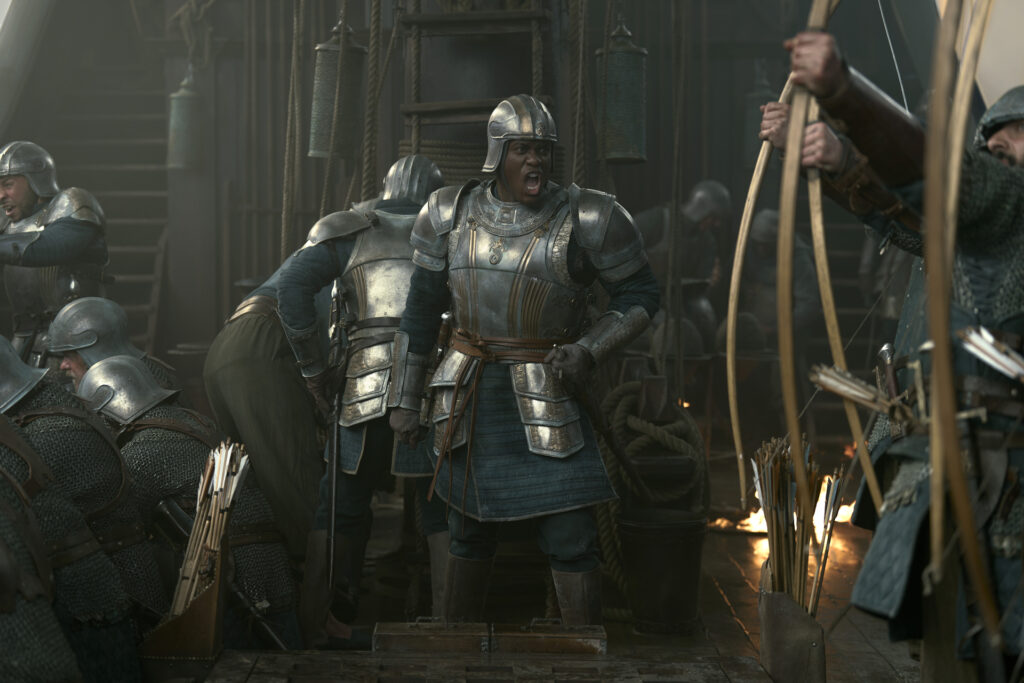
Which set or sequence took your breath away and helped you get into character?
Abubakar Salim: Definitely the boats and the whole kind of madness that the crew were able to create. The brilliance of working on this production is that everyone is there to help you get into the zone. The boats and the whole battle sequence of the Gullet was sensational because it is terrifying not knowing how you’re going to pull off something so big, but doing it with that team was phenomenal.
Where does Alyn stand with Corlys following the raw emotional notes their relationship ended on last season?
Abubakar Salim: We left Season 2 with Alyn very vulnerable and raw with Corlys. Season 3 really explores that wound. It’s almost like Alyn threw a challenge to him: “If you really truly see yourself as a father, let me see that.” It dives into what makes these people human rather than just seeing themselves as titles and gods, and where Alyn fits into this huge political mess.
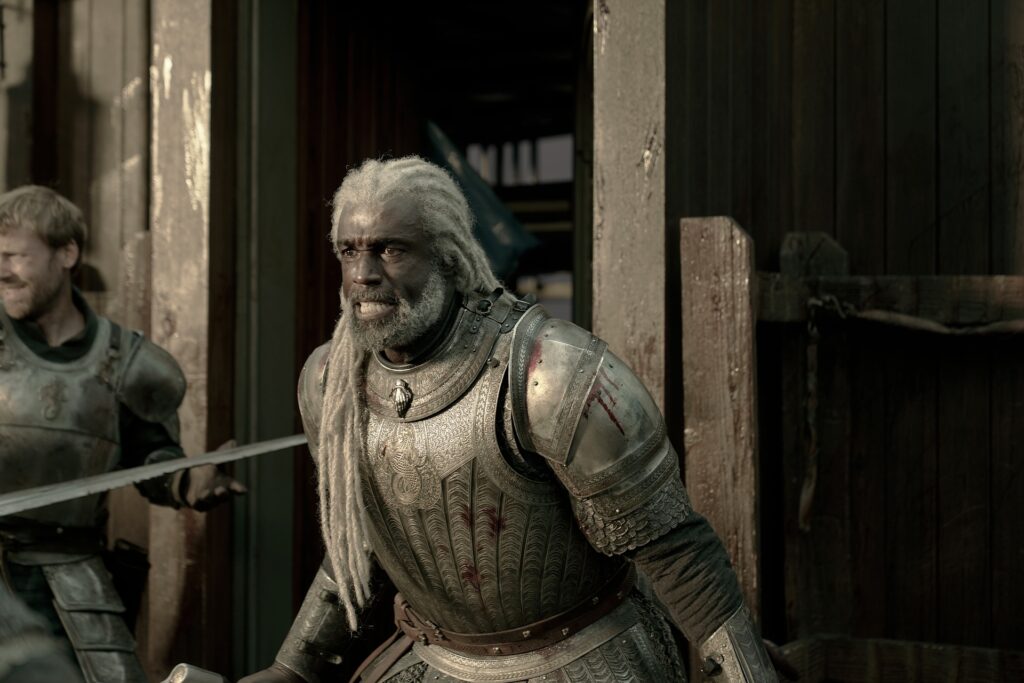
Corlys has faced devastating loss. How does that grief translate into his actions in Season 3?
Steve Toussaint: He’s still going through massive changes and grieving, but now his wife is gone and he is kind of rudderless. For the first two seasons, he was very clear about who he was, very intransigent, and lacked patience. Now, he’s having to show humility and vulnerability, which he’s never done before. At the same time, a lot of his season is tied up in rage over the sacrifices he’s made for this cause without being justly rewarded in terms of his legacy.
In the books, Corlys coordinates the Battle of the Gullet from behind the scenes. Will we see him get more hands-on in the show?
Steve Toussaint: He is not in the back coordinating in our version of the Gullet. He leads by example, and he leads his men. So, yeah—he’s swinging.

About House of the Dragon Season 3
The reign of House Targaryen begins with this prequel to popular HBO series “Game of Thrones;” based on George R.R. Martin’s “Fire & Blood,” “House of the Dragon” is set nearly 200 years before the events of “Game of Thrones,” telling the story of the Targaryen civil war with King Viserys I Targaryen’s children battling for control of the Iron Throne.
Season three of HOUSE OF THE DRAGON debuts SUNDAY, JUNE 21 (9:00-10:00 p.m. ET/PT) on HBO and will be available to stream on HBO Max. The eight-episode season will continue with one new episode weekly through August 9.