
Mama’s Geeky attends the Toy Story 5 global press conference, where the creators tease rogue Buzzes, technology as a villain, and Jessie’s moment.
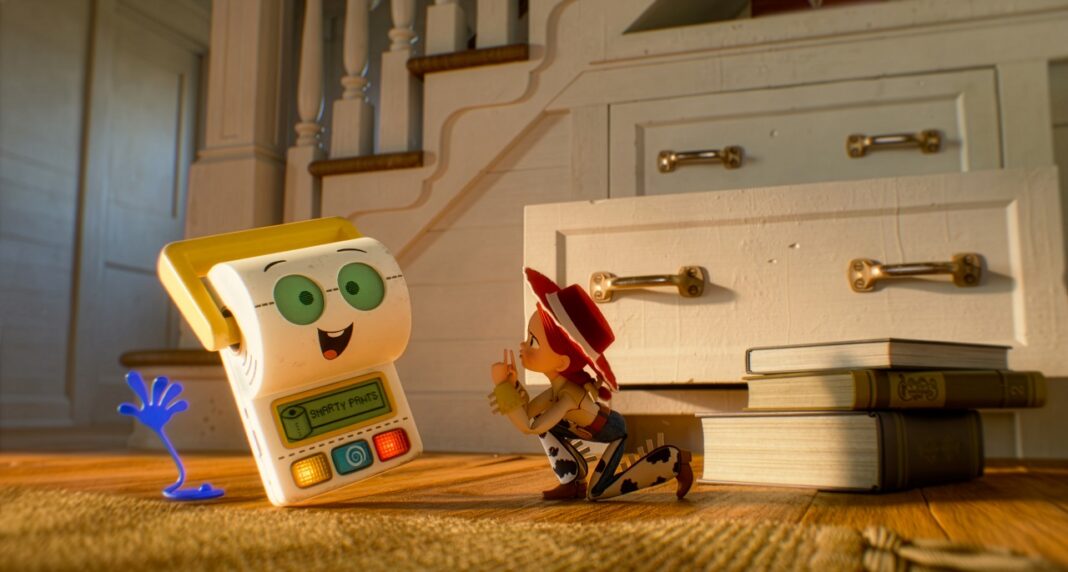
The beloved Toy Story franchise is returning to the big screen with its highly anticipated fifth installment, exploring the modern realities of growing up. This time around, the narrative centers on Bonnie, whose childhood is heavily influenced by a brand-new tech device named Lilypad.
Serving as the central antagonist, Lilypad introduces a completely flawed philosophy built around numbers and checklists, directly threatening the organic human nature of play and imagination. With Jessie stepping up as the main protagonist and running the room, the film tackles the complex balance between traditional toys and advancing technology.
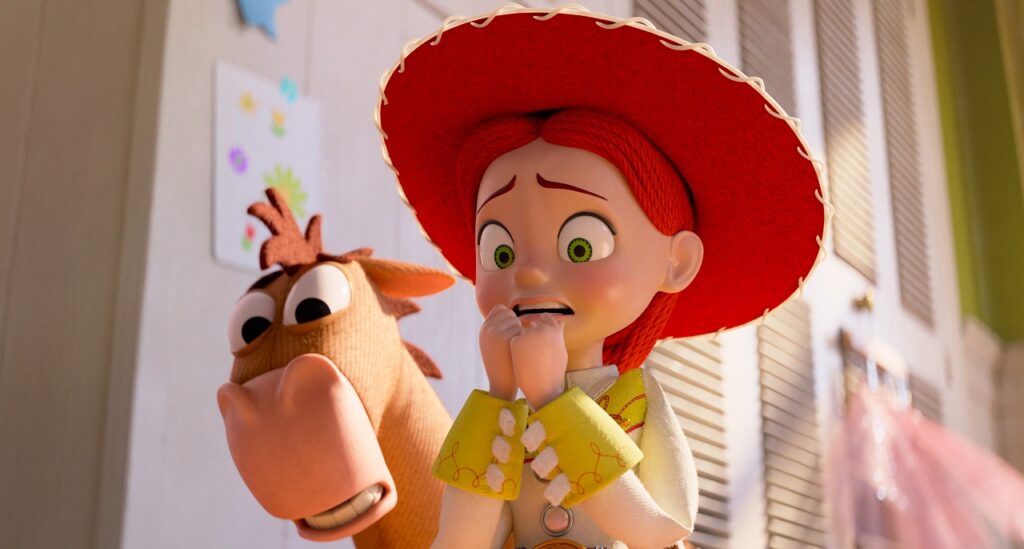
Mama’s Geeky had the pleasure of attending the global press conference for Toy Story 5 which featured co-director and writer Kenna Harris, producer Lindsey Collins, and executive producer and Chief Creative Officer Pete Docter. They all discuss what brought them back to these iconic characters.
The filmmakers teased incredible behind-the-scenes secrets, from an initial draft that featured 50 rogue Buzz Lightyears washing ashore to the immense creative challenge of balancing a massive roster of fan-favorite characters. They also delved deeply into how animation technology has evolved over the last 30 years and what they hope audiences – both kids and adults – take away from this emotional new chapter.
Toy Story 5 Global Press Conference Highlights
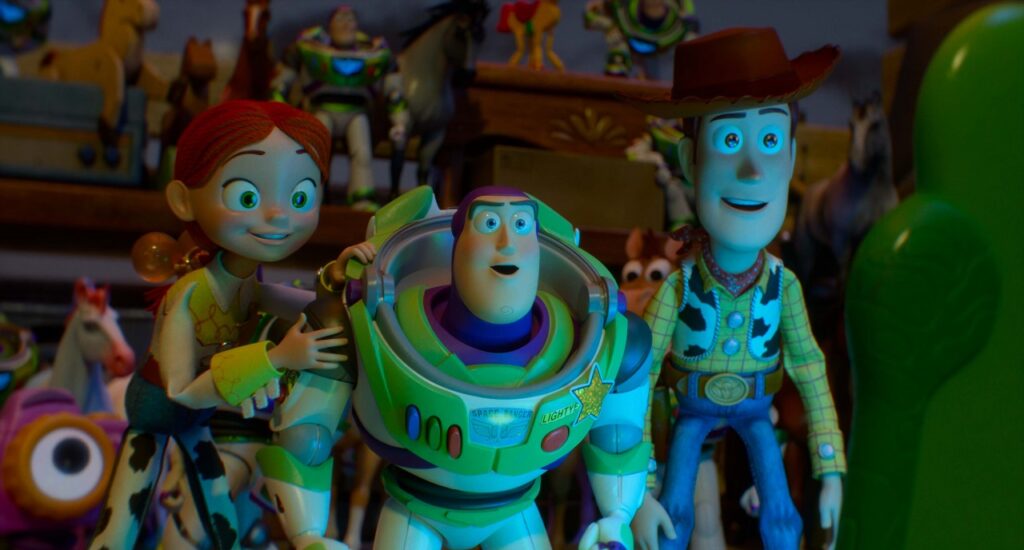
Question: What convinced you all that there was still a story worth telling, and why was now the right time to return to these characters?
Kenna Harris: “Andrew Stanton… was only interested if, you know, he could really take it where he wanted to see it to go. And his first draft included these kind of three core ideas of devices being introduced. He already had Lilypad kind of envisioned as an antagonist. He wanted Jessie to be running the room now that she had had the sheriff badge passed to her. And then he really wanted to see 50 Buzzes going rogue in the film and washing ashore in the beginning on a beach…”
Kenna Harris: “When Andrew first kind of asked if I wanted to join as co-director, there was like the briefest moment of like, ooh, that’s intimidating… And then I went, wait, is he asking me to write Jessie fan fiction with him? Then I’m the perfect choice. And so I immediately kind of fell into it with a lot of joy.”
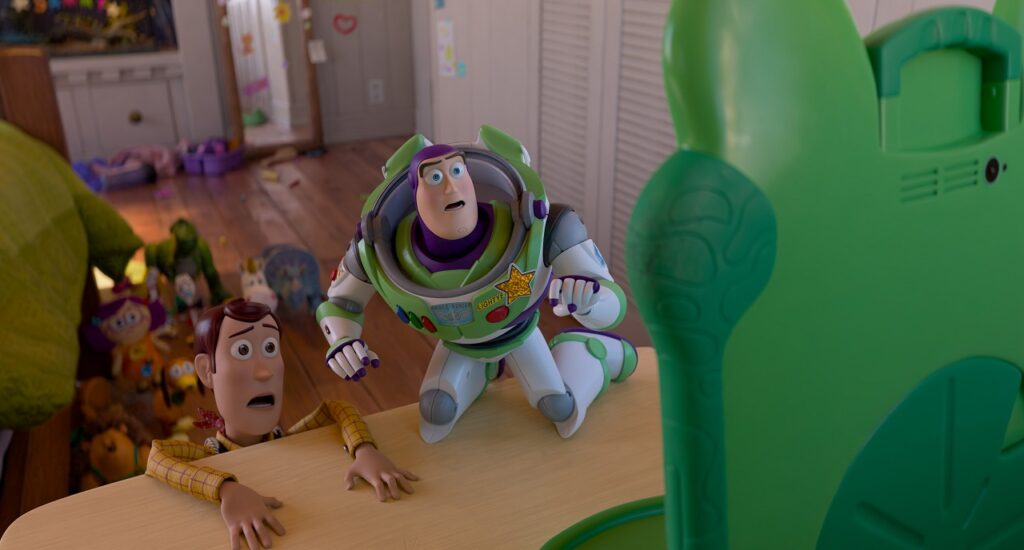
Question: How did you decide to incorporate technology as a bit of a villain, and how did you navigate threading that into the story?
Lindsey Collins: “I think we just started with reflecting what we were seeing… and rather than try to come in with kind of a take on it, it was just like, okay, let’s start with just kind of representing what we are all feeling is our complicated relationships with technology, what we’re seeing in terms of our kids’ relationships with technology, and start there so that we can kind of start from a place of truth rather than a place of judgment around it.”
Lindsey Collins: “Obviously, she’s coming in with the same kind of initial intent of all the toys, which is I’m here to help. I have a purpose. I care about this kid and I’m going to help. I have an opinion about how to do it and it’s completely flawed. It’s all about kind of all the data and all the numbers… And that is completely in contrast to Jessie. And that all of a sudden, starts to provide drama and fun.”
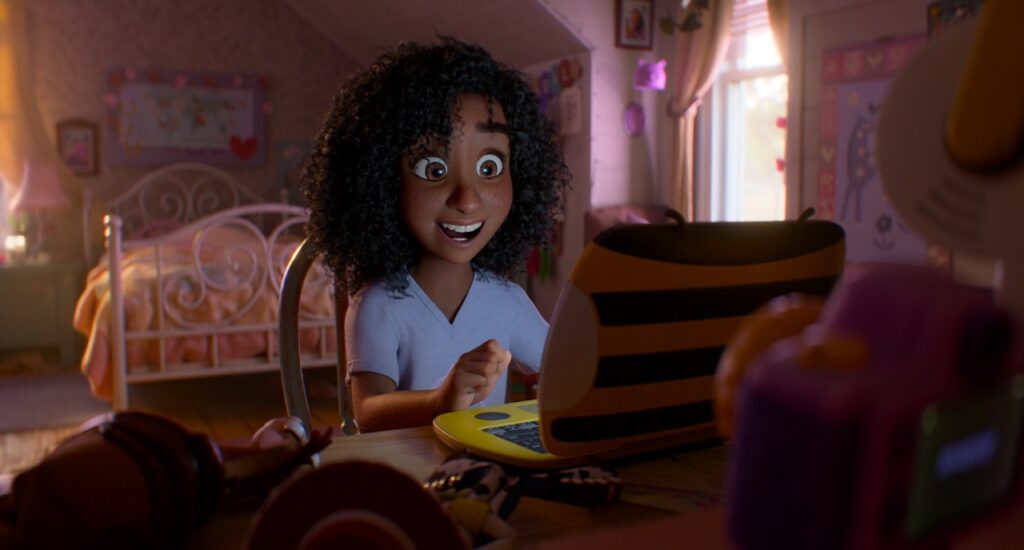
Question: How do you balance introducing new characters while ensuring smaller supporting fan-favorites still get their moments?
Pete Docter: “We have a process that allows us to get it wrong many, many times. And so we take our first pass. In fact, I think Andrew is pretty blatantly like, I’m not worried about the other characters. I know I remember him saying this in the one of first or second screening, like, these other characters have to be balanced. I’m just focused on the through line of the main character. We can get to all that. So it really — the old adage is writing is rewriting is definitely right on in our case.”
Kenna Harris: “It just ended up — practically each day, it still just ended up being a challenge. And I feel like the ways we accomplished it really varied… Like, sometimes it was a roll of the dice of like, all right, who hasn’t spoken in five minutes? Like, let — it’s Dolly. Let’s give Dolly a line. And so there was kind of truly, like, at times, mad scramble.”
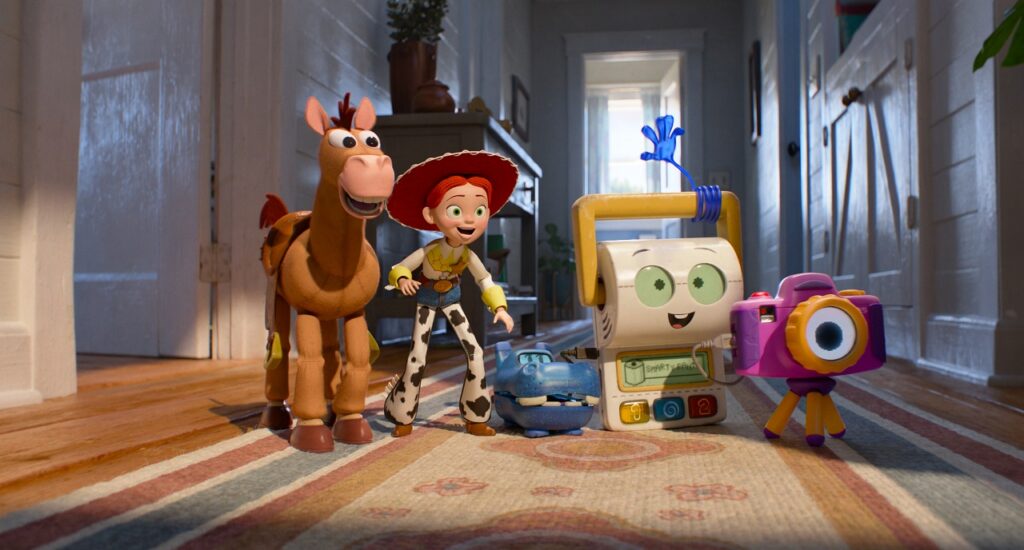
Question: Can you discuss how animation technology has evolved since the first Toy Story?
Pete Docter: “In Toy Story 1, if you remember, Woody gets his forehead burned by Sid with the magnifying glass… We could not do water. So we just had a long meeting, and we talked about, like, how do we do this?… Now, in Toy Story 5, Jessie runs into the house and Mom comes home and she plants in a bowl of pig water. So it comes full circle. We’re able to do that sort of thing now that was near impossible back in the ’90s.”
Pete Docter: “Similarly, the animators now have so much polish. I mean, they’re so good. If you go back and look at the animation in Toy Story 1, it’s sort of like clunky and lacks weight. But the performance is the same. I think that’s the consistent thing is that we’re always focused… The technology is going to wow you for about three seconds. And after that, it’s got to bring it in terms of what it’s saying. It’s got to have some emotional thing and a connection that the audience recognizes as real in the performance.”
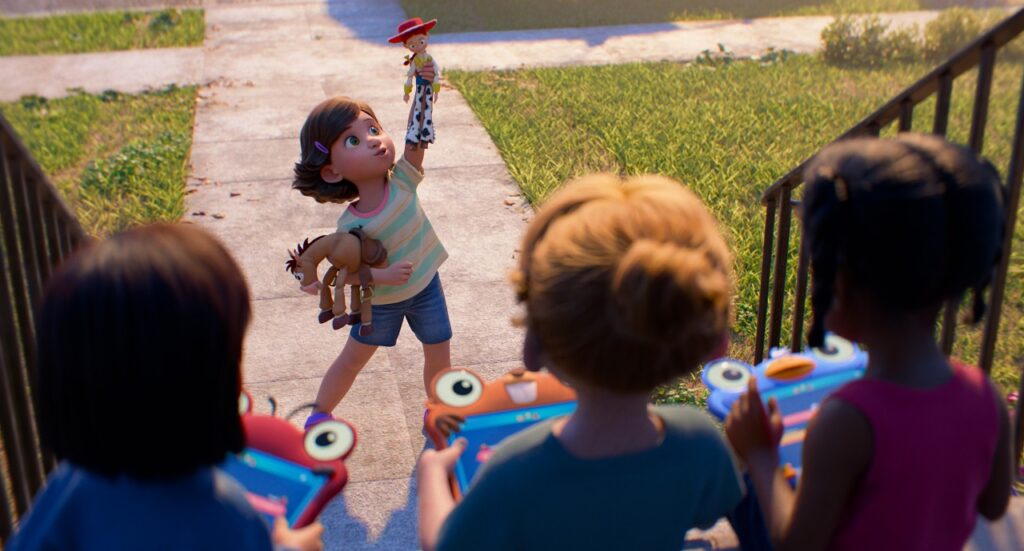
Question: What emotional territory does Toy Story 5 explore that previous films did not?
Kenna Harris: “Well, it’s naturally kind of exploring the interiority of a kid’s life more than the previous films did… not only is there this kind of practical issue of, you know, Bonnie being raised with maybe a little bit less play, a little bit less imagination, but a lot of the social aspects of her life is complicated by Lilypad. And it just felt like this awesome natural progression that Jessie, you know, it is the biggest challenge she’s faced yet…”
Lindsey Collins: “I think for Jessie… it ultimately kind of settled on like the fact that this realization of impact and the understanding that it doesn’t matter how long you’re with somebody, you can impact their lives in just a moment at times. And that that gift of knowing that impact is so incredible. As a parent, I’m always questioning, like, am I making a difference with my kids?”
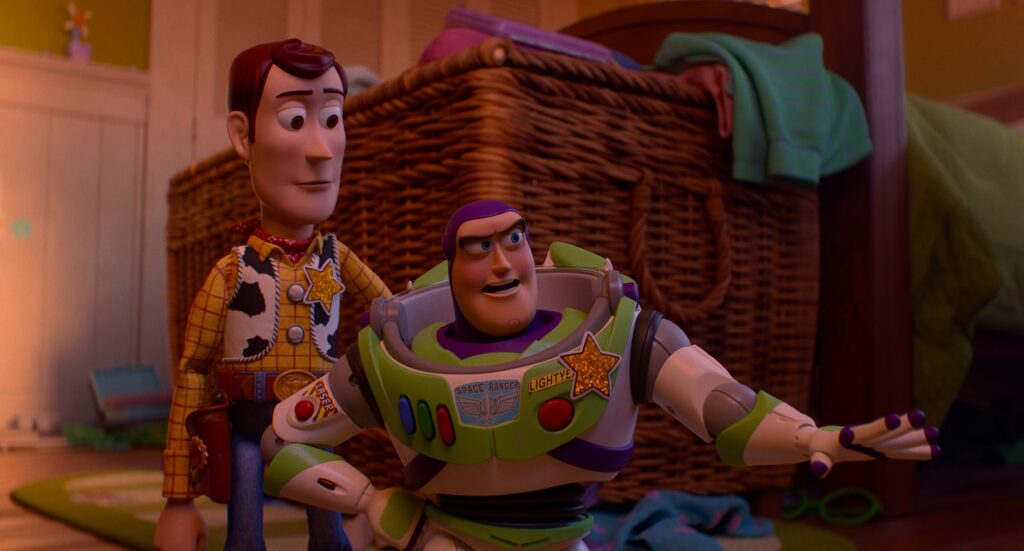
Question: As you look back on the 30-year journey of the franchise, what do you hope audiences take away from this film?
Pete Docter: “I think the thing that I keep coming across with all our movies and even individually as a person is that inevitably people think it’s up to them and that somehow they’re going to do it by themselves. And what we learn over and over is it takes a community. It takes a village of people. To all be aligned and come together to really make these things work.”
Lindsey Collins: “I mean, I talked a little bit about what I love about this film, which is this sense of kind of the acknowledgment of impact. And again, that’s not to say that is just purely kind of, oh, I had an impact on other people, but also recognizing the importance of giving the people the gift of telling them of an impact they’ve had on you. I really thought that was really such a lovely way to wrap up the story for Jessie.”
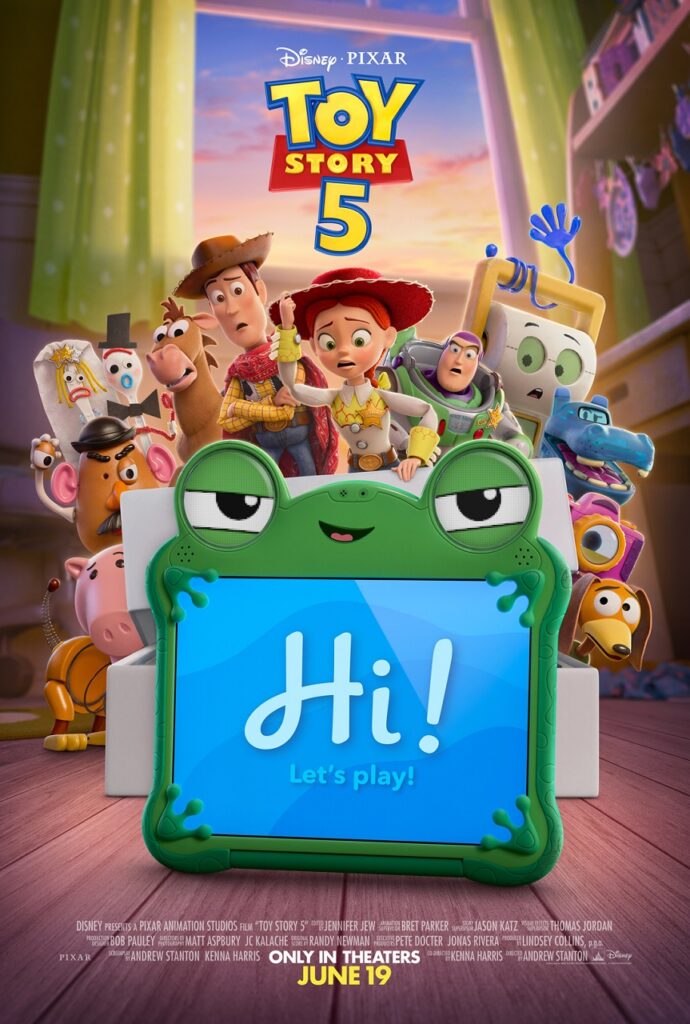
About Toy Story 5
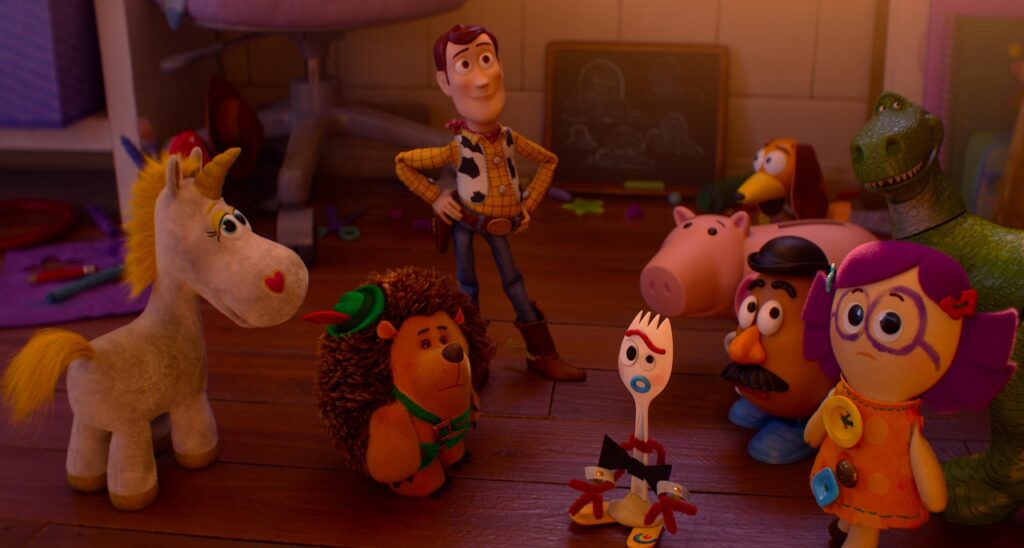
The toys are back in Disney and Pixar’s “Toy Story 5,” and this time it’s Toy meets Tech. Woody (voice of Tom Hanks), Buzz Lightyear (voice of Tim Allen), Jessie (voice of Joan Cusack) and the rest of the gang’s jobs are challenged when they come face-to-face with Lilypad (voice of Greta Lee), a brand-new tablet device that arrives with her own disruptive ideas about what is best for their kid, Bonnie. Will playtime ever be the same?
Toy Story 5 comes to theaters everywhere on June 19th.