
White Noise starring Adam Driver played at the 2022 Venice Film Festival and is now streaming on Netflix — and this movie needed to be a musical.
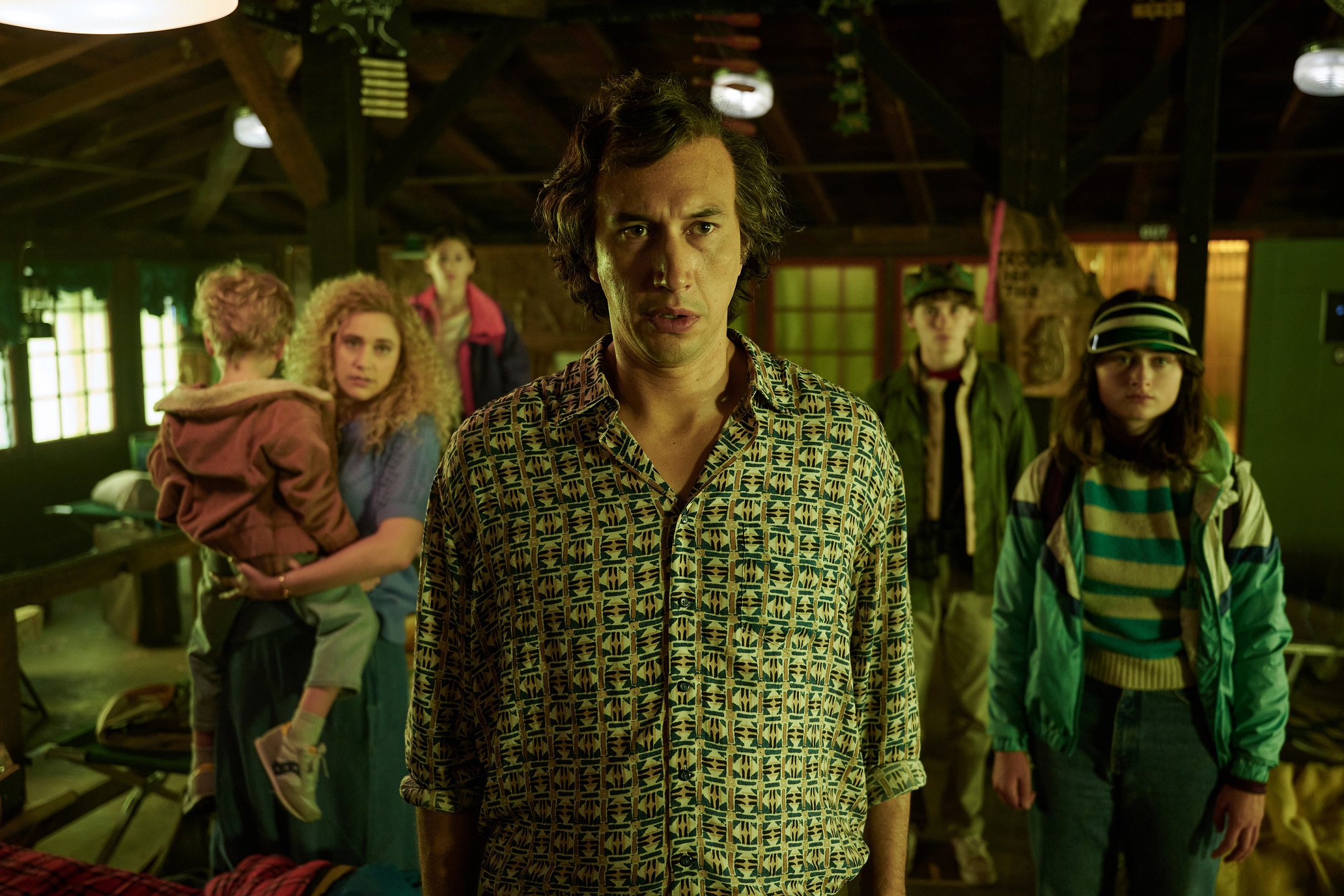
Three years after earning universal praise from the festival crowd with his humanistic portrayal of divorce and love with Marriage Story, even earning a Best Supporting Actress Oscar. Noah Baumbach returns to the festival circuit with WHITE NOISE: Following the story of Jack Gladney, a professor of Hitler studies at The-College-on-the-Hill, husband to Babette, and father to four children/stepchildren, who is torn asunder by a chemical spill from a rail car that releases an “Airborne Toxic Event”, forcing Jack to confront his biggest fear – his own mortality.
The film is a mix of Baumbach trademark’s: once more teaming up with Adam Driver and directing his wife Greta Gerwig, and a new challenge for the seasoned writer/director where this is his first film to be an adaptation, in this case of Don Delillo’s homonymous novel.
This blend of two unique storytelling voices, and mediums, makes for one eclectic result and is really a story in three parts.
The first part is where family dynamic becomes immediately recognizable for Baumbach fans, with wonderfully quirky personality clashes that vibrate off the screen as Driver and Gerwig play an off-beat couple who are also parent to an eccentric group of children, and also provides insight into the issues that plague the family: from anxiety, to addiction, to existential dread.
Tonally a perfect representation of the film’s genre-blend present throughout the entire film, yet there’s enough separation as Baumbach fully brings it together in the second part: where horror elements are followed by slapstick comedy and road-trip tropes are met with an end-of-the-world epic disaster.

This mix feels like what it would be if an Adam McKay script was directed by Wes Anderson, a wonderfully amusing with a ton of whimsy as character dynamics are broadened and there’s a ton of hot topics being discussed but in a necessary over-the-top way, but it’s also where the film feels at its most lost and pointless: there’s a sequence of events that have no pay-off and barely connect to anything else in the film, creating a structural disconnect between the parts that make the whole, it only shows how admirable it is that Baumbach took such a huge gamble with this film, and how it clearly was a passion project for him, it just doesn’t fully work.
Where the character dynamics are deepened, it only highlights how moving forward in the film this wonderfully compelling dynamic falls by the wayside to never be seen or be of importance again once the film changes tone and style once more. Where the first part subtly hinted at Baba’s troubles through the oldest Denise (Raffey Cassidy) and her worries for Baba, giving way to the second bringing Jack and Denise together in their worry, finding a compelling connection between estranged stepdaughter and father; the third forgets her, along with the rest of the children up until the crazy closing credits.

Leading us to the third part which dives into what’s been haunting Babette during and post the Airborne Toxic Event: her drug use and how it’s connected to Jack’s existential fear of death, bringing the two together in a tender manner, the kind of genuine human connection amidst the silliness which Baumbach effortlessly captures to expand on characters’ motivations.
This focus on Jack and Babette torn relationship once more shifts the genre into an absurdist crime thriller that while promising in concept, feels too much like an entirely different movie to ultimately connection emotionally.
Ultimately what White Noise had going for it the most is how all its parts and elements had one thing in common going for them: This film needed to be a musical. It’s an odd issue to have with a movie, but in all its visual and tonal panache combined with the lyrically sounding dialogue exchanges, a musical number wouldn’t have felt out of place, in fact the film’s entire closing credits sequence is one giant musical sequence that quite excels in its visual and stylish simplicities, illustrating what all the mishmash of tones and genres was missing all along as connective tissue.
The characters and the way they interact so off-balance with the world around feels like direction one would take within the context of a musical and would’ve helped in this major shift when it comes to Baumbach’s storytelling abilities. Where he has always excelled at is authenticity: in character, in story, in feel, in drama and emotion and by foregoing that, his unique voice doesn’t get entirely lost, but someone silenced amongst the rest of the noise.
WHITE NOISE just never fully clicks. While Baumbach’s trademark family dynamics are presented through with a quirky blend of tradition & modernity, its several parts feel jarringly distant from one another, with themes that are lost in translation, and a clamor for identity that never comes to life. Always ambitious & interesting, never engaging.
FINAL GRADE: C+
NEXT: Annette Review: A Bizarre, Dark, & Creative Rock Opera

About White Noise
At once hilarious and horrifying, lyrical and absurd, ordinary and apocalyptic, White Noise dramatizes a contemporary American family’s attempts to deal with the mundane conflicts of everyday life while grappling with the universal mysteries of love, death, and the possibility of happiness in an uncertain world.
White Noise played at the 2022 Venice Film Festival and is now streaming on Netflix.


