Global K-Pop Group AtHeart releases ‘Plot Twist’ Remix Package and launches U.S. Promotional Tour ahead of their American debut.
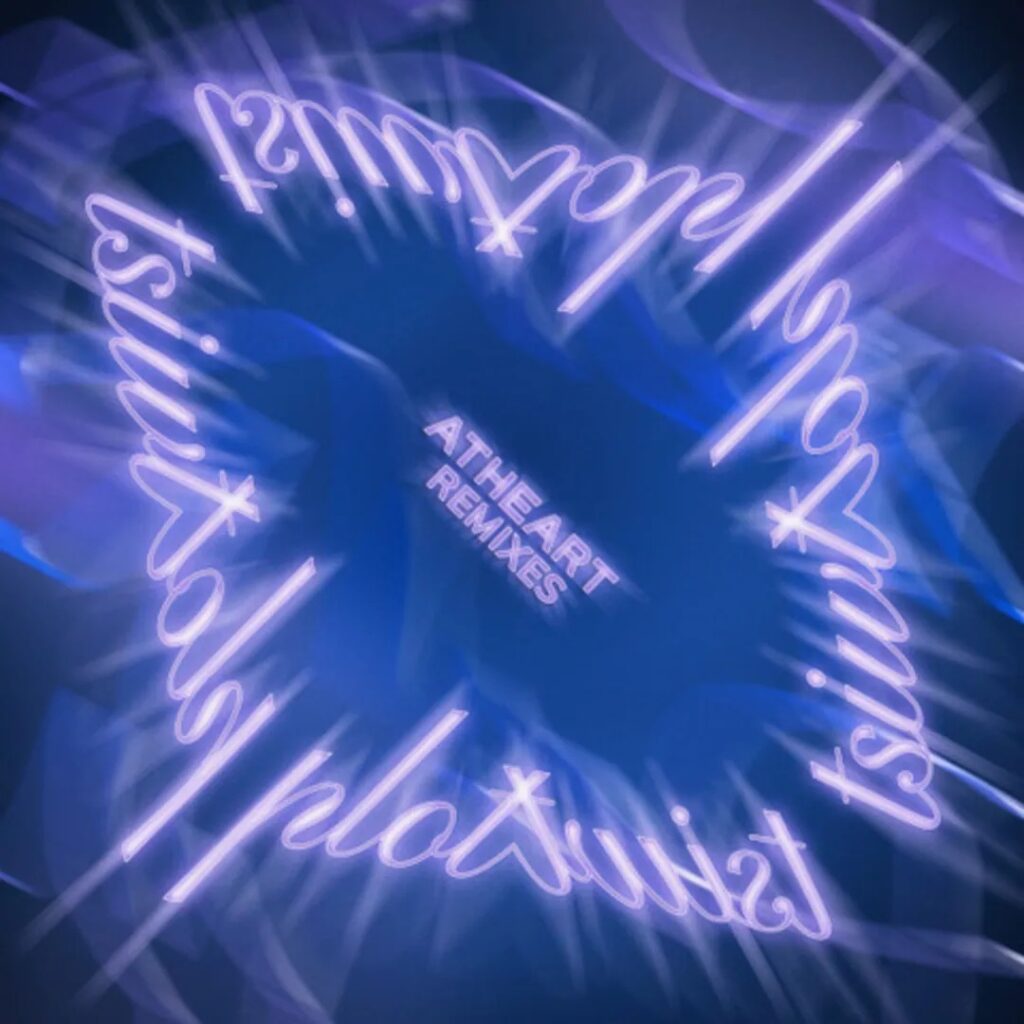
Global K-pop group, AtHeart, continues to build international momentum with the release of Plot Twist (Remixes), available Friday, October 31 at 1 PM KST across all major global digital music platforms.
The remix package offers six tracks in total, including the original version, the recently released English version, and four new remixes in collaboration with internationally recognized DJs Cat Dealers and Tsu Nami, as well as “sped up” and “slowed + reverb” versions that reinterpret the group’s breakout debut single.
Brazil’s top electronic duo, Cat Dealers, elevate the track’s festival energy with an EDM-driven rework, while Los Angeles-based Tsu Nami introduces melodic and atmospheric elements that highlight the group’s global versatility.
Plot Twist was crafted by a powerhouse team with credits spanning East and West – including work with Chappell Roan, Camila Cabello, Shawn Mendes, BTS, IVE, and more. The track was produced by Jonah Shy and Jack Laboz, written by Hilda Stenmalm and David Charles Fischer, and mixed by Grammy-winning engineer, Rob Kinelski (Billie Eilish).
AtHeart U.S. Promotional Tour
Following the release, AtHeart will commence an extensive U.S. promotional tour, beginning with a fan event titled, “AtHeartExperience,” on November 1 at TITAN CONTENT’s Santa Monica headquarters.
Recognized by The Hollywood Reporter, NME, and Rolling Stone as one of the “K-pop Groups to Watch in 2025,” AtHeart continues to strengthen its global profile.
The group’s debut track Plot Twist achieved No. 1 on Kugou Music Korea, charted on QQ Music and NetEase, and accumulated over 17 million streams, 15.9 million YouTube views, and over 1.1 million channel subscribers, establishing AtHeart as one of the most promising emerging acts shaping the next era of K-pop.
About AtHeart
Formed under TITAN CONTENT, AtHeart is a global K-pop group representing new paradigm of K-pop. Since debuting in 2025, the group has garnered international attention for its polished production, dynamic performances, and genre-blending sound that bridges Eastern and Western pop influences. With a rapidly expanding global fanbase and chart-topping releases, AtHeart continues to define a new standard for the next generation of global K-pop acts.
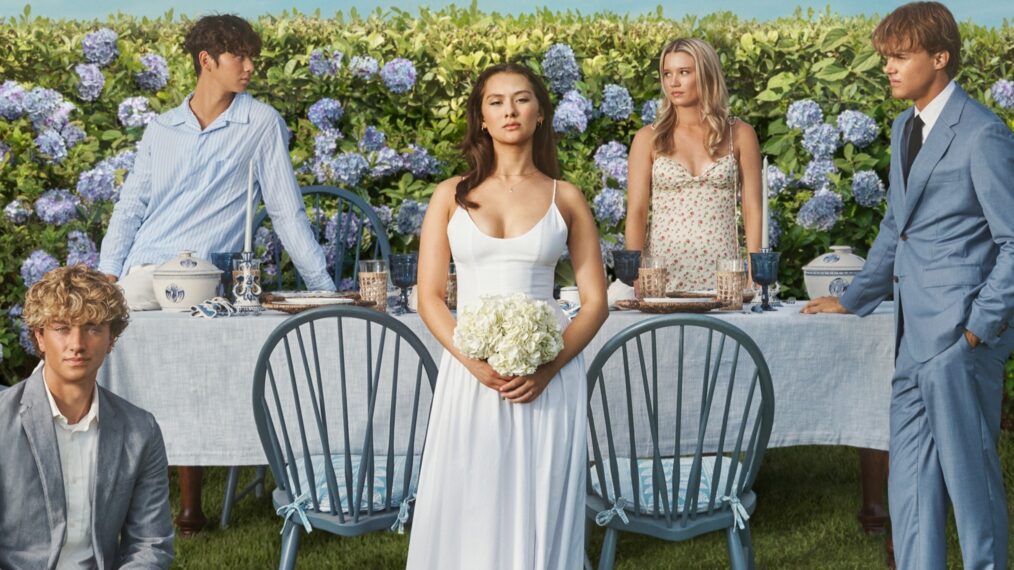
Jenny Han reveals she wrote a heartfelt letter to Taylor Swift to secure “The Way I Loved You” and land The Summer I Turned Pretty‘s perfect soundtrack.
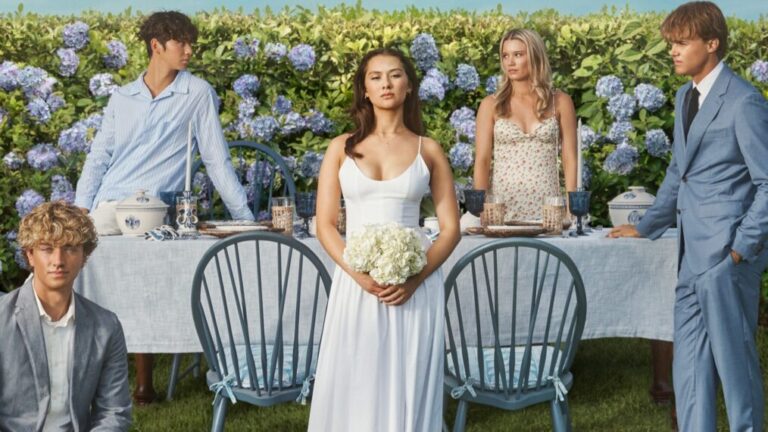
The global success of Prime Video’s The Summer I Turned Pretty is due, in part, to its flawless emotional integration of Taylor Swift’s music. The songs don’t just set the scene; they narrate the profound emotional journey of Isabel “Belly” Conklin and the rest of the beloved cast.
In a recent press conference, creator, showrunner, and executive producer Jenny Han (who is also directing an upcoming spin-off movie) provided details on the show’s music, casting, and her efforts to maintain the original books’ intimate, singular voice.
Securing the Soundtrack: A Letter to Taylor Swift
As a massive Swiftie, there was no way I could let this press conference happen without sneaking in a Taylor Swift question. When asked about integrating Taylor Swift’s music so beautifully, Jenny Han revealed the specific, pivotal song she fought to secure for Season 1, along with the heartfelt letter she wrote to the pop icon to make it happen.
Jenny Han’s Non-Negotiable Song For The Summer I Turned Pretty
Jenny Han explained that the key to landing the expansive Taylor Swift catalog was nailing the moment for one specific song: “The Way I Loved You.” This track was integral to a The Summer I Turned Pretty Season 1 finale scene featuring Belly and Conrad, and Han knew the moment wouldn’t work without it.
“I really didn’t know if we were going to be able to get the song that I really wanted, which was The Way I Loved You. And that was really important to me to have that song because I had even pitched the show with that song. And I knew exactly how I wanted it to go, where he’s standing up and looking at her, and then it had that swell of the music. And so I really, really knew that we needed that song. And so, that’s when we approached her team. And I wrote a letter, a very heartfelt letter, just explaining to her how much her music meant to the fans of the show, who I knew would just be beyond thrilled to have… Well, the fans of the books, I should say, because the show wasn’t even out yet. And so we were really lucky that she said yes. And so then I was like, okay, well then, can we also have these songs? And they said yes.”
The Evolution Of The Love Triangle
Han was quick to address the fans’ who have waited around for the final season of The Summer I Turned Pretty, assuring viewers she was always going to deliver the emotional payoff they have been waiting for, particularly for Belly and Conrad. She also stressed that the original three-book structure was always the “North Star” for the series.
“Well, I think that I know that the fans were worried that they were going to get a five-second reunion between Belly, and Conrad, and they weren’t going to be able to see them together as a couple in the present time, because pretty much everything we see of them other than the end of the season one kiss is a flashback. It’s a memory. So, I think that’s one thing I know that I’m going to deliver to the fans for them to see them as they are as these two young adults in the present… To me it was always important to do the three. There’s three books, and having three seasons just felt like the beginning, the middle, and the end of the story. So, I think that having that structure felt right to me.”
The Summer I Turned Pretty’s Perfect Casting
Jenny Han spoke movingly about the casting process for The Summer I Turned Pretty, particularly for Lola Tung (Belly), who came to the role with virtually no professional experience and had to shoulder the massive responsibility of leading a global phenomenon.
Jenny Han’s Instinctive Draw To Lola Tung
Han knew immediately that Tung had the quality necessary for Belly: an essential brightness that would make the audience forgive the character’s flaws.
“There was just something about her that right away, I felt drawn to in almost like a maternal way of looking at her as this like really young person who had so much brightness and light to her and joy. And I just felt myself instinctively rooting for her, and wanting her to win. And I think that’s what I needed for Belly, a person that the audience could look at and think, ‘Yeah, you’re making some mistakes, but I really want you to come through this.’ And I knew that that was what the character was going to require because there’s a lot of messiness to her story and she does stumble and fall, but you still need to be on her side. So I think that Lola really achieved that goal.”
Witnessing Lola Tung’s Transformation On Set
Jenny Han described a meta-coming-of-age as she watched Tung grow into her role as a professional leader over the course of the first summer of filming The Summer I Turned Pretty.
“I remember bringing out the cakes and looking at her and thinking, ‘How magical is this moment that you’re so beloved by the people who are working with you, the crew, the cast. Everybody adores you and you’re in this beautiful dress and you’re really coming into your own. You are the number one on the call sheet. You are the leader and you started out.’… I felt like looking at her, like her eyes looked different to me at the end of that summer than they did at the beginning, where there was more of a knowingness there. There was some wisdom from everything that she had been through, which was, it’s not an easy feat to hold a whole production on your back when you’re so young.”
Jenny Han On Casting Chris Briney & Gavin Casalegno
“Chris, I knew right away that I thought he was Conrad. We’d been looking for a while, and then his tape came in and he just blew me away… he brings a real honesty and realness to the character. And I think his is not an easy character to embody because when you first meet him, he’s very different from who he is, who all the characters know him as. So, you’re masking a lot… And then for Gavin as Jeremiah, I think he ended up being the last person we cast. That was a really hard role to fill also because he needed to have a lot of natural sunniness to him and an optimism in the way that he looked at the world.”
A Story That Feels Like A Memory
Han concluded by explaining why The Summer I Turned Pretty resonates so deeply with multiple generations, from Gen Z to Millennial and Gen X women. The secret, she says, is writing with respect and the goal of tapping into shared, nostalgic emotional touchstones.
“All I think about is writing characters that feel real and sincere and genuine… I always approached it that way, just that on the same level as if I was writing for adults, with respect and really trying to write to people’s humanity and everyone’s individual human experience and not talking down to them… I wanted the show to feel like a memory in some ways, like a memory of a different time that you could think back to the first time that you fell in love, the first time that you cried over somebody… The first time you had a really big fight with your mom and you felt like the world was ending, that it would tap into those kind of emotional touchstones.”
All three seasons of The Summer I Turned Pretty are now streaming on Prime Video.
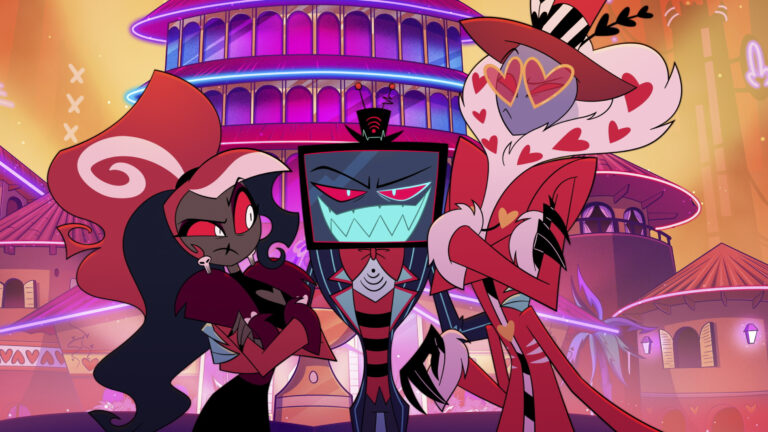
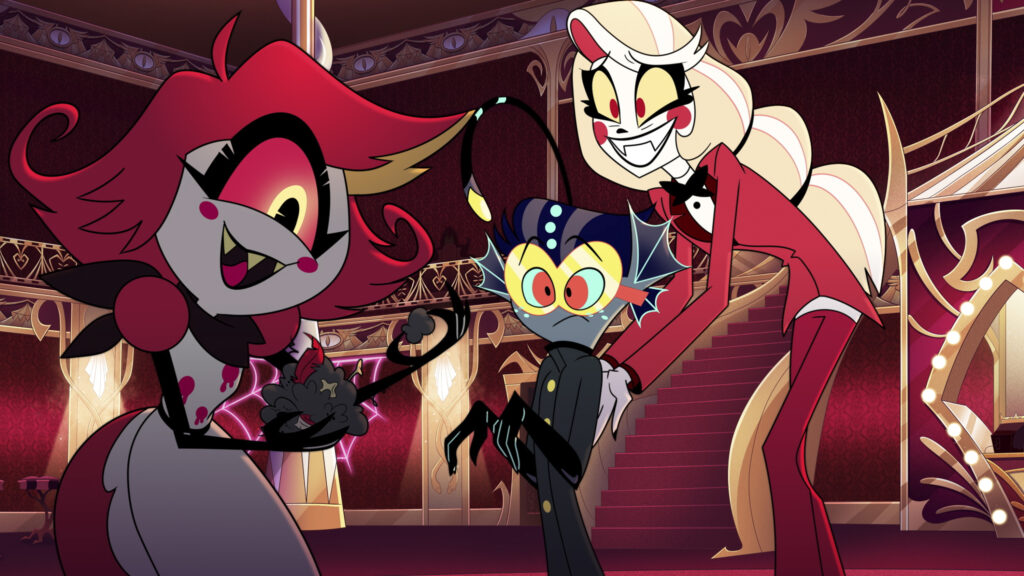
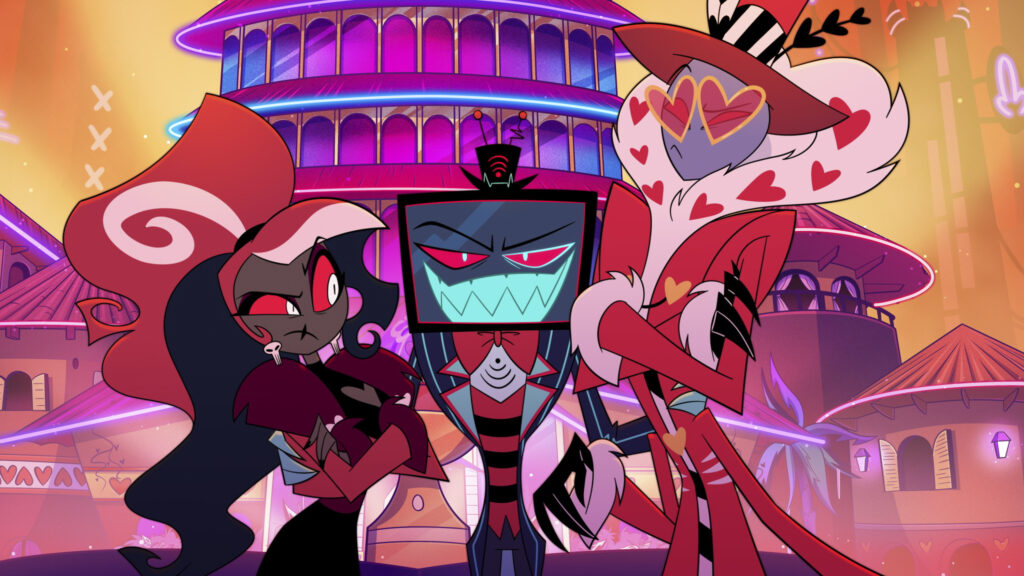
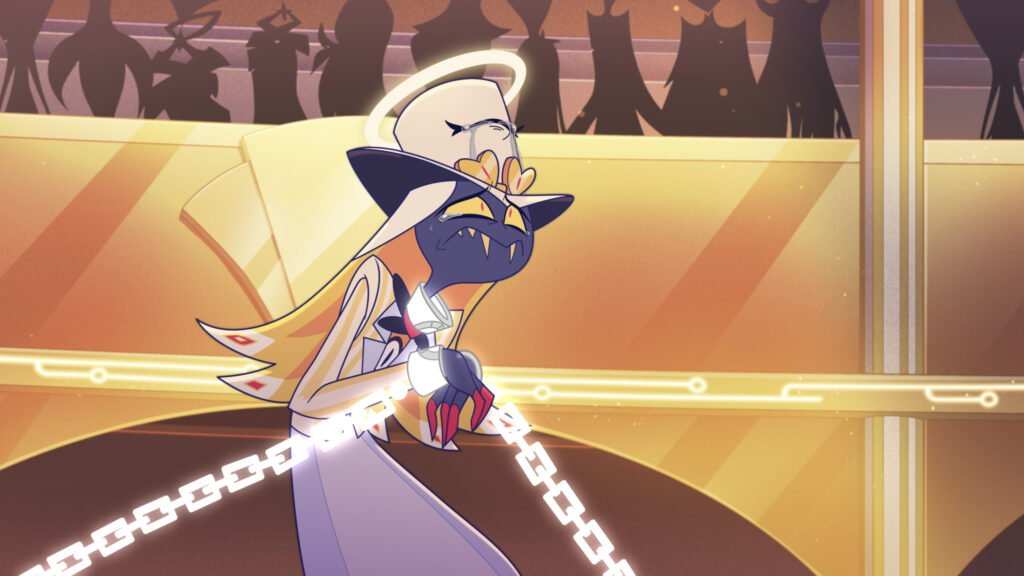
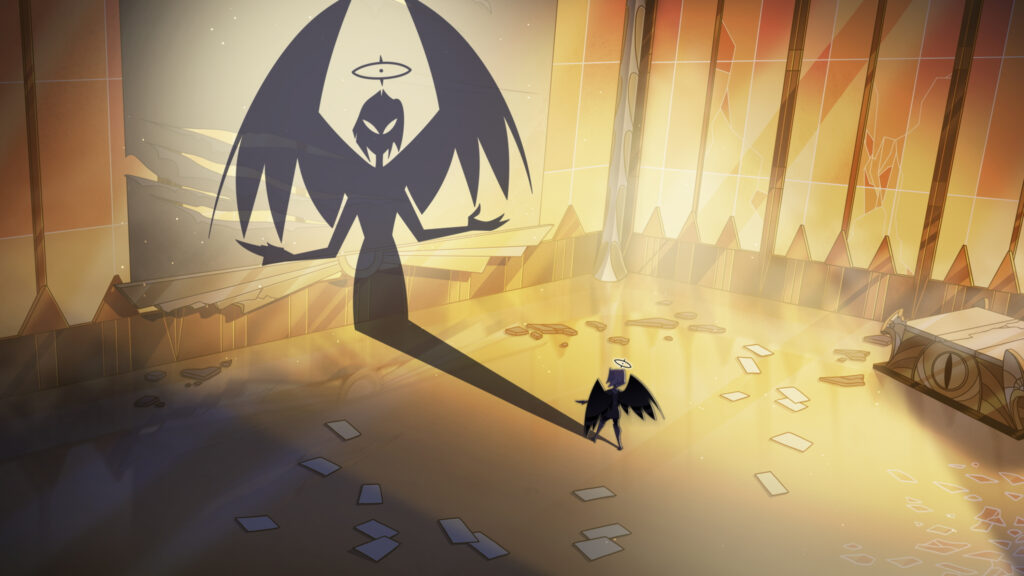
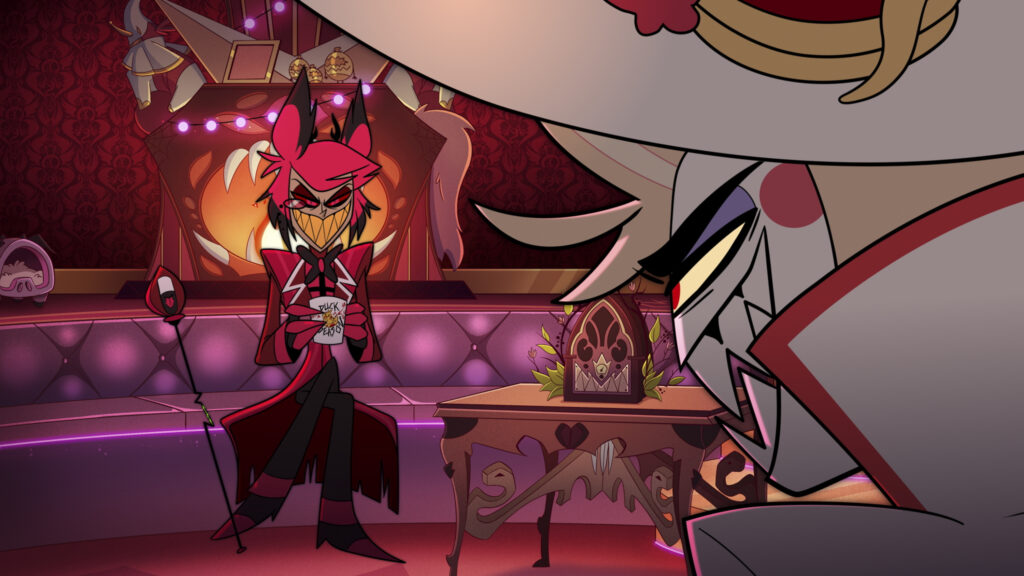
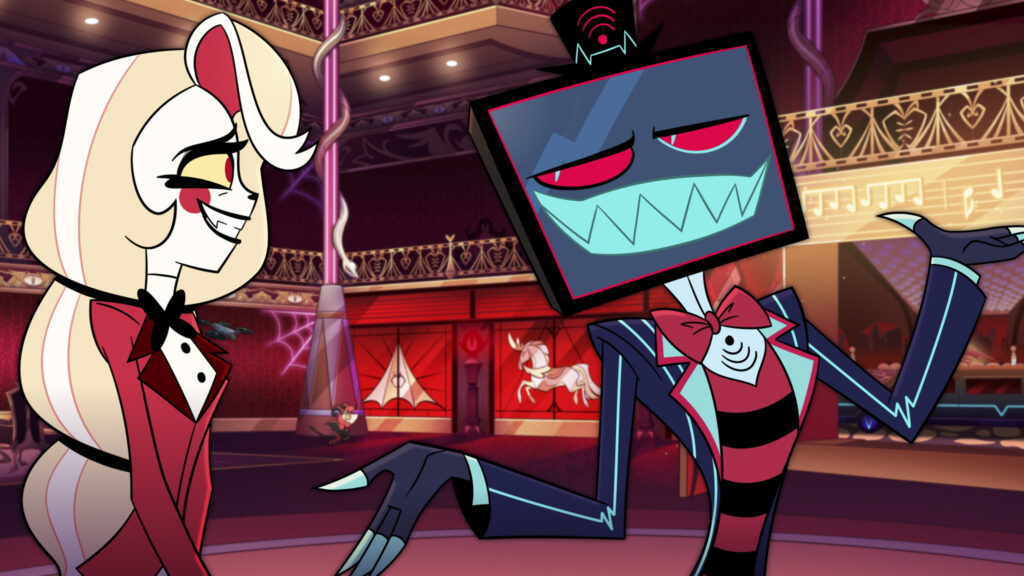
Hazbin Hotel Season 2 is filled with gorgeous animation, fantastic voice acting, high stakes, and some of the best songs of the entire series.
Hello Sinners! Hazbin Hotel is back with season 2, and it is even better than the first, something that seemed almost impossible. The idea of redemption is explored even more, especially now that Sir Pentious has been redeemed and is up in Heaven (spoiler for the season one finale, but if you haven’t watched that yet, why are you reading this?).
Season two offers gorgeous animation, catchy songs, incredible voice acting, references and callbacks to the first season, and yes – even some much-wanted backstories of fan favorite characters.
Hazbin Hotel Season 2’s Animation Is Top Notch
When I say that the animation raised the bar this season, I mean it. Don’t get me wrong, the first season of Hazbin Hotel is beautiful as well, but something about this season raises it more than a few notches. Every single scene is stunning, and so much of what is done is beyond impressive – especially during any fight and song sequences.
Redemption IS Possible… And That Heavily Influences The Story
At the extremely emotional end of Hazbin Hotel Season One, Sir Pentious is redeemed. He sacrifices himself to save Cherri Bomb, and that is enough to make him reappear in Heaven. This was a welcome shock and something that fans are still crying happy tears about. Of course, that means that it must be addressed this season, and it is done brilliantly.
Pentious doesn’t have it easy being in Heaven because, as expected, he misses the hotel and his friends. I will not get too much into it, so as not to spoil anything, but this becomes a big part of the story moving forward.
At the same time, Charlie is trying to bring more sinners into her hotel for redemption, but the Vees are doing everything in their power to stop this from happening. As the season goes on, a lot of secrets are revealed, which fans are all sure to lose their minds over.
Hazbin Hotel Season 2 Features More Fantastic Music
One of the best things about Hazbin Hotel (although really every aspect of it is great) is the music. The songs written and composed by Sam Haft and Andrew Underberg help to tell the story in entertaining and catchy ways. While the first season really focused on Broadway-esque style songs, they really branch out in season two, exploring more genres and leaning into the strengths of the cast.
Because of the incredible songs and the amazing performers, each song is a banger (much like the previous season). There are callbacks that will have viewers sobbing and powerful moments that will have them bopping along. Once the full soundtrack is released after the finale, it is sure to be played on repeat over and over.
Hazbin Hotel Season 2 Overall Thoughts
Hazbin Hotel Season 2 raises the bar on every level. The story being told is emotional, thrilling, powerful, and exciting. Fans get to know their favorite characters on a deeper level, and maybe even learn to understand why they ended up where they are now. The Vees take center stage, but no one is left behind. War is coming, and trust me, you don’t want to miss it!
We already know that seasons three and four are on the way, and if Hazbin Hotel Season 2 is any indication, it is just going to continue to get better and better. I personally cannot wait to see where things go from here.
About Hazbin Hotel
Hazbin Hotel follows Charlie, the princess of Hell, as she pursues her seemingly impossible goal of rehabilitating demons to peacefully reduce overpopulation in her kingdom. After a yearly extermination imposed by angels, she opens a hotel in the hopes that patrons will be “checking out” into Heaven. While most of Hell mocks her goal, her devoted partner Vaggie, and their first test subject, adult-film star Angel Dust, stick by her side. When a powerful entity known as the “Radio Demon” reaches out to assist Charlie in her endeavors, her crazy dream is given a chance to become a reality.
Hazbin Hotel season 2 premieres on Prime Video on October 29th with two episodes. For the next three Wednesdays, two more episodes will be released.
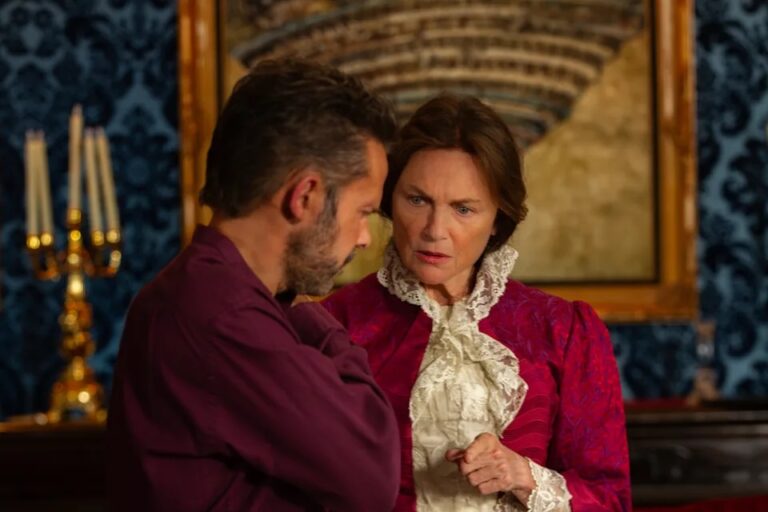
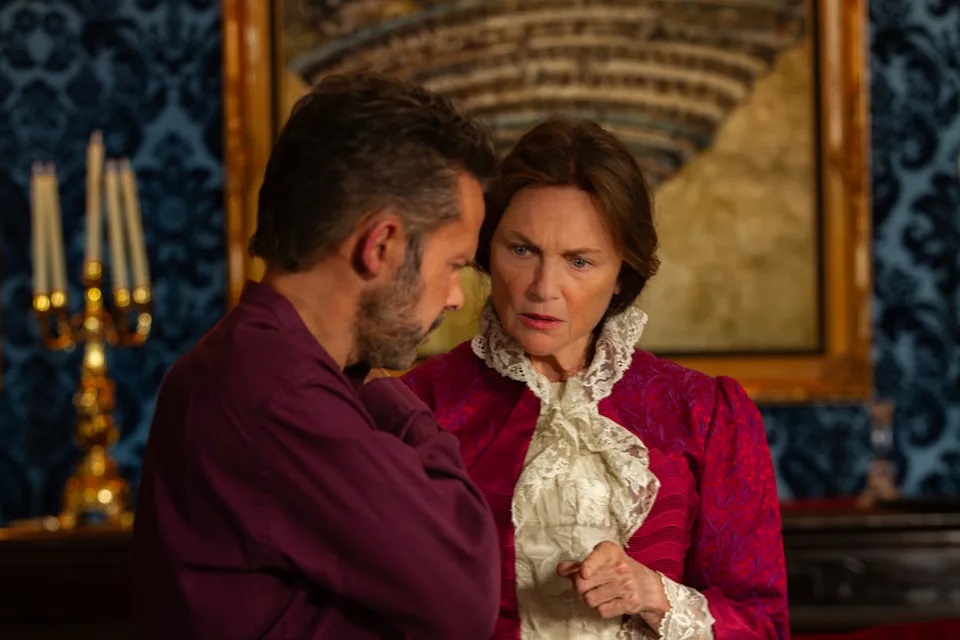
Long Shadows stars Jacqueline Bisset and Dominic Monaghan discuss their characters, costumes, and the spirit of the Wild West in this interview.
The new western, Long Shadows, is drawing critical praise for its gritty realism and unexpected twists. For its stars, screen icon Jacqueline Bisset and fan favorite Dominic Monaghan, the film offered an opportunity to delve into new territory – both professionally and personally – and inject their own unique flavor into the Old West tale.
In these interviews with Mama’s Geeky, Bisset shared her surprisingly personal reason for a character accent, while Monaghan detailed his first experience saddling up for the Western genre.
Jacqueline Bisset Brought Her Own Twist to Long Shadows’ Vivian Villeré
Jacqueline Bisset’s role as Vivian Villeré, the lady of the house in the saloon, initially felt “disagreeable on the page” to the legendary actress. To add depth and complexity, Bisset suggested a key change: giving the character a Cockney accent.
“I read it, and I thought the woman, Vivian Villeré, was a little too… I didn’t like her particularly, and I felt there’s a reason for her to be this,” Bisset explained. “I suggested that she be a bit Cockney, because I wanted to do that.”
The choice was highly personal. The Cockney accent, which Bisset often performs with friends, brought a sense of lightness and fun. The inspiration, she said, came from “sitting on the bus, basically, and in England sitting on the double-decker bus behind people.” Most touchingly, Bisset used to perform the voice for her mother, who was incapacitated for many years. “She would laugh so much, and I just said, ‘Can I do this in this film?’ That’s all the story is,” Bisset recalled.
While her time on the Arizona set was brief, Bisset remembers being charmed by her driver’s knowledge of local wildlife, noting a fascination with a creature called a javelina.
Dominic Monaghan Saddles Up for His First Western
For Dominic Monaghan, best known for his work in fantasy and adventure, Long Shadows was an intriguing departure. “I’ve not done a Western before,” he explained, noting that the genre has “slightly lost its favor” despite its historical dominance in Hollywood.
Drawn in by the script and the chance to explore new ground, Monaghan found the role of Ned – a grifter, drifter, and alcoholic – too intriguing to resist. The decision to join the film, however, was simple: “It just seemed fun, you know, Arizona riding horses and working with Jacqueline Bisset. I was just like, yeah, I don’t need much more than that.”
Monaghan quickly found that the physical transformation was key to stepping into the Old West. “When you’re wearing a bowler hat and a cravat and a vest – or a waistcoat as we call it – it changes how you move, how you stand,” he said.
Working with an Icon and the Power of Costumes
Both stars were sure to mention the importance of costume during their interviews.
“The whole thing is terribly important. What you wear or don’t wear,” Bisset stated, noting that period attire naturally changes an actor’s gestures and mood.
Monaghan echoed this sentiment and found joy in working closely with his legendary co-star. “She was lovely,” he recalled of Bisset. “We built this little backstory between our characters that wasn’t necessarily in the script. It made those scenes richer.” For Monaghan, sharing the screen with an icon like Bisset was also a chance to trade insights about longevity and craft in Hollywood.
Filming in the Arizona heat presented a unique set of challenges, particularly for Monaghan, who admitted he’s not a big horse rider. Yet, his lifelong love of animals made the experience memorable. “Horses are sensitive – they pick up on your energy. You have to come into that situation correctly,” he advised, smiling as he reflected on the experience. “It’s bizarre using a living, breathing animal as a vehicle. But it’s such a special thing.”
Ultimately, Bisset hopes audiences take away the modern relevance of the story’s emotional core, particularly the reality of a young man’s struggle with trauma. “The reality of that situation is so awful. It twists his mind,” she said, acknowledging that the film addresses issues like mental health that still affect people today.
Whether it’s a Cockney twist, a new hat, or the unique energy of a horse, the stars of Long Shadows have reminded us that adventure – and a little bit of fun – is always worth the ride.
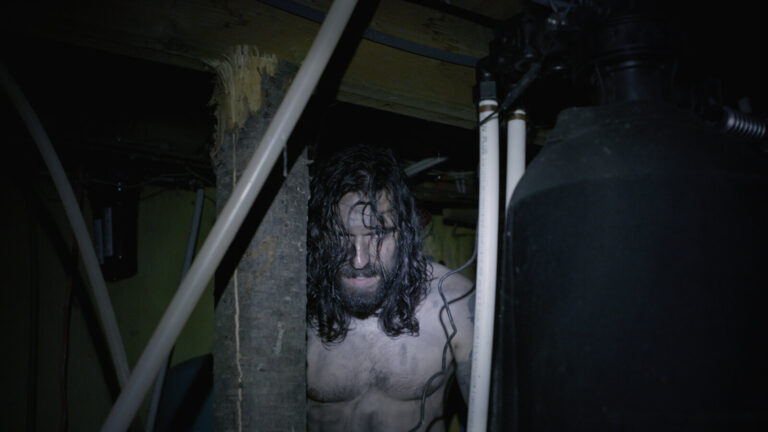
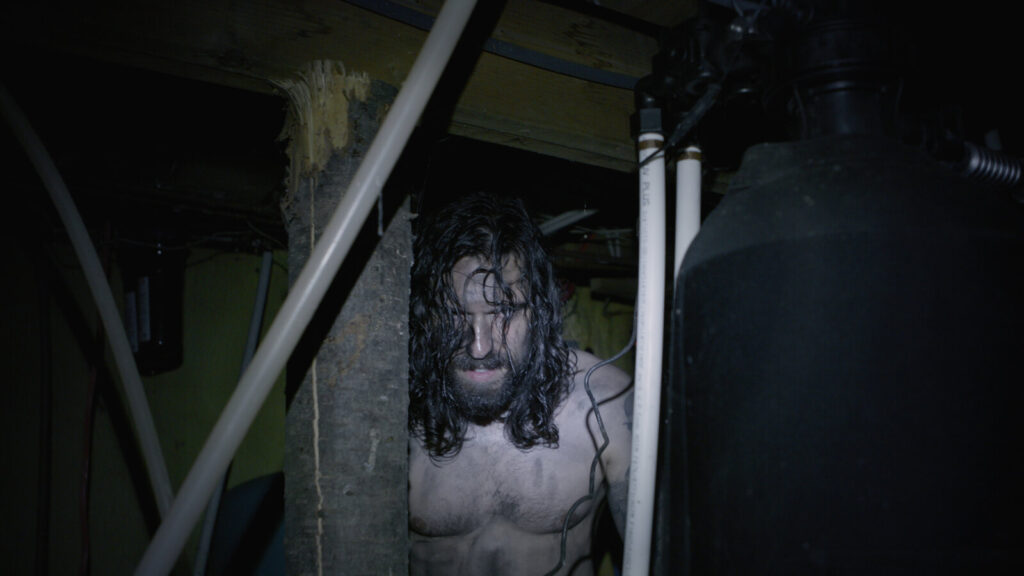
Dream Eater filmmakers and horror legend Eli Roth discuss bringing this incredible and terrifying found footage film to life.
The world of found-footage horror just got a terrifying new entry that has already earned the stamp of approval from a master of the genre. Director, producer, and horror icon Eli Roth has championed the chilling new film, Dream Eater, a micro-budget shocker from debut filmmakers Jay Drakulic, Mallory Drumm, and Alex Lee Williams.
In this interview with Mama’s Geeky, the filmmaking team discussed the film’s intensely personal origins, the grueling nine-day shoot that tested their limits, and the crucial, last-minute intervention by Roth that changed the film’s finale forever.
Stripping Away The Comfort Zone
Dream Eater follows a couple, Alex and Mallory (played by the co-directors Williams and Drumm), whose relationship is pushed to its breaking point when Alex begins to suffer from severe parasomnia – a sleep disorder involving abnormal or unnatural movements, behaviors, and dreams. The resulting footage, shot mainly from a camera recording the couple while they sleep, transforms the most secure space on Earth – the bedroom – into a relentless psychological hell.
For the filmmakers, the premise was rooted in personal experience. Mallory Drumm explained the unique terror the team wanted to achieve: “You know, I think first and foremost, we really just wanted to be able to strip away people’s comfort zones. And where do you feel the most comfortable? At home, in bed, lying next to your loved one.”
The story became deeply personal, drawing on their own nocturnal anxieties. Jay Drakulic revealed: “Both Alex and I grew up having night terrors, Jay grew up sleepwalking. So we kind of like added in a bit of personal experience in there.”
The crew’s goal was nothing less than genre-defining. “We always say like, Jaws made you change the way you went into water. Psycho made you change the way you take a shower,” Drumm stated. “And we really want Dream Eater to change the way you go to bed at night.”
The $40,000 Discovery: Eli Roth’s Support
Eli Roth’s involvement was a moment of serendipity. He learned of the film not through an agent or a festival submission, but from a viral TikTok post by a movie influencer.
“It was just one of those weird things where someone sent me a link to a TikTok that Chuck Shaughnessy, Your Movie Guy, posted where he was just raving about this movie,” Roth recalled. Intrigued by the “very disturbing and striking” imagery, he reached out directly via Instagram.
Roth was instantly captivated by the film’s raw, unrelenting terror. He drew parallels to the genre’s most revolutionary works. “I remember watching Paranormal Activity for the first time and Blair Witch Project for the first time when you really don’t know what you’re getting into,” he said. “It just gets you, there’s that moment where the movie just turns and it’s – I was like, ‘Oh my god, I’m legitimately scared. This is really scary.’”
The final moments, in particular, left a powerful impression. “I don’t think there’s anything that’s scaring her in a movie this year,” Roth asserted. “I was legitimately heart racing, scared, just dreading every time it’s nighttime, they’re going to sleep.”
The biggest shock, however, came when he learned the budget. “I thought they made this for a million, a million and a half dollars. And they told me they made it for $40,000. I was legitimately shocked.”
For Roth, this level of achievement with such minimal resources demanded support. “Those are the people I want to support – people that make it on just raw passion and talent,” he stressed, praising the film’s “meticulous” sound design and score. “Horror fans love a discovery. And I think this movie truly is a discovery, and it deserves to be seen in theaters. I didn’t want it to get lost on a streamer.”
A Perfect Finale: Eli Roth’s Crucial Input
The decision to acquire and theatrically release the film led to a small but game-changing edit: the ending. Roth was the first to offer honest, constructive criticism.
“My job, if I’m going to be a producer, is to be honest with them, and you trust the filmmakers, but I’m telling them, you know, this is what didn’t – the only thing that fell short for me was this,” Roth said.
The filmmakers were ecstatic when Roth’s note aligned with an ending they had originally scripted but had been talked out of. Jay Drakulic was quick to credit Roth for the final, terrifying shot: “If it wasn’t for Eli, we never would have been able to recapture the spirit of what we were going for with our original scripted ending… so cool to get a second chance, a second opportunity at that.”
Roth emphasized the importance of a knockout conclusion in the found-footage subgenre: “These movies can live or die in that last shot, whether it’s Blair Witch, Paranormal, or reallyif you can have a really, really scary finale build up to that finale, then then you have a winner. And these guys did it. They nailed it. I jumped. I got chills at the end of it.“
Wearing Multiple Hats Allowed The Team To Tackle Challenges In Unexpected Ways
The production was famously lean, with the three co-directors making up a significant portion of the eight- or nine-person crew. Drumm and Williams also played the leads, a daunting challenge that required balancing performance with logistics.
Mallory Drumm reflected on the intensity: “Honestly, I think just exactly what you’re saying, like wearing all of the hats and doing all of the things is difficult… we did this movie in nine days with a crew of eight or nine people, three of which were us.” She credited the rigorous pre-production: “We spent months… blocking everything so that when we did arrive up at the location, any challenges that we did face, we felt super prepared to then just like pivot on the spot.”
One of the biggest anxieties for Alex Lee Williams was maintaining the integrity of the performance while managing the set. “Will we be sacrificing something in the performance? Like that was always in the back of my head,” he admitted. The solution was full commitment: “Just throw yourself at it. Don’t think about how it looks or sounds, just go with how it feels in this moment.”
The crew’s ability to treat limitations as opportunities was essential. When an exterior shot was blocked by heavy snow, Jay Drakulic recalled: “We looked at it as something that was creatively liberating.” It resulted in a memorable scene where Williams’s character chops wood, a skill he learned five minutes before the cameras rolled.
Roth praised the director-actors’ bravery, noting they had to do stunts and scenes that many professional actors would refuse. “You have two of the three directors that are acting in it, and that have to direct and act,” Roth said. “Then you have Alex, who has to act as waking Alex, and then acting as sleepwalker Alex – that’s like three jobs. And then Mallory has to put herself through this in terrible trauma.”
Found Footage & The Intimacy of Terror
The filmmakers explained why the found-footage approach was necessary for their story, citing the crucial narrative justification of documenting parasomnia.
Alex Lee Williams articulated the appeal: “With found footage, which it’s funny, because people inherently think that found footage is an easy sub-genre to tackle when, when really it that is just mistaken.” The biggest difficulty, he noted, is justifying the camera being on. “Your narrative has to be strong enough to inform why the camera is on and then you that has to be sold through the actors.”
The format provides a unique intimacy. Mallory Drumm elaborated: “The intimacy, watching things that you feel like you shouldn’t be watching. And then exactly what Jay said, like now that the camera acts as a character, you as an audience member can put yourself like, as if you’re in the camera as well.”
For Eli Roth, the authenticity is key: “When it’s found footage, you’re like, they’re really fucking doing it… when you see these guys in the snow, and they’re barefoot, you feel that pain, they’re really doing it, they’re not faking.”
The Adrenaline Of The Audience Pop
After pouring years of their lives into the film, watching it with a theater audience was the ultimate payoff.
Alex Lee Williams described the experience as “very surreal,” recalling the honor of sitting next to Roth at the Beyond Fest screening. “When you’re the person who poured years into it, and especially with alongside your best friends, being able to look around and see people jump at those moments that you had crafted meticulously, you plan for that to happen. And it surprises them is like a feeling that’s indescribable.”
Jay Drakulic added that the experience turns into “market research” after a few viewings. “We’re all nudging each other. We’re like, see that one over there? That was, I didn’t expect them to do it at that time. Like, yeah, it’s literally just like, just gathering data.”
Roth concluded the conversation by reinforcing his mission to champion the film and its creators: “Hopefully people get the same obsession with Dream Eater… They got to, you know, get out there and support some new filmmakers. That’s what it’s all about. Blood in the genre, giving other people a chance. And if the movie works, it makes it easier for me to do it for other directors, too.”
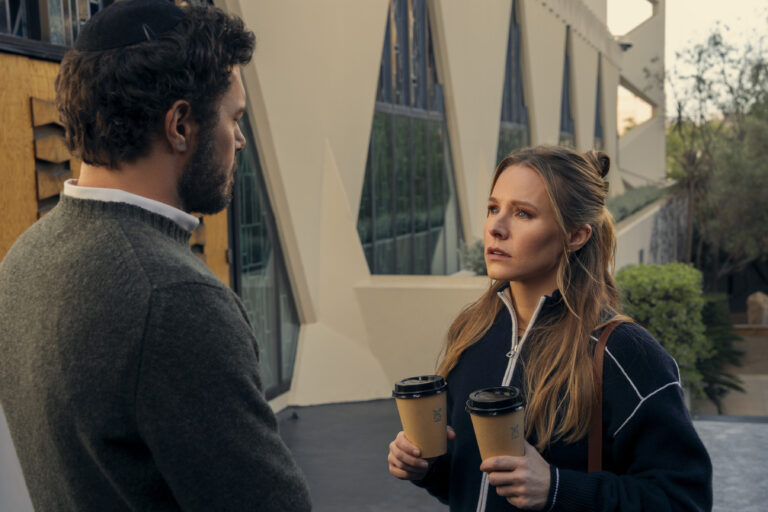
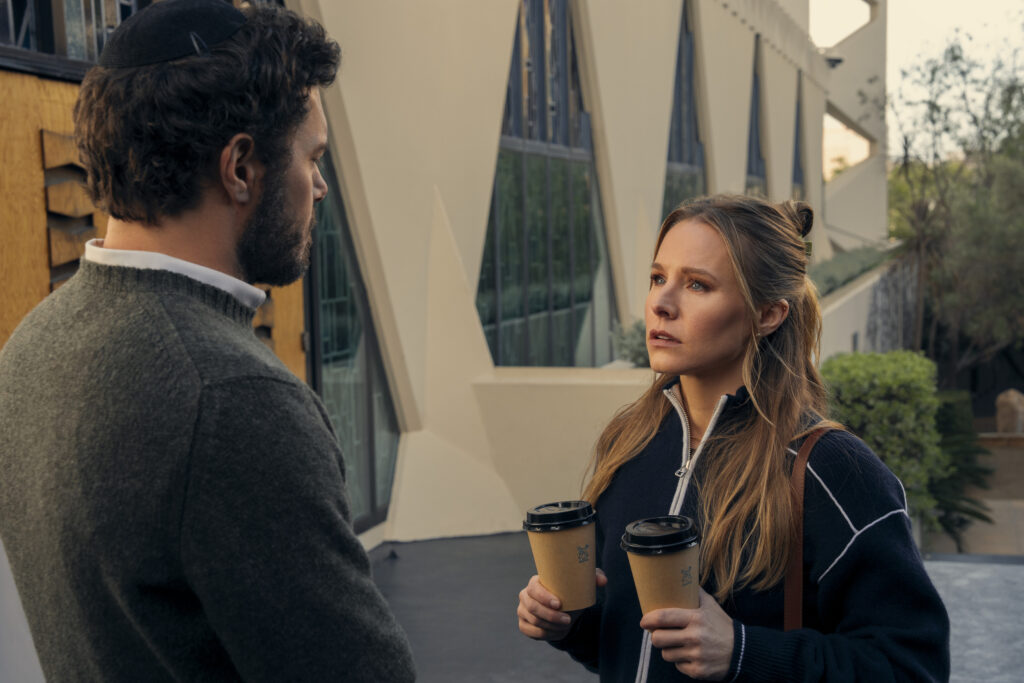
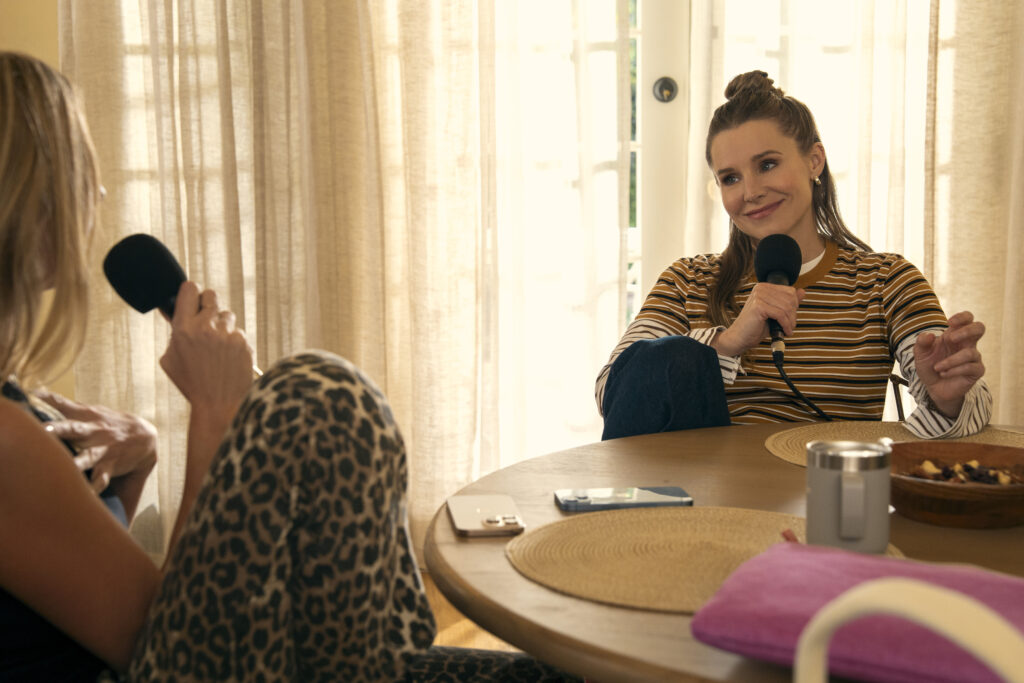
Nobody Wants This Season 2: Kristen Bell & Adam Brody tackle life after the rom-com ending. Plus, juicy teases from Justine Lupe, Timothy Simons, & Jackie Tohn.
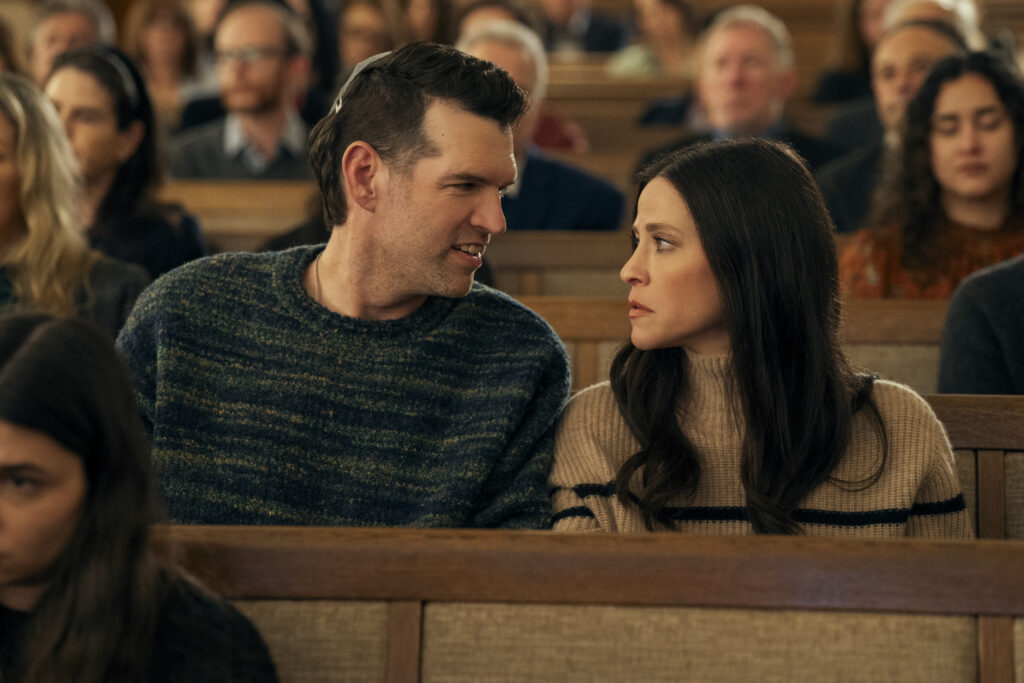
The critically acclaimed Netflix comedy series Nobody Wants This is back, and the honeymoon is officially over. The first season garnered three Emmy, three Golden Globe, and three Critics Choice nominations. In support of the new season, the cast – Kristen Bell, Adam Brody, Justine Lupe, Timothy Simons, and Jackie Tohn – gathered virtually for a press conference to tease a second season that trades in the rush of a new romance for the messy, hilarious, and deeply relatable realities of staying together. Season two of Nobody Wants This is now streaming on Netflix.
From Grand Gestures to Organizing Toothbrushes
Season one famously concluded with a classic, cinematic romantic comedy ending: Joanne chasing after Noah. But for executive producer and star Kristen Bell, that was just the beginning.
When asked if everything is now “happily ever after,” Bell offered a quick, witty dismissal of the rom-com fantasy. “It’s just like life. So, now they coast, and they are in love, with that feeling of butterflies and happiness forever.”
“They chose each other at the end of the first season, and the second season was just full of opportunity,” Bell explained. She was excited that creator Erin Foster “really grabbed it because now we have to organize where we keep our toothbrushes and how we meet our families, and how we merge our friends and how we compromise, and all the things that happen after the first three months of a relationship, believe it or not, are far more interesting and far funnier than the first three months.”
The central dynamic remains the clash between Joanne’s “fly by the seat of her pants, a little bit more impulsive” nature and Noah’s more “regimented and careful and constructed” personality.
“It has to be a constant compromise, and there is always friction, but the question is, can they find the love and affection and laughter through that friction?” Bell mused.
Adam Brody’s Rabbi Noah is facing his own personal and professional upheaval. At home, he’s excited but wrestling with a big, unresolved question: Joanne doesn’t want to convert. At work, he’s frustrated and adrift due to the arrival of a new, competitive rabbi played by Alex Karpovsky. The professional anxiety, Brody says, “really bleeds into each other, and so it does bring his home life into some upheaval too.”
While the daily friction makes for great comedy, the core conflict from season one – the religious difference – is far from settled.
“There was a little miscommunication or debate about, ‘Did we punt the religious issue? Or did we decide? Did you decide? And are we good?’ And so, that’s not over yet,” Brody admitted, adding that the religious question is “probably, even more than their friends and family, still the biggest issue to work out.”
Bell elaborated that in season one, they only talked about the issue “to the degree that they could handle.” Now, those unaddressed details are back to haunt them. Ultimately, Bell sees all their challenges – from religious conversion to simple domestic details – as stemming from a single, universal anxiety: “‘Will I lose myself when I merge with this person?’ And I think every single, like, topic they’re dealing with is that same root emotion if you boil it down.”
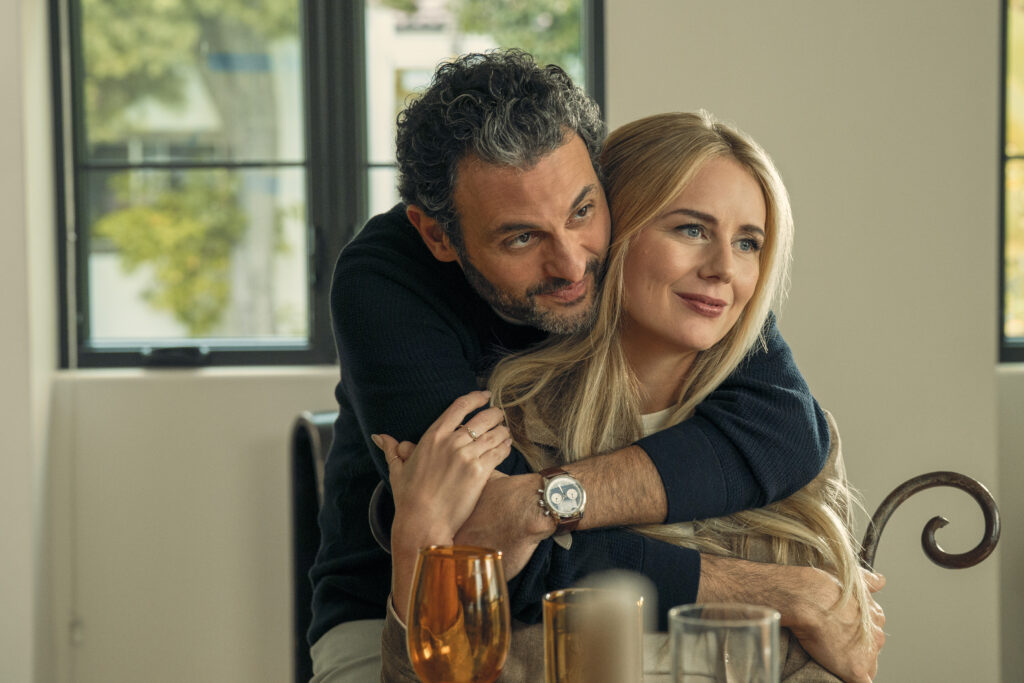
The supporting cast is also front and center this season. Justine Lupe’s Morgan, Joanne’s sister, gets a significant emotional arc as she adjusts to life without her sister as her primary focus. Lupe, whom Bell affectionately called “Television’s secret weapon,” spoke about exploring the very familiar, albeit painful, storyline of sisterly codependency.
“There are these codependent relationships that we have in our twenties… and then there’s a bit of a crisis sometimes when they leave to go off with their romantic soulmates,” Lupe explained. She was eager to explore Morgan’s evolution as a woman who “doesn’t necessarily have all the tools to get through that kind of a process emotionally.” Lupe also delighted in reuniting with her Succession co-star, Arian Moayed, calling him “so talented and so kind and such a team player.”
Timothy Simons’ Sasha is a source of much-discussed drama, specifically his unexpected friendship with Morgan. The two are united as the “‘loser siblings’” of their respective families, sharing a similar worldview and status as the first-born but “not the golden child of the family,” according to Simons. Lupe added that their dynamic thrives on teasing: “I just read this thing about how people who are teased by their friends… sometimes they have the most healthy relationship, and I do feel like there’s something that comes with that.”
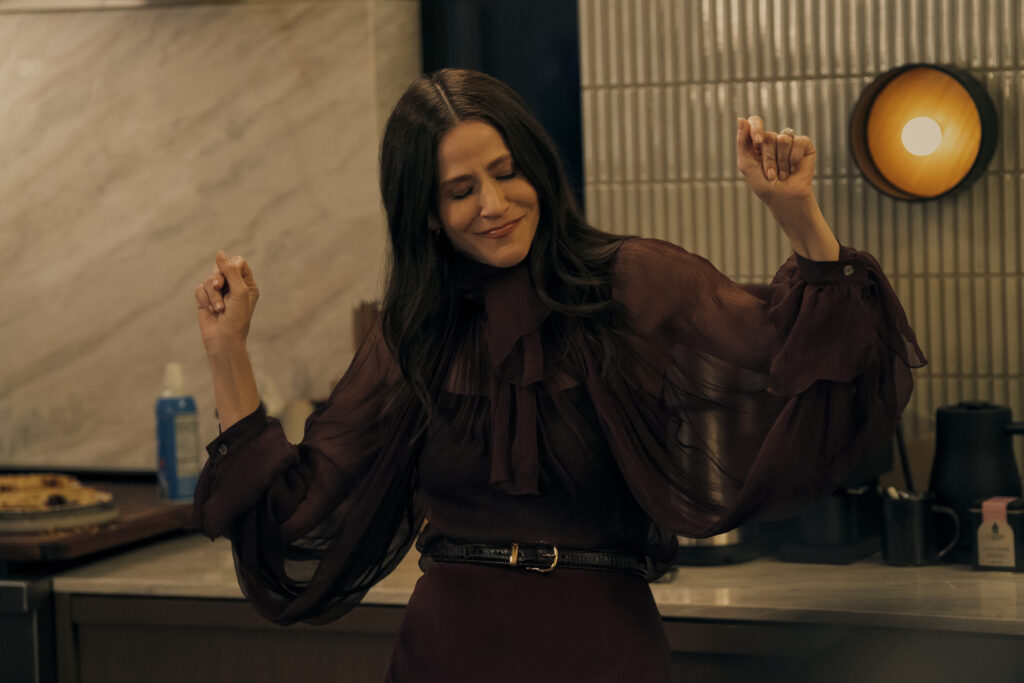
Simons also revealed the story behind his season two standout moment: an elaborate dance sequence to Ariana Grande’s 7 Rings. A self-professed non-dancer who feels like “a giraffe with human limb sewn on,” Simons decided to embrace the challenge head-on, taking five dance lessons. “I just thought if I threw myself into it, it would be better than if I tried to run away from it,” he said.
The move was so surprising it caught his co-star, Jackie Tohn (Esther), completely off guard. “I saw it for the first time while a camera was pointing at me,” Tohn exclaimed. “I was like, ‘I don’t know if this is Esther or not, but Jackie is screaming and jumping up and down ’cause this is so delicious and so well done.’”
Jackie Tohn’s Esther is also on her own major emotional journey this season, though Tohn was careful to avoid spoilers. Esther is still wading through the weirdness of Morgan and Sasha’s close connection, which Tohn loves to address. “I love her. I really love Esther. I mean, I’m a body broad, but she makes me look like a delicate tulip,” Tohn joked. “She just says everything she’s thinking, minces no words.”
The cast took a moment to reflect on how Nobody Wants This successfully modernizes the classic romantic comedy.
Bell believes the show brought “the rules of real life to a very settled-in-its-ways genre.” Rom-coms traditionally feature a formula – “They bump into each other on the street, and they accidentally spill coffee, and their hand reaches for the same cup.” – but creator Erin Foster saw that “that’s not how my girlfriends are dating and guy friends are dating.”
By infusing that reality into the structure, the show “exploded into something that really resonated with people and, I think, made them feel very seen,” especially in the age of dating apps.
Brody agreed that the key was grounding the story. “It still has those archetypal somewhat characters and structure… but that said, brought so much more everyday occurrences in real life into it in details,” making it more relatable.
When asked about the cast’s incredible chemistry, Tohn was the first to speak, joking, “I think we’re laughing ’cause we didn’t do anything.”
Bell then used one of her signature “kids’ metaphors,” as Lupe pointed out, saying, “We were called into our first grade classroom. And they said, ‘You five are talking too much. Go sit in the corner.’ And we’ve been sitting in the corner ever since having a blast.”
The reality, Bell concluded, is that “We fell in love.” The cast realized they were “all kinda cut from the same cloth” and simply poured effort into their connection, leading to the palpable, enjoyable dynamic that carries the comedy and heart of Nobody Wants This through its highly anticipated second season.
Flanked by his star-studded cast – Oscar Isaac, Jacob Elordi, and Mia Goth – and key members of his creative team, Guillermo Del Toro presented his film not merely as a horror story or a gothic tale, but as a decades-in-the-making meditation on creation, parenthood, and the necessity of forgiveness.
Mama’s Geeky attended an in-person press conference at Netflix Studios, moderated by Jenelle Riley of Variety. It served as a triumphant final preview before the film’s limited theatrical run, which began on October 17, 2025, ahead of its global digital premiere on Netflix on November 7, 2025. The director, writer, and producer was joined by his leads, Oscar Isaac (Victor Frankenstein), Jacob Elordi (The Creature), and Mia Goth (Elizabeth), as well as composer Alexandre Desplat, production designer Tamara Deverell, character designer Mike Hill, and costume designer Kate Hawley.
A Decades-Long Obsession Becomes A “Prodigal Father” Tale
For Guillermo del Toro, the film is the culmination of a lifelong obsession that began when he was a child. He was first exposed to Boris Karloff and James Whale’s “masterpiece”, as he calls it, at age seven, an encounter he describes as having a “profound religious effect” on him. Just four years later, reading Mary Shelley’s novel at age eleven, he had a revelation: “I realized the movie was not the book at all”. It was the book’s grappling with the humanity of the creature and the inhumanity of the world that truly resonated with him.
Guillermo Del Toro’s relationship with the material evolved, mirroring his own journey through life. He initially saw it as a story about himself and his own father. Later, upon becoming a parent, it became a reflection of his relationship with his own child. The final, mature iteration of his vision, he shared, crystallized only after 50, becoming about forgiveness and acceptance. This theme was so central that the ending – that message of grace – served as the guide for his entire writing process.
The director revealed that adapting the classic proved structurally challenging, requiring two to three and a half years of dedicated work. His solution was to structure it as presenting two sides of the tale that were found in the original text. The key, he explained, was framing the narrative around the experience of a father who is unaware of his child’s journey into the world until the child returns to tell his story. This approach cemented the film’s powerful, paternal core, which was underscored by the project’s secret working title: Prodigal Father. Guillermo Del Toro even drew a direct thematic line to his Oscar-winning work, noting that Frankenstein and Pinocchio are the same story: One of an imperfect creation and a father’s responsibility.
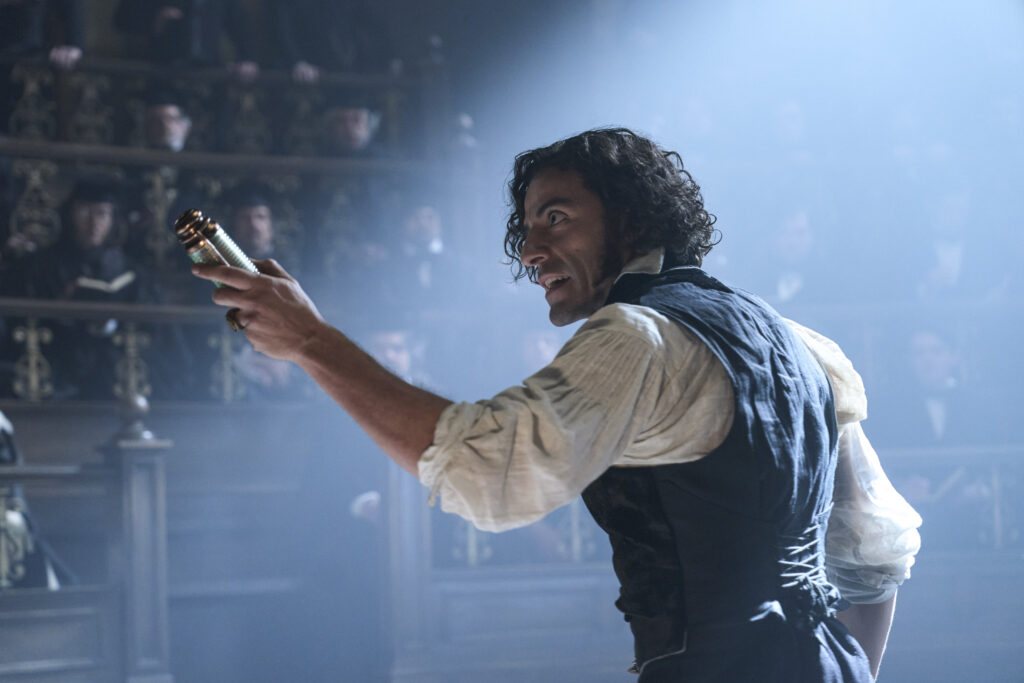
The director confessed that he began writing the script with his lead actor already in mind: Oscar Isaac. Isaac, who plays the ambitious and tormented Victor Frankenstein, described his casting as a surprise, resulting from a chance meeting that Guillermo had originally claimed was not about Frankenstein at all.
Oscar Isaac On Victor’s “Doubtless Blindness”
Oscar Isaac as Victor Frankenstein in “Frankenstein” directed by Guillermo del Toro.
Photo Credit: Ken Woroner / Netflix
When asked about his experience playing a character as dark and as cruel as Victor, Oscar Isaac offered a fascinating psychological insight. He admitted that he found so much pleasure playing this character. Isaac elaborated on this, contrasting the character with himself:
“So playing, me who’s filled with whys and doubts all the time, to have the release of somebody that’s doubtless about what they want to do to the point of blindness, the fact that I found that so enjoyable, I don’t know what that says about me.”
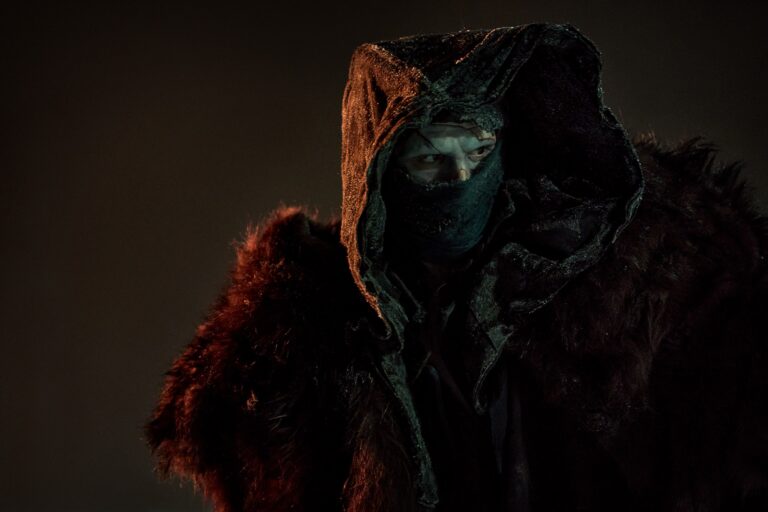
Oscar Isaac’s co-star, Jacob Elordi, provided an equally profound perspective on embodying the Creature. His connection to the material was instantaneous, responding viscerally to the Creature’s existential torment. Elordi saw his role as an opportunity to channel the fundamental questions of existence and suffering, declaring:
“When I read it, every word of the Creature was something that I was asking myself. I mean, I get to be Job asking God why. Every scene was why.”
Elordi’s commitment to embodying the Creature’s vulnerability and rage was evident. He recounted a pivotal moment while reading the script, where the stage direction described the Creature pulling down a mask and seeing the line, “Now run.”
He remembered the moment vividly, saying, “when I read that, I heard drums in my head”. This reaction underscored the emotional truth of the character that Jacob Elordi was determined to bring to the screen.
Character designer Mike Hill later praised Elordi’s dedication, noting that the Creature was designed as a person whose physical appearance was engineered to direct the audience’s gaze towards the actor’s eyes, allowing the character’s “soul coming out” to be the focus, rather than a “garish, ugly monster”.
Mia Goth, who plays Elizabeth Lavenza, spoke to a personal resonance with the narrative’s themes of alienation and belonging. She was incredibly moved by the script, noting that she recognized parts of herself not just in Elizabeth, but, surprisingly, in all of the characters for the first time in her career. Her interpretation of Elizabeth centered on a universal yearning for connection:
“I think this sense of feeling like an outsider and this longing to connect and this searching for a home is what really resonated with me.”
In Guillermo Del Toro’s version, the character of Elizabeth is an amalgam, a voice of wisdom that is fused with the spirit of Mary Shelley herself. Her voice in the film is meant to guide and challenge Victor’s destructive ambition.
“Emotion is the New Punk”: Del Toro’s Final Defiance
Toward the end of the discussion, Guillermo Del Toro addressed the film’s deeper meaning, a topic he approached with the gentle caution of an artist. Acknowledging his past statements that monsters are metaphors for outsiders, he resisted defining the Creature’s symbolism with a single, restrictive meaning.
“You have to be careful with poetry because if you give it a single meaning, it becomes math. It becomes chemistry”.
Instead, he views the symbols as alchemic, shifting, and depending on the reader. His job as the director, he concluded, was not to dictate the audience’s response – “I provide the supermarket, not the shopping list” – but simply to provide the wealth of material and emotion for each person to take what they need.
He finally closed the press conference with a passionate defense of the sincere emotion at the heart of the Frankenstein novel and his film. In a world he believes is increasingly cynical and scared of emotion, he declared a personal revolt:
“I think emotion, as I’ve said in the past, is the new punk. Being emotional is the new punk. It’s the new anarchy”.
The film itself, he asserted, is a complete act of love that has taken decades to create, and a defiant gesture against irony and callousness.
Guillermo Del Toro’s Frankenstein is a powerful exploration of family and the need for empathy.
Guillermo del Toro’s Frankenstein is in select theaters now and will be available to stream globally on Netflix on November 7, 2025.
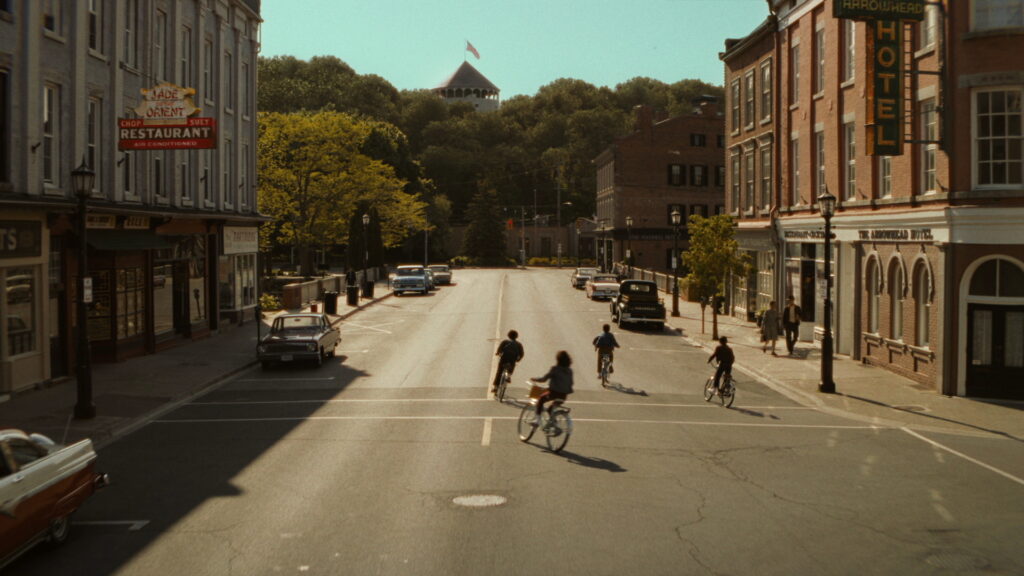
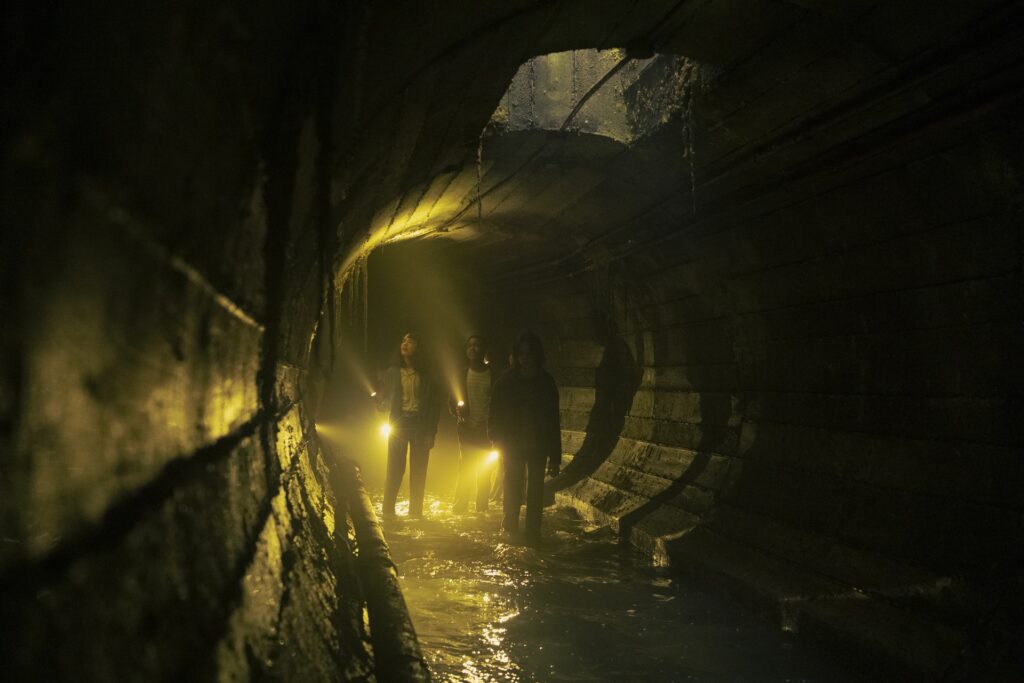
IT: Welcome To Derry is a terrifying exploration of the lore of Pennywise the Dancing Clown, offering more insight, and more scares.
As someone who is scared of clowns quite literally because of Pennywise, I am not sure why I hit play on IT: Welcome To Derry, but here we are. In all honesty though, I love to be scared and this series terrified me, but it also offers so much more.
It should be noted that this review is based solely on the first five episodes of IT: Welcome To Derry.
Expanding On & Exploring The Lore
Like I said, I love to be scared, and IT: Welcome To Derry delivers on that side of things. But it really does so much more. Those who are big fans of Andy Muschietti’s IT films will be pleased to know that he keeps the same vibes, while also deepening the story.
Of course he explores a lot of the themes from Stephen King’s book more in depth as well, but what he tells is the story of this creature, how it arrived in Derry, why it remains in Derry, and how it is has terrorized Derry’s residents since it arrived. This is something we got a small peak into in IT Chapter Two, but this series goes even deeper into it all.
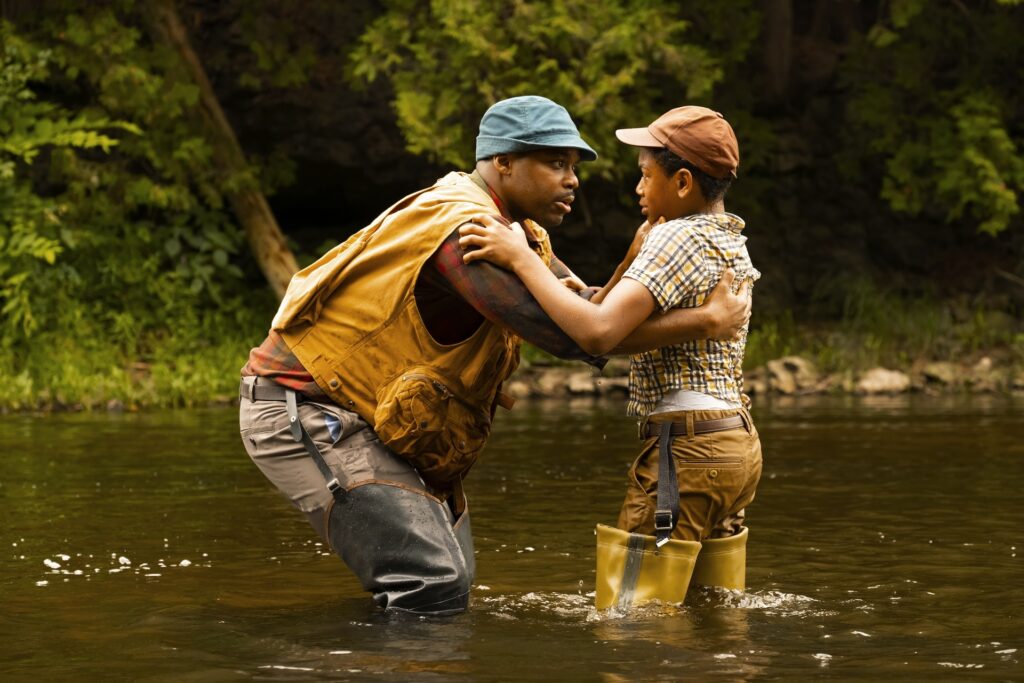
Because of the time periods that IT: Welcome To Derry takes place in, there is also a lot of racism that is present throughout the storytelling. This is especially heartbreaking because it is impossible not to think about how people of color are still treated this way by some, many years later in 2025.
While this is not the main plot of the series, it is a prominent and important plot, which I thought was necessary. If racism was just ignored even though the story takes place in a time when it was everywhere, that would make no sense at all. I am glad it was not erased.
Exploring Loser’s Clubs Of The Past
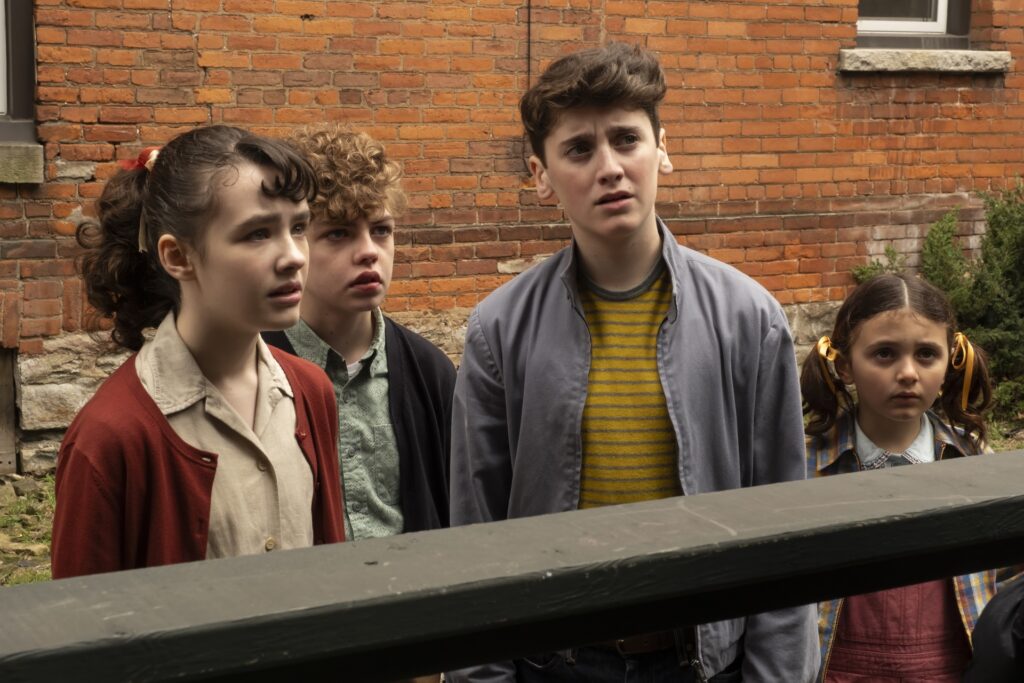
One of the things that I enjoyed the most about IT: Welcome To Derry is getting to know the Loser’s Clubs of the past. If you have seen the trailers than you know there are a lot of children in the show. We learn that the Loser’s Club from IT Chapter One was not the first, which makes perfect sense because of course these kids have been standing up for themselves when the adults in the neighborhood wouldn’t during every one of Pennywise’s cycle.
I do not want to go into it too much, because there are so many major plot points and I would hate to spoil something, but just know that these kids are great, and it was a joy to watch them on screen, even if they were being, well, terrorizes.
Which leads me to the “nightmare sequences” as I like to call them. There are just the right amount of them and yes, the are deeply unsettling, terrifying, and completely and utterly horrific at times. They are scary, as they should be, always leaving me watching through my fingers. And yes, they start pretty quickly so buckle up and get ready.
Overall Thoughts
IT: Welcome To Derry is the perfect continuation, or should I say prequel, to the IT films. Bill Skarsgård is back and scarier than ever. Even just the sound of his voice sends shivers down my spine and don’t even get me started on when we see him as Pennywise in clown form. No. Thank. You.
The stories that are being told throughout the series are compelling and captivating. As much as this entity scares me, it is exciting to get to learn more about it, and its reasons for being in Derry for so long.
About IT: Welcome To Derry
Following the events in the 1960s, the time leading up to the events of the first film in the Stephen King “It” series.
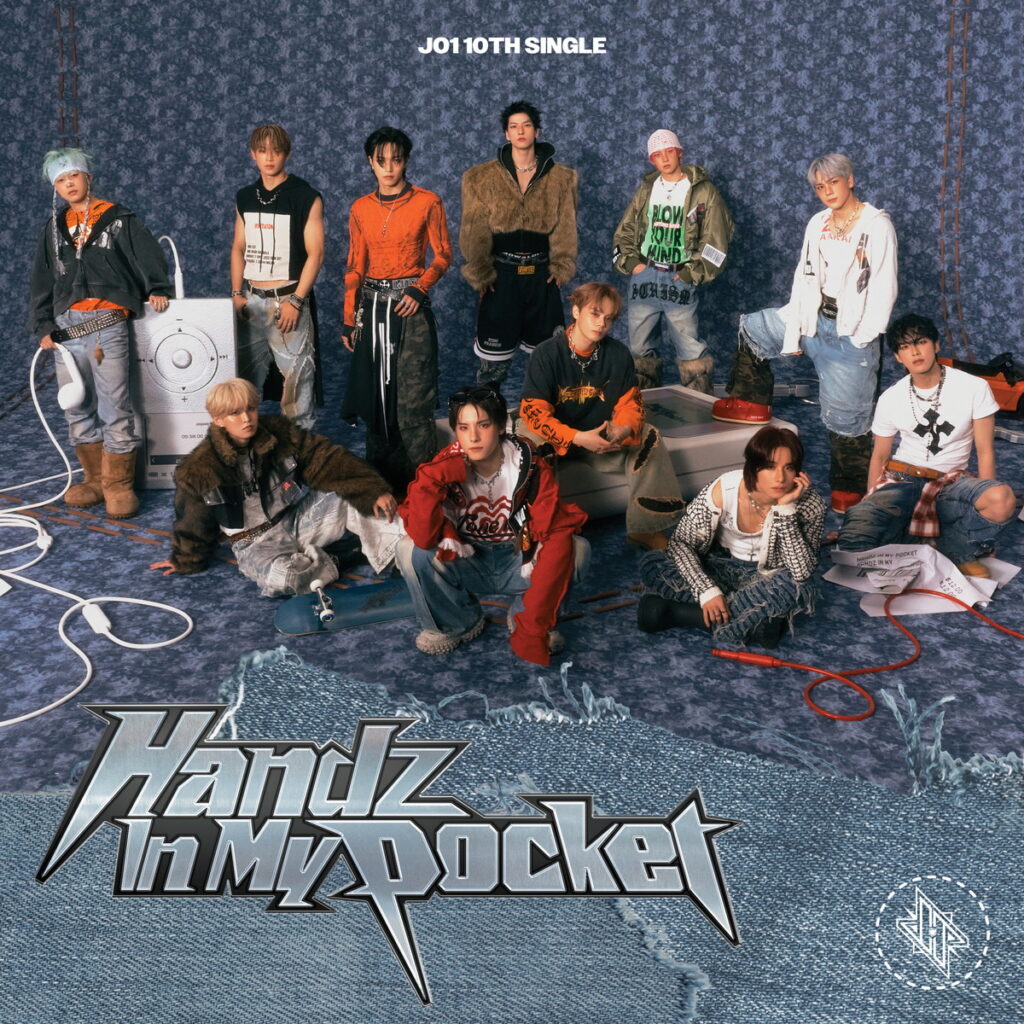
Global Boy Group JO1 Announce Forthcoming EP “Handz in My Pocket” Featuring New Music Video “Just Say Yes”.
Chart-topping Japanese sensation JO1 announce their upcoming EP, Handz In My Pocket, set to release on October 21, 2025 at 8AM PST following the soaring release of their 10th single, “Handz In My Pocket.”
This special release will feature a music video for the track, “Just Say Yes,” which will be released at a later date. The project showcases JO1’s unmistakable sound and expanding global reach, an evolution that continues to bridge J-Pop and international pop culture.
With electrifying choreography, sleek production, and lyrics rooted in optimism and self-expression, “Just Say Yes” represents a new creative era for JO1. The track will be released alongside a cinematic music video that captures the group’s dynamic energy and forward-thinking artistry.
JO1’s “Handz in My Pocket” EP Available In Four Editions
JO1 is an 11-member global boy group on the rise to becoming worldwide stars. Emerging from PRODUCE 101 JAPAN on March 4th, 2020, they have quickly made their mark with their remarkable talent, chart-topping hits, and dynamic performances. Consisting of 11 members – Sho, Ren, Ruki, Junki, Keigo, Takumi, Syoya, Shosei, Sky, Shion, and Issei, they were formed through 65 million votes by their passionate fans—the “nation’s producers”—JO1 is carving out a major presence not only in Japan but across the globe.
JO1 has nine consecutive number-one singles on the Oricon charts, including the record-breaking debut single “Protostar,” which sold over 300,000 copies in its first week. They have eight number-one songs and two number-one albums on Billboard Japan, with “Wandering” achieving double platinum status. They’ve achieved three MTV Video Music Awards Japan, three MAMA Awards, and one Japan Gold Disc Award, including Favorite Asian Artist at the 2022 MAMA Awards.
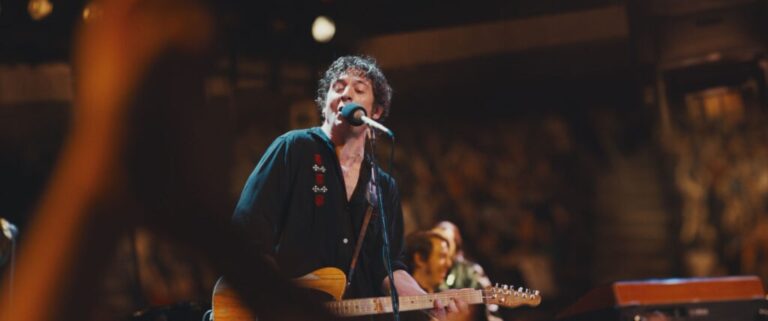
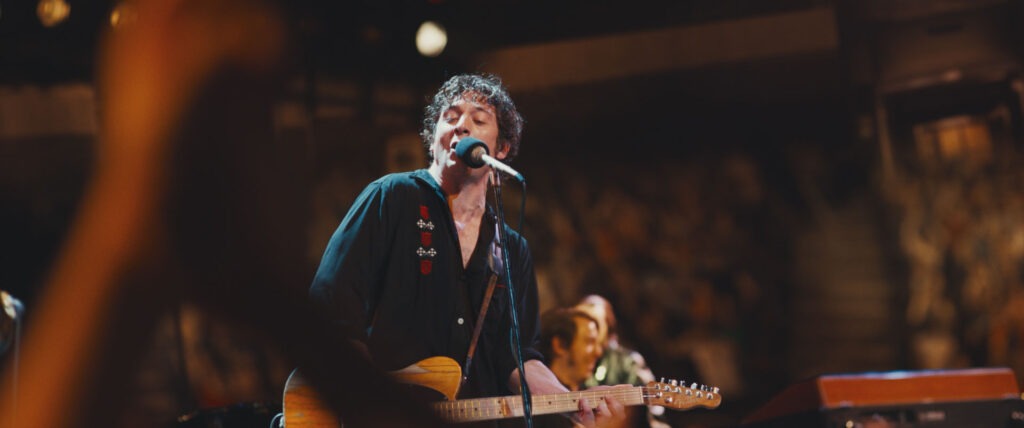
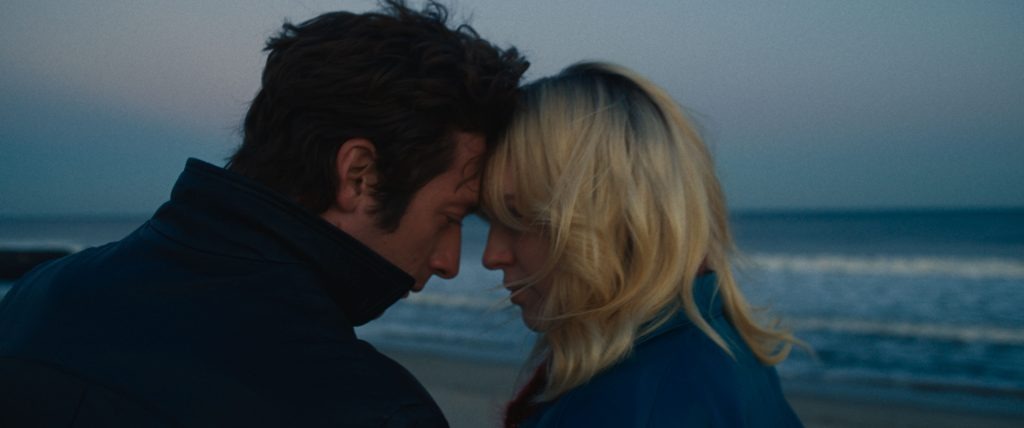
Have I listened to very much Bruce Springsteen? Besides his most classic songs, not really. So a movie about the making of his album Nebraska wasn’t very high on the list of things I would want to see in a movie theater. I know The Boss is a cultural icon and a favorite of plenty of people out there. After watching the movie about the making of the album, I can’t say that the movie did very much justice to the story or the album. It stars Jeremy Allen White as Bruce Springsteen and places the audience in the middle of his successful beginnings as an artist. It opens on a thundering performance of “Born To Run” and then brings Bruce to the making of his next album.
Along the way, we’re introduced to Jon Landau (Jeremy Strong), Bruce’s manager and prime confidante. He is there to facilitate Bruce on his way to crafting his new album and also make sure that the record company is okay with what’s going on. Bruce is such a star at this point that he really has a long rope with the record company. But as the movie goes on, there are some demands of his for the album that push executive Al Teller (David Krumholtz) to the edge.
Bruce retreats to his small-town hometown in New Jersey and gets entangled with the locals playingon Friday nights with a band at the biggest music bar. He’s introduced to Faye Romano (Odessa Young), and a relationship blossoms. There really isn’t an antagonist in the classic sense of the word here, but it’s part Bruce’s own depression, his upbringing with an abusive father (played by Stephen Graham), and the weight of stardom. Also on the cast are Gaby Hoffmann (playing his mom), Marc Maron (playing recording manager Chuck Plotkin), and Paul Walter Hauser (playing Mike Batlan, but really the embodiment of the audience).
For fans of Bruce Springsteen, this might be a dream. LIke I said before, I don’t have parents that blasted Bruce Springsteen to me at an early age. I know that “Born In The USA’ is the most misunderstood song in the history of music, and that’s really about it for my experience with The Boss. For me, the person who doesn’t really have any connection to the material, my eyes started glazing over about halfway through the movie.
The drama unfolding onscreen is fine, its easy to see that Bruce is a tortured artist that’s in the pangs of depression about a variety of things in his life. That doesn’t excuse a lot of the drama and conflict in the film not actually unfolding. We don’t get a resolution with Faye’s story. His acceptance of his father and the abusive tendencies is also undersold and undercooked. The movie also REALLY wants you to know that everyone thought it was a bad idea for Bruce to release an acoustic, folksy album that was made from the depths of his heart.
The music biopic has reached a tipping point where the next big one is going to have to be less paint-by-numbers and something more than that. Springsteen: Deliver Me From Nowhere is about as paint-by-numbers as it gets. Jeremy Allen White is excellent in the role, but the material and the story surrounding the performance is subpar. There’s something interesting to the relationship he has with Faye and her daughter, but that very quickly takes a backseat and then doesn’t really resolve.
Through it all, Springsteen: Deliver Me From Nowhere is only for Springsteen superfans. If you love the album Nebraska, it’s slightly intriguing to see where some of the songs came from, and to see Jeremy Allen White wrestle with the demons that faced The Boss, but this is overly melodramatic and misses the mark where other biopics made the machinations of millionaires interesting.
We use cookies to ensure that we give you the best experience on our website. If you continue to use this site we will assume that you are happy with it.









![Frankenstein Movie REVIEW [Venice Film Festival 2025]](https://mamasgeeky.com/wp-content/uploads/2025/08/netflix-frankenstein-movie-review-1024x682.jpg)
![Frankenstein Movie REVIEW [Venice Film Festival 2025]](https://mamasgeeky.com/wp-content/uploads/2025/08/Frankenstein-movie-review-1024x682.jpg)
![Frankenstein Movie REVIEW [Venice Film Festival 2025]](https://mamasgeeky.com/wp-content/uploads/2025/08/Frankenstein-review-1024x682.jpg)
![Frankenstein Movie REVIEW [Venice Film Festival 2025]](https://mamasgeeky.com/wp-content/uploads/2025/08/netflix-frankenstein-review-1024x682.jpg)