Andy Serkis and Iman Vellani discuss adapting George Orwell’s Animal Farm for a new generation and why they chose to end it with hope.
Adapting George Orwell’s classic novel Animal Farm into an animated feature is a bold undertaking, balancing dark political allegory with the need to engage a younger generation. By shifting the focus toward a coming-of-age narrative, director Andy Serkis and star Iman Vellani have transformed a cautionary tale about totalitarianism into an empowering, hopeful journey for modern audiences. Through the introduction of new characters and a focus on moral agency, the film invites viewers of all ages to question authority and engage in critical conversations about the world they are inheriting.
In this interview, we sit down with Andy Serkis and Iman Vellani to discuss the creative challenges of bringing such heavy subject matter to an animated format. We explore the duality of playing characters caught on opposite sides of a power struggle, the necessity of creating a central protagonist to navigate Orwell’s moral maze, and why it was essential to pivot from the book’s famously bleak ending toward a message of hope and resilience for young people.
Iman Vellani & Andy Serkis Talk Animal Farm
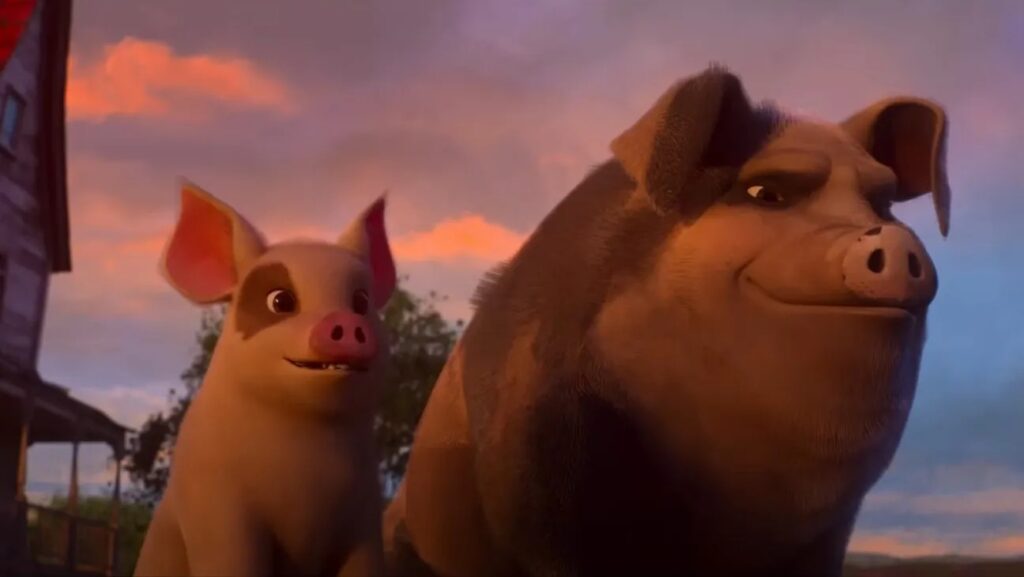
Mama’s Geeky: Iman, you play two characters, Puff and Tammy, who represent opposite sides of the conflict. What was it like exploring that duality?
Iman Vellani: “Tammy… it felt like just the final piece of the puzzle, honestly, because you really need that person who’s going to show the extreme version of, you know, what happens when you follow authority blindly and don’t question anything”. “I think all of these characters like explore much larger, more profound themes that we got to do on a very basic, simple level”.
Mama’s Geeky: Andy, the original book is incredibly dark. How did you make this story digestible and empowering for a younger audience?
Andy Serkis: “We wanted to make it modern and we wanted to make it accessible to particularly to young inquiring minds and create an atmosphere where we could, you know, be both entertaining and ask questions and cross generational questions”. “We wanted to offer some hope at the end that, that there is always the opportunity to turn back the tide and to, to move on in a more positive way”.
Mama’s Geeky: You also introduced the character of Lucky. Was that a necessary change to help guide the audience through the story?
Andy Serkis: “The book doesn’t really have a central, it doesn’t have a protagonist. When you’re making a movie, you’ve got to go with somebody on that journey. Putting our young audience right in the middle of the moral maze and making them go through this journey… [was] very important to sort of have those ways in to encourage a debate”.
To see the full discussion on how this classic story was reimagined, be sure to watch our full video interview.
About Animal Farm
From visionary director Andy Serkis, and featuring the voices of Seth Rogen, Gaten Matarazzo, Glenn Close, and Woody Harrelson, comes a satirical allegory of revolution and power. Animal Farm traces how a movement for equality is systematically corrupted.
As the pigs consolidate control, truth is erased, dissent is crushed, and the farm descends into a ruthless dictatorship–fulfilling Orwell’s warning about the dangers of communism.
Animal Farm comes to theaters on May 1.