


Is it an anomaly or just your mind playing tricks? Exit 8 turns a viral gaming loop into a gripping psychological nightmare.
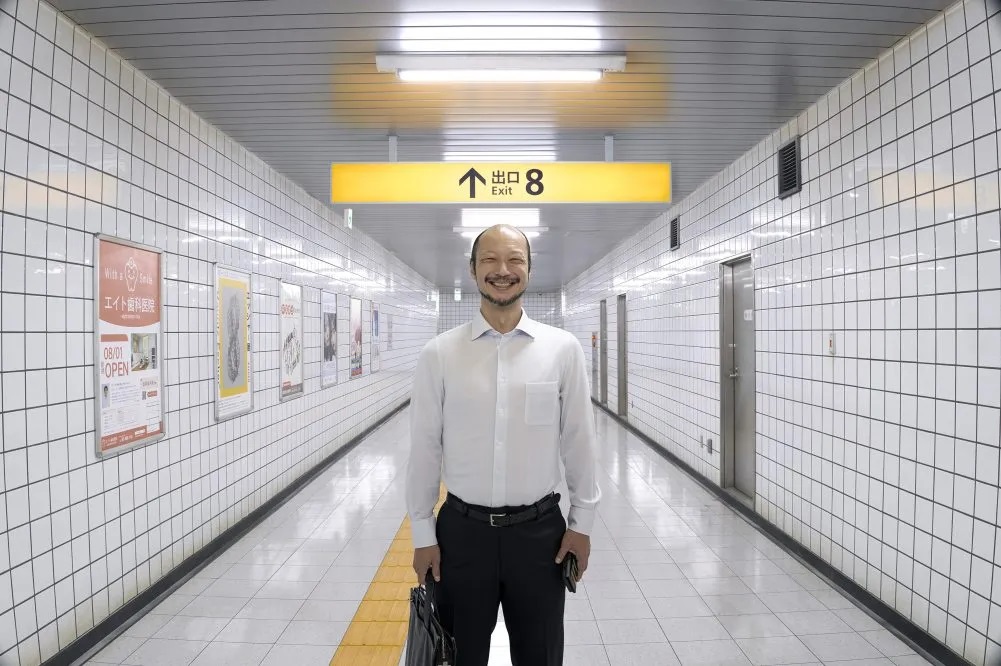
Before I watched Exit 8, I purposefully opted not to play the video game it is based on. I wanted to step into this world completely blind. This was the right decision for me because I had absolutely no idea what to expect. That said, fans of this game are going to be thrilled with how it was brought to the big screen.
Right from the start, I was hooked. The film starts with a POV perspective that feels like a direct love letter to the source material, but I was honestly relieved when it transitioned into a more traditional cinematic style. While the first-person gimmick works for a short gaming session, we needed to see Kazunari Ninomiya’s face to actually connect with the Lost Man.
The most engaging part of Exit 8 was how it turned me, the viewer, into a frantic participant. I found myself leaning toward the screen, eyes darting across every tile and poster, searching for anomalies. I wanted to yell at the screen every time the Lost Man or Walking Man missed a subtle change that seemed glaringly obvious to me.
What surprised me most was how much heart was added so that the movie has a true purpose. In the game, the Walking Man is just a mechanic – a landmark to pass. Here, Yamato Kôchi gives the character a soul. By giving backstories to the Walking Man and introducing The Boy (Naru Asanuma), the film elevates itself above a mere gimmick.

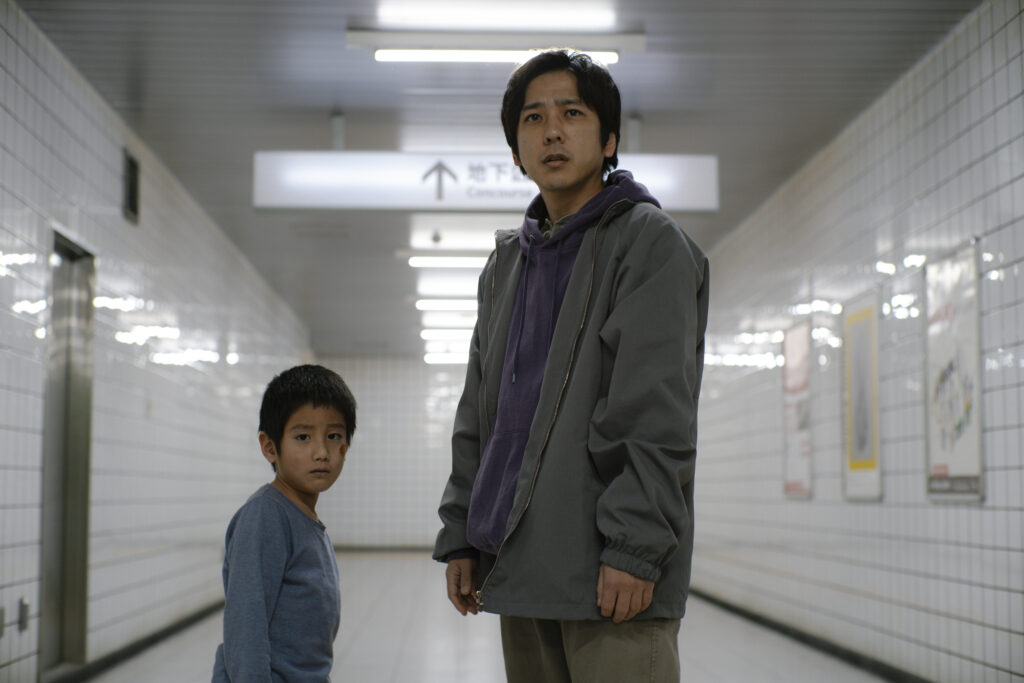
Kids in horror movies give me the creeps, and The Boy was no exception at first. However, as the narrative unfolded, my fear turned into genuine affection. He wasn’t there to provide a jump scare; he was a piece of a much larger, more emotional puzzle. The way the film weaves different timelines together is admittedly confusing at times – you’re left wondering how these people are all wandering the same hallway – but in a place where logic has clearly gone to die, it somehow makes perfect sense.
If I have one major complaint, it’s that the film honors the loop a little too well. The middle act gets noticeably repetitive. I understand that the entire point of the story is the grueling nature of walking the same hallway over and over, but there were moments where the pacing dragged. It doesn’t help that the colors are bland and the changes are (mostly) subtle. This makes it easy for your mind to drift.


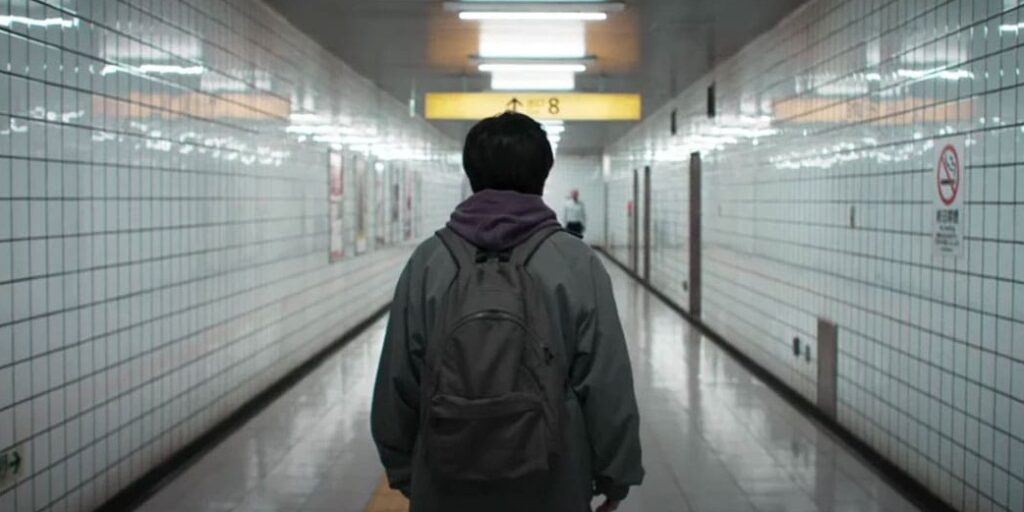
Fortunately, once the third act kicks in and the anomalies become much more obvious, the payoff is well worth the wait. The reveals are handled with a deft hand, shifting the film from a simple spot the difference game into a deep psychological horror.
After watching Exit 8, I finally sat down to play the game, and I was floored by the attention to detail. The film’s set design is a flawless recreation. It’s a rare feat for a video game adaptation to succeed this well, and I think the secret was the decision to add meat to the bones of the story. Without the character backstories, we wouldn’t care if they ever found the exit.
Exit 8 managed to make me question my own surroundings. It’s a startling, creepy, and deeply psychological journey that proves you don’t need monsters in the dark to be terrified – sometimes, a slightly misplaced poster in a well-lit hallway is more than enough to break you.
About Exit 8
A man trapped in an endless sterile subway passage sets out to find EXIT 8. The rules of his quest are simple: do not overlook anything out of the ordinary. If you discover an anomaly, turn back immediately. If you don’t, carry on. Then leave from Exit 8. But even a single oversights will send him back to the beginning. Will he ever reach his goal and escape this infinite corridor?
Exit 8 comes to theaters on April 10th.