
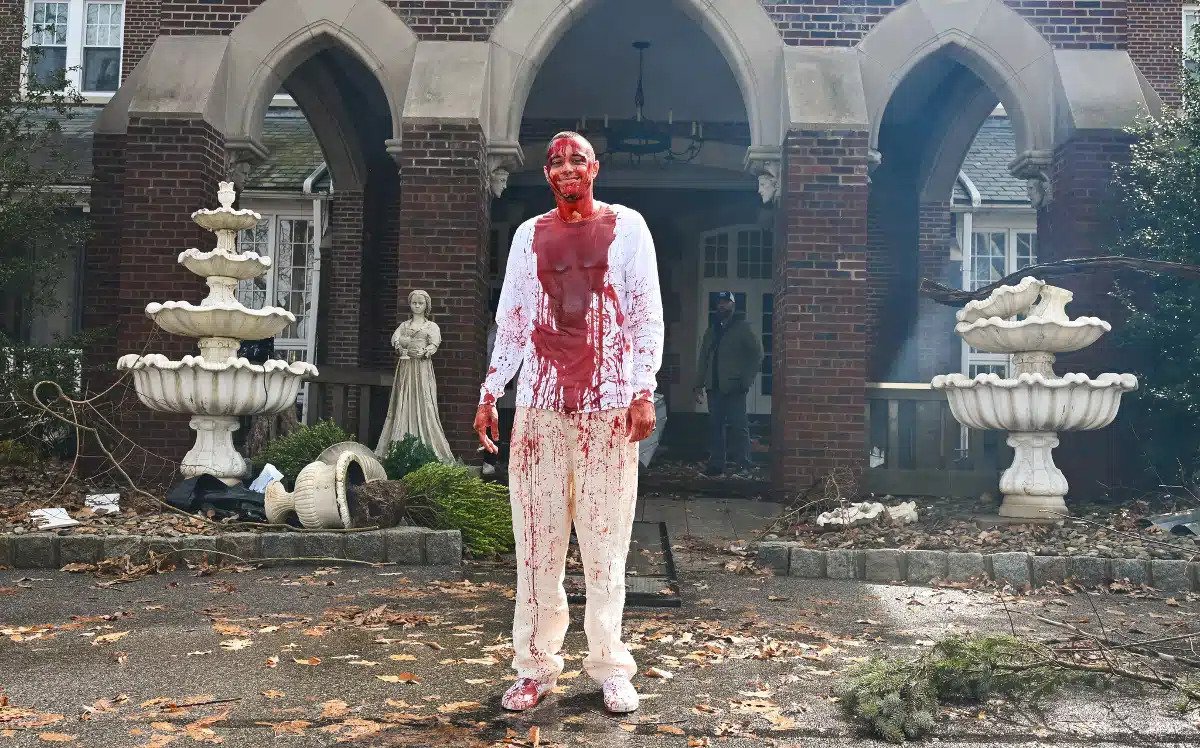


Go deep into The Home with director James DeMonaco in this interview. Discover the wild twists and Pete Davidson’s fearless turn in this pure psychological horror.

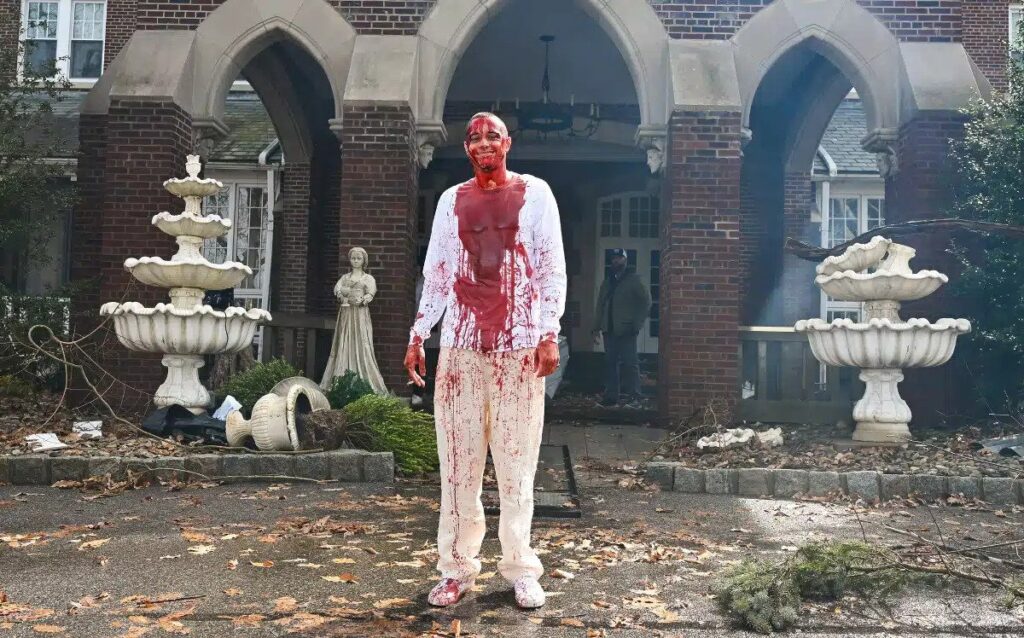
James DeMonaco, the visionary behind The Purge franchise, takes a thrilling turn into pure psychological horror with his latest film, The Home. In an exclusive interview, DeMonaco discusses the wild ride of creating this new cinematic experience, working with Pete Davidson, and the deliberate choices that make The Home a must-see.
James DeMonaco: From The Purge to Pure Psychological Terror
Q: You’ve created one of the most iconic franchises with The Purge. What drew you to writing and working on something like The Home? It feels like it’s in the same vein but still very different.
James DeMonaco: Yeah, I think it’s different too; I agree. That’s the perfect way to say it: it’s in the horror vein but different. I always looked at The Purge films as more action horror, especially after we got to part one, two, three, four, five – they kind of went towards action and more like Escape from New York and the movies I grew up on. So here, the goal, what my producer and I were thinking, was the idea… Well, I shouldn’t say this came first. The idea came first, but the idea of potentially doing a psychological horror, pure psychological horror, was exciting because we hadn’t done something that was so pure to the genre. I grew up on Rosemary’s Baby and The Tenant and all those great ’70s psychological horror films. I was like, this is the stuff that gave me nightmares. I’ve been plagued with nightmares since I was a young man. I have insomnia because of it, not to get into my terrible sleep habits, but movies from the ’70s really screwed me up. So it was nice to get into that vibe of a straightforward psychological horror film.


Q: You mentioned growing up with those ’70s psychological horrors, and The Home definitely delivers a third act that goes bonkers, much like films such as Hereditary and Midsommar. How challenging was it to make that stand out within the genre, especially with such a distinct twist?
James DeMonaco: Yeah, that’s my big hope: that people don’t see the big twist coming, and then they don’t see how I really… you know, we had to save a lot of money from early shootings. We shot that last because I’m like, we gotta go all in here in this third act. I want to deliver for the audience, not pull our punches. We were working with a more independently-minded studio; you know, The Purge is Universal, and they’re fantastic. But when you work independently with a smaller budget, you’re allowed to kind of push the envelope a little bit more. So it was kind of fun to say, “Let’s go all in, not pull punches.” And it’s great you bring up movies—I’m a big fan of Ari Aster and how Ari goes for it. I love that he doesn’t pull; he just goes all in, and I can’t wait to see his new film. So yeah, I’m so happy. And we were really hoping that—we worked a lot of time on the twist—so we were hoping that people didn’t see it. Maybe you watch it a second time, you could see that we give a couple of hints here and there, but not many to see it coming. So hopefully.
Q: I actually watched it twice, and you’re right – it’s one of those films that’s really great on a second watch because you can pick up on those little tidbits. It truly doesn’t make sense until you know the twist.
James DeMonaco: Exactly, right. It really is senseless in the beginning, and hopefully in a good way. But right, you know the twist, you’re like, “Oh, what the hell is happening here?” Which I don’t mind in a movie. I know some people like, “I love not knowing what’s going on for a while.” I think it’s fun. But you want it to obviously, at some point, coalesce into making some sense. But I do hope people go back again, because like you said, I think there’s enough there to start giving you hints at what’s coming, which you can’t really see on the first viewing. But hopefully that leads to a second viewing. That would be fun.
The Theatrical Experience and Pete Davidson’s Fearless Performance


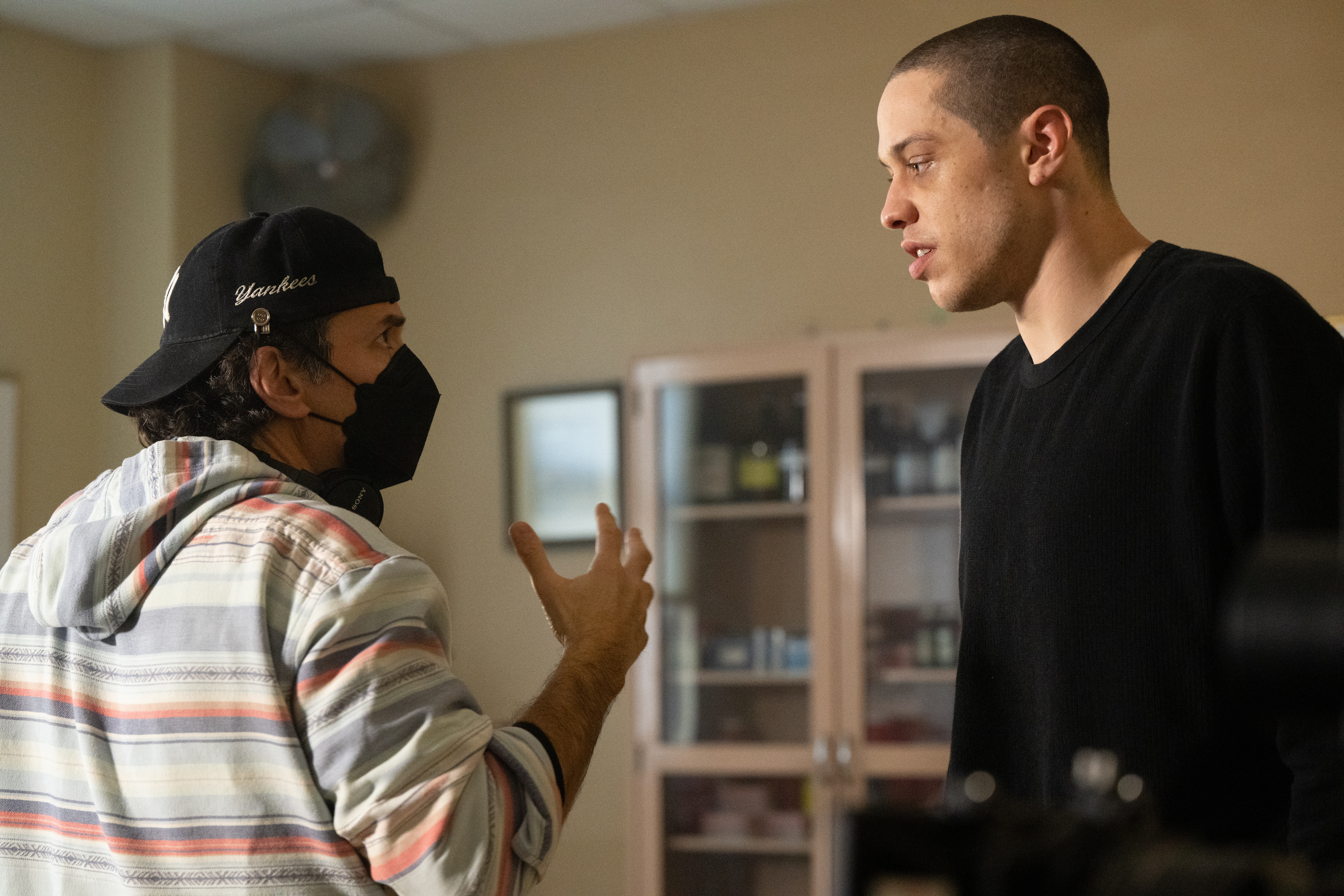
Q: I’m very glad this one’s getting a theatrical release. I need to see audience’s reactions to this!
James DeMonaco: Yes! I think the people are squirming. There’s things they can’t look at, you know. And I did that on purpose because I have a fear of eyes being touched, so I definitely dove into my own fears. And then I think, I hope people are cheering at some point. I know, even when I watch it now, I have this—I guess it’s an ability to separate myself as if I have nothing to do with the film—and every time I see what’s happening in the third act, I feel like cheering, and that gives me a nice… I’m like, “Oh, it’s a horror film where I want to cheer a little.” That’s exciting. And it’s fun.
Q: Pete Davidson truly branches out in The Home, especially in that third act where he carries so much of the physical and nuanced performance. Was he always who you envisioned playing Max?
James DeMonaco: Yeah, in a way. When we wrote—so I have to give the caveat that I knew Pete when he was pre-celebrity. We grew up in the same neighborhood. So yeah, he’s another Staten Island guy, and so was Adam, my co-writer—all Staten Island guys. We live in the South Shore. And I used to hang out at a restaurant called Nucci’s, an Italian restaurant, great place, very Italian and Irish where I live in a working class [area]. And Pete was a busboy at Nucci’s. And he came over to me after the first Purge. He’d heard that, “Oh, that’s the guy who wrote The Purge movies.” And he came over—”I’m a big fan.” So he was probably 16, 17, pre-SNL. And we kind of hit it off. I think we always felt a little bit like outsiders on Staten Island because it’s a very tough, hyper-masculine place, and we always were just kind of nerdy guys. So we hit it off. I got to watch him rise and become a celebrity, but I knew him as this very soulful man.
He had some tragedy in his life when he was young. And when Adam and I were writing, we knew that, well, we felt that Pete’s experience in his youth, what happened with his dad and the trauma there, and then what Max experiences in the script, it was a mirror. And they both process their grief through art in a way, both the character and the real-life Pete. And Pete read it, and he was just in… He was like, “I could do this.” I knew we could do it. I had to convince some people at that point because they’d just seen maybe a King of Staten Island; they hadn’t seen much from him, but I knew, I knew, I knew he had it. And then I think he impressed everybody. He was working with, I would say this, like with Tony Award-winning theater actors from New York, and he just… he just fit perfectly in with them and didn’t blink an eye. He’s, he’s fearless. I wish I had his fearlessness. He’s wonderful.

Q: Max is a character who needs that fearlessness, as he’s thrown into so much. He’s layered, much like Pete is, and he’s not necessarily just a “bad guy.” He’s here because of bad choices, but his whole thing is that he isn’t his choices.
James DeMonaco: Exactly. Exactly. So it’s, yeah, it’s definitely a redemption story in a way, right? He’s made some bad choices. He’s still, he’s still probably caught in the grief from not understanding what happened to his brother, which, you know, he becomes part of the film in a way, that grieving process and where he goes with that, especially through the Norma character. So yeah, I think it’s an interesting journey, but he does have to—he’s quite courageous because I don’t think some of the choices he made, I don’t think I would make in real life. I think I’d just be running for the hills at some point. So yeah, he’s a courageous character, and Pete embodies that; he’s fearless. So there was some, it was definitely a match between character and actor. And again, Pete, I think rose up to the occasion. I remember his mom was on set one day, and I turned to her, I was doing a great scene with Bruce Altman, who’s a wonderful theater actor and film actor. And Bruce came over to me and said, “My God, this kid’s amazing.” And I turned to Pete’s mom saying, “How did he learn to do this?” And she’s like, “I have no idea. In the basement. I don’t know. He just learned on his own.” So he’s not trained; he’s just a natural. It’s amazing.
Q: It’s exciting to see him doing more, especially after his work on Saturday Night Live. He has such natural talent, and I hope The Home is a jumping-off point for even more roles, especially in the horror genre.
James DeMonaco: He’s fantastic. And he’s… no one is… he’s also a real person. What you get with Pete, even on screen, is very real. And I think sometimes there’s no facade. Pete doesn’t—there’s no pretense with him. And I think you feel that, as the audience feels that, that realness of a person and character. So he’s wonderful.
The Home promises a unique and intense cinematic experience, blending psychological depth with unexpected thrills. Be sure to catch it in theaters on July 25th and witness the squirm-inducing moments and a twist you won’t see coming.